RSS Feed

Article Image Alt Text

Above is a rendering of the fire training building that will be located on West Port Street in Abbeville.

Police Jury bringing first fire training center to Vermilion Parish

Will be located on West Port Street in Abbeville

Training is one of the most critical chapters in the story of a firefighter’s career.
In the near future, firefighters across the 15 departments in Vermilion Parish will have access to a local three-story facility to further that training.
A fire training building is currently being constructed for the Vermilion Parish Police Jury. Located on West Port Street in Abbeville, the building with allow firefighters throughout Vermilion Parish to train for structure fires in a controlled environment.
Doris Langlinais, the fire coordinator for the police jury, said this is an essential step for the parish. Langlinais also serves as the chief of the 7th Ward Volunteer Fire Department and is a member of the Abbeville Fire Department.
“This will be the first opportunity to get some hands-on training at a facility in the parish,” Langlinais said.
Featuring a smoke room, prop room, and a three-story tower, this will be a first-of-its-kind opportunity for firefighters to apply their classroom knowledge to real-world scenarios. In addition, local firefighters would have to leave the parish to conduct similar training exercises.
“You had to go out of the parish,” Langlinais said. “You had to go either to the state training facility in Baton Rouge or another parish’s training center.”
With so many volunteer firefighters in the parish, this facility will maximize training time by saving time on travel.
“Vermilion Parish is majority volunteer firefighters,” Langlinais said. “This will allow them to make evening and weekend training that will meet their schedule with their jobs and their families.
“They won’t have to leave town or take off work to go to training.”
Use of the building by the fifteen fire departments that provide emergency services within the parish will also benefit property insurance rates.
“It will help our fire rating and provide a place for more in-depth training for all parish departments,” Abbeville Fire Chief Jude Mire said. “We will be able to have more hands-on training with surrounding departments.”
Glenn Lege Construction, Inc. is currently building the foundation. Parish Administrator Keith Roy said he is working with the Louisiana National Guard to have some of its members construct the three-story facility at no cost to the parish. The parish would purchase materials.
“It’s something I utilized when I worked for the federal government,” Roy said. “It provides them free training.”
Roy said access to the meeting room and facilities at the LSU AgCenter extension office next door cuts down on space and, therefore, the cost of the fire training building.
“If we put it somewhere else,” Roy said, “we must add a training room and restrooms.
“Right there, you are saving on cost.”
Once completed, the training building will return value to the parish often.
“This allows us to train, pre-disaster, at a facility that’s made for training,” Langlinais said. “Firefighters will be able to hone their skills and judge themselves while carrying out emergencies in a training scenario. Everyone is looking forward to it. It’s a long time coming.
“This is a huge advancement.”

Article Image Alt Text

Jim Bradshaw

Tidelands fight took 50 years

The fight between Louisiana and the federal government had been going on for 16 years when Congress passed “historic” legislation in May 1953 to “restore to the state land that was taken away from it by decisions of the Supreme Court.”
The land in question was beneath the Gulf of Mexico. Nobody much cared about it until the 1940s, when it began to dawn on folks that there was oil beneath that soggy bottom. In fact, the U.S. government had no objection in 1938 when the state claimed everything out to the edge of the Continental Shelf — the shallow seabed that in some parts reaches a hundred miles or more from shore.
But it didn’t take long for the federal government to realize there were millions and millions of barrels of oil beneath the Gulf, meaning millions and millions of dollars in potential taxes. That’s why the feds went to the Supreme Court to claim that coastal waters belonged to the national government, not the state.
Louisiana argued it had always exercised “continuous, undisturbed, and unchallenged sovereignty” over the seabed. But the court agreed with the feds, touching off a decades-long legal fight, known generally as the Tidelands Dispute.
The Submerged Lands Act that was passed in May 1953 was supposed to undo what the courts had done. It gave coastal states jurisdiction for three miles from their coastlines, but that raised as many issues as it solved. Nobody was sure about where to start measuring the three miles. The New York Times predicted, correctly, that “because of the state’s extremely irregular shoreline, it may take … years to determine just where the three mile … boundary of the state actually lies.”
That was just about the time that Jack P. F. Gremillion was hand-picked by Earl Long to become attorney general. He stayed in office for 16 years and is probably best remembered for opposing desegregation and for the fact that his tenure ended with an indictment for fraud and conspiracy. A jury found him not guilty of those charges, but he was then convicted on five counts of lying to the grand jury that indicted him.
Despite his other views and Long’s claim that “if you want to hide something from Jack Gremillion, put it in a law book,” Gremillion did serious battle over the tidelands. He put together an impressive team of legal scholars and they put together a series of lawsuits raising a list of constitutional issues — none of which were successful.
Gremillion tried another route. In 1956, he took his argument to the friendlier state, not federal, court, and got a restraining order to keep the federal government from leasing offshore land. Gremillion argued there was a conspiracy between the U.S. Department of Interior and oil companies “to usurp and illegally ‘grab’ lands and revenues belonging to the state.”
That finally led to an agreement between the state and federal governments to allow oil drilling, but to hold the lease money and taxes in escrow until a ruling by the Supreme Court on who owned the land. The court, once again, gave the federal government the land that it claimed, and, more importantly, gave it most of the money.
Louisiana finally won a small battle several years later over where the shoreline began, and with the declaration that coastal erosion did not also erode away state land. But there was still a money issue to solve, this one over how much of the interest from the money that had been put aside belonged to the state.
That legal battle dragged on for years more, often to the frustration of Billy Guste, the attorney general who picked up the battle. In 1980, the court made a tangled ruling that Louisiana did own the money that had been held for it, but somehow did not own the interest on it.
That’s how things stood until one day when Gary Keyser, the assistant who led the tidelands fight during the Guste administration, came across a federal rule actually meant to deal with drilling on federal land in the western U.S. It provided that states should get a “fair and equitable” part of the proceeds from mineral production on public land.
Louisiana pounced on that with a new suit that was settled out of court in 1986. It gave the state $540 million in reparation for past federal action, and provided that Louisiana would get 27% of the annual revenue from a part of the Gulf outside the three-mile limit designated the “8(g) area,” referring to the part of the rule that gives some money to the states.
Since then, the state has invested the so-called 8(g) money in a Louisiana Education Quality Trust Fund that has provided hundreds of millions in grants to Louisiana schools.
It only took 50 years to get things more or less right.
You can contact Jim Bradshaw at jimbradshaw4321@gmail.com or P.O. Box 1121, Washington LA 70589.

Article Image Alt Text

Photo by Doug Dugas / University of Louisiana at Lafayette
Representatives of UL Lafayette, its Center for Louisiana Studies and contributors to the recent renovation of the Roy House attended a Thursday ribbon-cutting ceremony. Shown, from left, are: Dr. Vaughan Baker, former department head; Scott Hebert, director of Facility Management; Scott Chappuis, Architects Beazley Moliere; Robert "Popie" Billeaud, J.B. Mouton Builders; Dr. Joshua Caffery, center director; Rita Durio, Rita Durio and Associates; Dr. Jordan Kellman, College of Liberal Arts dean; Dr. Joseph Savoie, University president; and John Blohm, vice president for Advancement and chief operating officer of the UL Lafayette Foundation.

UL Lafayette’s Center for Louisiana Studies flings open doors to Roy House

The University of Louisiana at Lafayette’s Center for Louisiana Studies flung open the doors to its new home – the J. Arthur Roy House – during a ribbon cutting ceremony on Thursday.
The recently renovated Roy House is the only campus building listed on the National Register of Historic Places; it’s now a hub for scholarly investigation of Louisiana’s people and history. The Center for Louisiana Studies attracts academics and scholars from across the world.
The College of Liberal Arts center, established in 1973, is UL Lafayette’s oldest research center. Its research division houses the Archive of Cajun and Creole Folklore, the largest collection of audiovisual materials related to the traditional cultures of southwestern Louisiana. The center also oversees the University of Louisiana at Lafayette Press.
The two-story, 5,000-square-foot Roy House was built by businessman J. Arthur Roy. The Queen Anne-style structure was completed in 1901, the year that the University – then known as the Southwestern Louisiana Industrial Institute – enrolled its first students. The Roy House stands at the corner of Johnston Street and University Avenue.
An extensive overhaul of the 122-year-old structure makes it a fitting and accessible location for the Center for Louisiana Studies, “its front door,” explained Dr. Joshua Caffery, the center’s director. Portions of its materials will remain in Edith Garland Dupré Library, including its inventory of thousands of UL Press books and primary archival documents.
As part of the restoration, the Roy House holds a reading and listening room where scholars and patrons can access the center’s audiovisual archives, and a bookstore where UL Press and other Louisiana-focused titles will be sold. The house also will contain a collection of rare maps.
Caffery expects the Roy House to entice visitors who simply want to view its grandeur. Beyond utilitarian upgrades to plumbing, wiring, heating and cooling, the renovation was carried out with an eye on maintaining as much of the house’s original aesthetics and architecture as possible.
“The center is already a renowned destination for research and creative projects and, since Louisiana culture fascinates all sorts of people, I expect that having the center based in the Roy House will draw more scholarly interest as well as general interest,” Caffery said.
The exterior of the Roy House features a two-story front gallery, three-sided bay windows and gables. Interior amenities include an intricate staircase, several elaborate mantels, wood floors, and restored light fixtures and repaired original stained glass.
“It’s not going to be a museum, but the entire house is a historical artifact. It’s one of the most beautiful houses in the region and a landmark people want to see,” Caffery explained.

Article Image Alt Text

Bryan Golden

Power vs. Force

Power: ability to do or act; capability of doing or accomplishing something.

Force: strength or effort exerted upon an object; physical coercion.

Power emanates from within. It enables one to accomplish tasks through the positive exercise of the law of attraction. According to the law of attraction, you attract people and circumstances of the same nature as your actions and attitude.

The source of power is a deep-seated belief in your goals combined with a genuine desire to help others. Authentic power arises effortlessly from who you are; it is not contrived. Power doesn’t have to be advertised or shown off.
People with power do not have a need to prove anything to anyone. Power is a by-product of developing self-confidence. Self-confidence grows in response to your belief in yourself. Power grows from a respect for others.
Power is not used for control or domination. It’s not used to belittle others. Power is a benevolent energy that makes you and those you come into contact with feel positive. It is a comfortable feeling to be with someone with internal power.
Force is the external application of energy in an attempt to control people and events. People apply force to compensate for a poor self-image. Force is used for intimidation. The employment of force creates a feeling of resentment from those upon whom it is applied.
Ego is linked to force, not power. People with power treat everyone with kindness and respect. They don’t act in a condescending manner toward anyone. People with power aren’t threatened by the success of others nor are they in competition with anyone.
Examples of power vs. force
Ellen has developed her inner power. At the accounting firm where she works, Ellen supervises 20 people. Although she has the authority to hire and fire, Ellen’s management style doesn’t incorporate threats or intimidation. Everyone in her department knows what’s expected of them. They feel Ellen treats them fairly and with respect.
Ellen doesn’t order people around. She asks her staff for what she needs. Because people enjoy working with Ellen, her department has very little employee turnover. Over the years, Ellen has had to let a few people go due to poor performance. In each instance, the other employees’ moral did not decline. They appreciated that Ellen was fair and expected everyone to abide by the same standards.
Mike regularly applies force in his interpersonal interaction. He has just been promoted to store manager. Mike erroneously believes people are impressed with his authority. He frequently orders his employees to jump from one task to another. Mike is quick to reprimand employees in front of coworkers and customers. Praise from Mike is rare at best.
Mike uses force with customers as well. He is clearly annoyed when a patron is sent to him with a problem. Mile is more concerned with demonstrating his authority rather than solving problems and satisfying customers. Mike’s attitude is perceived as rude.
There is a high level of employee turnover in Mike’s store. He constantly has to find and train new workers. As a result, his store is disorganized and messy. Sales are down since he has taken over as manager. Mike blames the economy and a poor work force.
The above examples illustrate the radically different results from power and force. The application of force creates problems. Then when more force is used in an attempt to solve a problem, the problem often worsens. Subsequent application of even greater force then produces a downward spiral.
Problems are solved, or avoided, with the utilization of power, not force. Power attracts solutions. Examine your own behavior for instances where you used force instead of power. Next time you are faced with a challenge, choose power.

Article Image Alt Text

Peterman Bourque

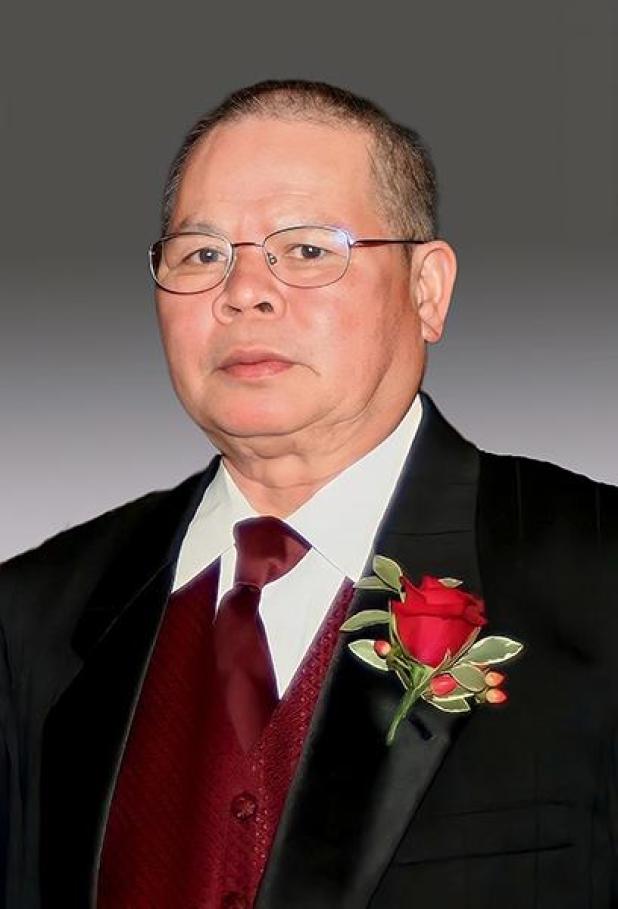
September 6, 1925 ~ May 7, 2023

ABBEVILLE — Funeral services will be held at 2 p.m. on Thursday, May 11, 2023 at Vincent Funeral Home - Abbeville honoring the life of Peterman Bourque, 97, who died Sunday, May 7, 2023 at Calcutta House at Hospice of Acadiana in Lafayette. He will be laid to rest at St. Paul Cemetery with Deacon William Vincent officiating the services. Those serving as pallbearers will be Matt Dore, Josh Andrus, Jarrod Andrus, Troy Theall, Brett Doucet, and Jamie Broussard. Hononary pallbearers will be Shawn Broussard, Jude Hardy, Brandon Hardy, Jake Andrus, Courtney Frederick and Charles Frederick.
He is survived by his five daughters, Judith B. Broussard (Dudley), Carliss B. Sellers (Nolan), Paulette M. McCloskey, Donna B. Abshire (Calvin), and Rebecca B. Andrus (John); 16 grandchildren; 34 great-grandchildren; 5 great-great-grandchildren; and sister-in-law, Eve Bourque.
He was preceded in death by his loving wife of 54 years, Nita Mary Boutte Bourque; parents, Philogene Bourque and the former Clomere Romero; sisters, Gladys Bienvenue, Agnes Foreman, Marie Bourque, Ella Viator, Eva Romero, Laurice Guidry, and Rosita Lovell; brothers, Ivy Bourque, Alton Bourque, Harris Bourque, and Mesman Bourque; and son-in-law, Willie McCloskey.
The family requests that visiting hours be observed at Vincent Funeral Home - Abbeville, 209 S. St. Charles St., on Thursday, May 11, 2023 from 9 a.m. until time of services.
A rosary is being prayed at 1:30 p.m. with a eulogy to immediately follow.
The family would like to extend a special thanks to Calcutta House at Hospice of Acadiana for their loving care and compassion.
Condolences may be sent to the family at www.vincentfuneralhome.net.
All funeral arrangements are being conducted by Vincent Funeral Home of Abbeville, (337) 893-4661.

Article Image Alt Text

BRCC softball coach Mark Suire tells the NV students and parents that Ashton Duhon (left) and Kennedy Kelly (right) will be awarded a softball scholarship.

Baton Rouge Community College coach gives great news to players

Suire tells softball players they are awarded scholarships and won’t have to walk on team

Monday morning was signing day for four North Vermilion High athletes.
All four seniors signed to play sports for Baton Rouge Community College (BRCC), located 90 minutes from North Vermilion.
Two signed to play baseball, and the other two signed to play softball.
The two softball players had a pleasant surprise during the signing.
Lady Patriot pitcher Ashton Duhon and infielder Kennedy Kelly had planned to be preferred walk-ons to BRCC. However, that meant they would have to pay their tuition, and there was no guarantee they would make the team.
They accepted the challenge, because they just wanted to play softball.
But right before they signed, BRCC softball coach Mark Suire, an Abbeville High graduate, took photos with the two girls and then announced the great news.
Suire told the girls and their parents that they were no longer walk-ons because the school had two scholarships to award them.
Both were happy.
“I did not expect that,” said Kennedy. “I thought I would have to work extra hard to earn a spot. Instead, I am going to work for a spot on the team.”
Kelly can play shortstop, third base or second base next year.
This year, Kelly hit .495 at the plate and knocked in 33 runs with nine doubles, two triples, and 10 home runs. She had an on-base percentage of .540.
Ashton Duhon was NV’s ace pitcher this year. However, when the season began, she was not 100 percent sure she wanted to continue to play at the next level.
“That was exciting to hear what Coach Mark said. It (scholarship) will help a lot,” said Duhon.
Duhon posted an 8-7 record on the hill with a 3.74 ERA. She had 89 strikeouts in 93 innings.
Duhon was a .347 hitter at the plate, knocking in 41 RBIs and hitting 10 home runs.

Article Image Alt Text

Christina Nunez Harrington

ERATH – A Mass of Christian Burial for Mrs. Christina Nunez Harrington, 52, will be held at 10 a.m. on Wednesday, May 10, 2023 at Our Lady of Lourdes Catholic Church with Fr. Matt Hebert officiating. Interment will follow at LeBlanc Cemetery.
A recitation of the rosary will be held at Our Lady of Lourdes Catholic Church on Wednesday, May 10, 2023 beginning at 9:30 a.m. prior to the Mass of Christian Burial.
A native and resident of Erath, Mrs. Harrington died at 4:30 p.m. on Sunday, May 7, 2023 at Our Lady of Lourdes Regional Medical Center. Christina was known for her love for her children and grandchildren, she was present at all their events. She loved cooking and being with family for holidays.
She is survived by her husband of 32 years, Mark Harrington of Erath; two sons, Joshua A. Harrington and his wife Lauren of Erath and Jace C. Harrington and his wife Airelle of Youngsville; a daughter, Jenna H. Hebert and her husband Trevor of Maurice; three brothers Chad Nunez, Brent Nunez, and Todd Nunez; and six grandchildren, Lillian Harrington, Madelyn Harrington, Cohen Hebert, Joelle Harrington, Elizabeth Harrington, and Beckham Hebert.
She was preceded in death by her parents, Otis Nunez, Jr. and Linda Ann Suire Nunez.
Serving as pallbearers will be Joshua A. Harrington, Jace C. Harrington, Trevor Hebert, Chad Nunez, Brent Nunez, and Todd Nunez.
Serving as honorary pallbearers will be Cohen Hebert and Beckham Hebert.
You may sign the guest register book and express condolences online at www.davidfuneralhome.org
David Funeral Home of Erath at 209 E. Putnam St. (337)937-0405 will be handling the arrangements.

Article Image Alt Text

David Keith Landry

August 25, 1962 ~ May 1, 2023

A celebration of life will be held at a later date honoring the life of David Keith Landry, 60, who passed away Monday, May 1, 2023.  
David was born on August 25,1962. He was a 1980 graduate of Abbeville High School.  After graduation, he attended USL and later joined the National Guard, where he proudly served our country. Thereafter he started a career with Acadian Ambulance where he achieved certification as a Paramedic. 
David was a caring and inquisitive man, who always enjoyed learning new things. He had a passion for all kinds of music, particularly Jazz and Rock & Roll. Over the years he acquired a unique collection of jewelry amongst other hobbies. He always enjoyed cooking up a big pot of something for his loved ones and spending time outdoors with his children and grandsons, whom were the light of his life.  He cherished the precious moments they shared together.
David is survived by his daughters, Holly Marie Landry Bostick and her husband Kyle, and Nina Landry; sons, Stephen Landry and his wife Kyah, and Matthew Landry; grandchildren, Cooper Bostick, Carter Bostick, Charlie Bostick, and Elijah Iles; parents, Jimmie and Bernice Broussard Landry; siblings, Carolyn Landry (Jimmie Leger), Alisa Manceaux (Dwayne), Bill Landry (Tabatha); and numerous nieces and nephews.
He is preceded in death by his maternal grandparents, Dolze and Clarice (Ledet) Broussard; paternal grandfather, Bernard Landry; grandmother, Eva Hebert Haden; and several aunts and uncles.
Condolences may be sent to the family at www.vincentfuneralhome.net.
All funeral arrangements are being conducted by Vincent Funeral Home of Abbeville, (337) 893-4661.

Article Image Alt Text

Letter to the Editor

School Buses No Longer the Sacred Cow

Dear Editor:

By and large, students are not riding the buses to school anymore! I see buses at the three public schools in Kaplan drop or pick up few if any students and then run their routes almost empty. What is in plain view is the mile long line of parent cars at each school to pick up and drop off their children.
Times have changed since I was in school when most of the students rode the school bus. Undoubtedly the cost of maintaining and paying the gas to run 137 school buses in this parish is quite enormous. Having to pay 108 full time bus drivers and other transportation personnel is a huge chunk of change as well! A lot of this is tax payer funded money! The Vermilion Parish School Board in a front page article in The Abbeville Meridional on Thursday, April 20, 2023 addressed the issue of looking to save school bus transportation money. The superintendent Tommy Byler clearly stated in that article “Efficiency of routes is my number one vision!”
My suggestion to the school board is this:

1.) Consolidate the routes for efficiency!

2.) Ascertain before the school year begins in writ ten, signed from each parent a guarantee that they want and will commit their child to riding a school bus at least 50% of the school year - then plan your routes accordingly.

If the school board addresses those points head-on and makes the hard changes necessary, they may find more funds available to give teachers and support personnel a more adequate pay raise.

Sincerely,
Stan Hardee
Kaplan

Article Image Alt Text

Letter to the Editor

All This Violence is Reprehensible, but Understandable

Dear Editor:

Recent gun crimes in our city and in our country (aside from isolated incidents where the cops in other locations became criminals), are not due to failure of law enforcement. Police are there to arrest the lawless-minded culprits who hurt others without justification, but they can never solve the social pandemic that exists. The scourge we have is parenting failure. Children learn behavior from example.
In my 75 years on this planet, I believe that kids who grow up bad do so more likely than not because they were not subject to following the good life behavior and direction of two parents. Fathers who are sperm donors, and not much else, is the most glaring predictor of a child-most likely a male child-to grow older without acceptable ethics in his heart.
We have too many irresponsible mothers mating with irresponsible men. There are too many women raising multiple children - all with different fathers - who are AWOL from what they created. To those women who flout the good spirited and well-intentions of taxpayers providing welfare income and food stamp benefits to become producers of children who are not being taught by good-living examples, I say that I am appalled and ashamed of you. We have had bad parent problems that lead to the proliferation of crime. Children learn to abide by the Golden Rule from parents who are attentive to them - not from older kids in the neighborhood who also grew up in a vacuum of good parenting.
Poverty - yes, that is part of the social problem. School dropouts - yes, that is part of the social problem. But these both stem from the undeniable fact that many teenage and young adults age-up without seeing the good example and guidance of good parenting. Responsible parents administer consequences to their children who misbehave at home and this sinks in as a learning tool to respect the law when they are not at home.
We cannot hire enough police officers to prevent crimes. They are vital to arrests and prosecutions after crimes are committed, but a cop on every block will not prevent murders, assaults, burglaries, rapes, theft or shootings. Criminal behavior is the product of deficient parenting. It is there that the problem of lawlessness is created. I am intimately familiar both with criminal victims as well as those who were charged with crimes who were products of irresponsible parenting. Bad parents are often the products of bad parents who fumbled that responsibility. Unfortunately for all, that beat goes on.

Louis G. Garrot
Retired Attorney
Felony Criminal Prosecutor and
Criminal Defense Attorney
Abbeville

Pages

Vermilion Today

Abbeville Meridional

318 N. Main St.
Abbeville, LA 70510
Phone: 337-893-4223
Fax: 337-898-9022

The Kaplan Herald

219 North Cushing Avenue
Kaplan, LA 70548