RSS Feed

Article Image Alt Text

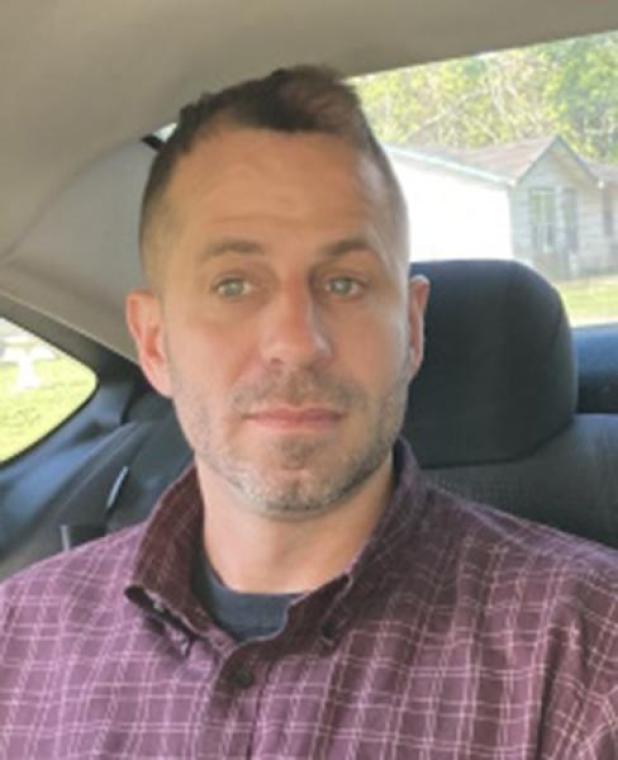
Celie LeBlanc Ulm

DELCAMBRE — A Mass of Christian Burial will be held on Wednesday, March 8, 2023 at 11 a.m. at Our Lady of the Lake Catholic Church for Celie LeBlanc Ulm, 34, who passed away on Monday, March 6, 2023 in Delcambre, LA.
The family requests that visitation be observed from 4 p.m. until 9 p.m. on Tuesday, March 7, 2023 at Our Lady of the Lake Catholic Church. A rosary will be prayed at 7:30 p.m. The church will reopen on Wednesday at 9:00 am until service time.
Fr. Buddy Breaux will officiate at the services.
Celie will be laid to rest at Our Lady of the Lake Mausoleum.
Survivors include her loving husband of 6 years, Matthew Ulm; her daughters, Tenley Marie Ulm and Oakley Anderson Ulm; her parents, Mike and Elina Hebert LeBlanc; her brother, Kip Michael LeBlanc; her paternal grandfather, Larry LeBlanc; nieces, Kadence LeBlanc and Caroline LeBlanc; nephews, Canon LeBlanc and Christian LeBlanc; her in laws, Stephen Ulm and Susan Ulm and her sister in law, Sarah Ulm.
Preceded in death by her paternal grandmother, Barbara Breaux LeBlanc and her maternal grandparents, Dolores Richard Hebert and Kenward Hebert.
Celie was a lifelong resident of Delcambre. She was a 2006 Delcambre High School graduate and a 2010 UL graduate. Celie was a high school volleyball coach and teacher who passionately empowered and mentored young men and women. Her coaching career began at North Vermilion High School then Acadiana High School and she was currently coaching at Ascension Episcopal School.
Celie will be remembered by all as a loving wife, mother, daughter, sister and friend to many. She was passionate about family life, volleyball, spending time at the camp and deer hunting.
She will be deeply missed and memories of her will be cherished for a lifetime.
Pallbearers will be Jhy LeBlanc, Tren LeBlanc, Trey LeBlanc, Parker LeBlanc, Cole Bourne, Lane Broussard, Canon LeBlanc and Christian LeBlanc.
Memorial donations may be made in her name to Our Lady of the Lake Catholic Church, 206 W Church Street-Delcambre, LA 70528 and/or Ascension Episcopal School, 1800 Chemin Metairie Pkwy, Youngsville, LA 70592.
To view the on-line obituary and sign the online guest register, please visit www.evangelinefuneralhome.com.

Article Image Alt Text

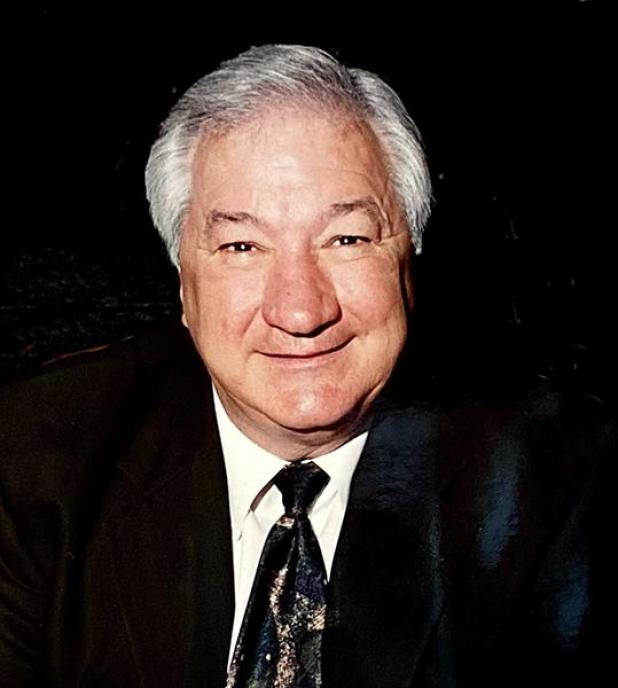
Lindsey “LeLe” Lynn Tardiff

ERATH – A Mass of Christian Burial for Ms. Lindsey “LeLe” Lynn Tardiff, 33, will be held at 1 p.m. on Wednesday, March 8, 2023 at Our Lady of Lourdes Catholic Church with Fr. Clifton Sensat officiating. A private interment will be held at a later date.
Visitation will be held at David Funeral Home of Erath on Tuesday, March 7, 2023 beginning at 4 p.m. until 9 p.m. with a recitation of the rosary at 7 p.m. Visitation will resume on Wednesday, March 8, 2023 from 9:00AM until the time of the services.
A native of Franklin and a resident of Erath, Lindsey died on Sunday, March 5, 2023 in Erath, LA. LeLe never met a stranger and was always happy. She would brighten up a room when she entered.
She is survived by her mother, Nancy Landry Tardiff of Erath; her father, Kary P.Tardiff and his wife Christina of Centerville; a sister, Kristy Tardiff Mire and her husband Nathaniel of Maurice; her maternal grandmother, Laurence Champange Landry of Erath; two nephews, Nathan Mire and Carter Wilson; three nieces, Taylor Wilson, Madison Wilson, and Kate Wilson; three uncles, Dr. Nathan Landry and his wife Robbie, Ted Tardiff, and Rickey Tardiff and his wife Dana; four aunts, Natalie Lovett and her husband Kenneth, Nanette L. Talbot, Sue Carter and her husband Dennis, and Karen Vincent and her husband Kerney; and her special people, Erin and Jeremy Hunt.
Serving as pallbearers will be Nate Mire, Jeremy Hunt, Carter Wilson, Tyler Hunt, and Becca Frederick.
The family would like to extend a special thanks to Lindsey’s sitters, Mary, Karen, and Samantha .
You may sign the guest register book and express condolences online at www.davidfuneralhome.org
David Funeral Home of Erath at 209 E. Putnam St. (337)937-0405 will be handling the arrangements.

Article Image Alt Text

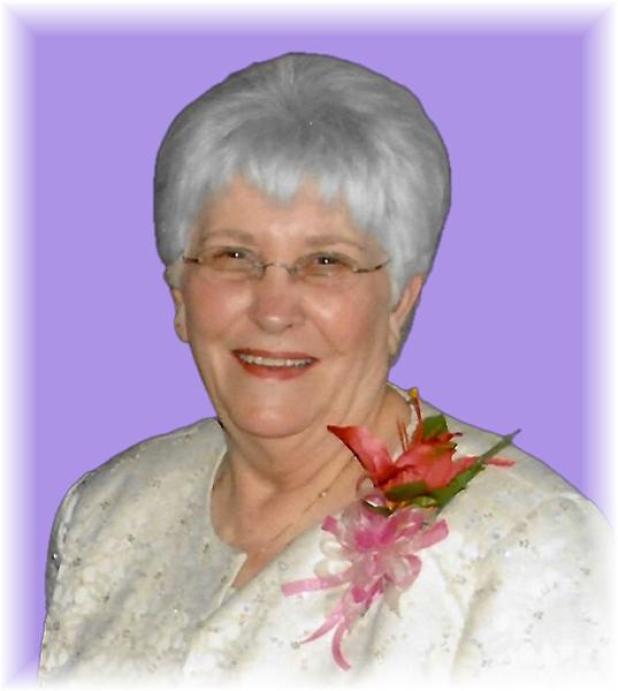
Ethel Mae Vice

September 11, 1943 - March 3, 2023

Ethel Mae Vice, born on September 11, 1943, passed away on March 3, 2023 at the age of 79. She was a lifelong resident of Erath, LA.
In her free time Ethel enjoyed reading, gardening, and crossword puzzles, but most of all she loved spending time with her family and friends whenever she could. She was employed at Woodcraft for 11 years; then went on to become a cook at Kimberly’s Cajun Kitchen for 3 years until they closed; moving on as a cook with Morris Lashaky Nursing Home in Erath for 11 years; finally settling down at Weiser as a Security Guard with Shaw Global out of Delcambre, LA for 6 years, where she retired in 2010. It is clear that Ethel was a dedicated hard worker in all that she set out to do, but she took the most pride in the ones she considered family. Ethel was a wonderful Mother and Grandmother, always going over and above for everyone, playing a huge role in raising multiple children, even those other than her own. If you needed her, she was there with love.
Ethel is survived by her children, Purvis J. Meaux of Erath, LA, Wilbert Dale Meaux (Wife, Tonya), of Church Point, LA, Sheila Frederick ( Husband, Paul Sr.), of Erath, LA, and Ethelyn Babin (late,  husband Scotty), of Erath, LA; her son- in- law, Sterling Callahan Jr. (husband of the late, Christina); her 16 grandchildren, Purvis, Joey, Destini, Bralie, Josh, Kevin, Elizabeth, Glenn, Leah, Sasha, T-Paul, Tiffany, Katelyn, Megan, and Mandy; her 30 great-grandchildren, Mikayla, Arianna, Gracie, Timberlyn, Daxton, Brooklyn, Emma, Kynleigh, Avrie, Bray, Blaine, Zaine, Lennox, Silas, Elijah, Layla, Thea, Josh, Josie, Braxton, Levi, Thomas, Stormie, Courtney, Landyn, Gabriel, Alaina, Brantley, Gabriella, and Gracelynn; her sister, Mary V. Evans of Abbeville, LA; her niece, Dabne` Dover (husband, Stewart), of Lafayette, LA; her nephew, Damon Evans (Wife, Bridget), of Abbeville, LA; and her 3 great nieces and nephews, Ashton, Drew and Sammi. Such a wonderful legacy she has left behind, all of which had the chance to feel her love in their lifetimes.
Ethel has now been reunited with those who have preceded in death before her; her mother and father, Purvis and Gladys Broussard Vice; her 2 brothers, Russell and Wilbert Vice; her 2 sons, Russell Earl Cluckey and Mitchel Meaux; her daughter, Christina Callahan; her son-in-law, Scotty Babin; her 2 grandsons, Claude Babin and Caleb Duplantis; her great-granddaughter, Amber Meaux, and her nephew and godchild, Darvin Duhon.
Louisiana Funeral Services & Crematory of Broussard, LA has been entrusted with the care of Mrs. Ethel Mae Vice.

Article Image Alt Text

LSN STAFF PHOTO / Lisa Soileaux
Warren Perrin, guest speaker for a recent meeting of the French Table of Rayne, explains The New Acadia Project, dedicated to the identification, investigation and preservation of the original home sites and final resting places of Acadians who began what is known today as Acadiana.

New Acadia Project: Identifying, preserving homesteads of Acadian pioneers

RAYNE — “The New Acadia Project” is an effort to identify, investigate and preserve the original homesteads and final resting places of Acadians who settled in what is today known as Acadiana.
Warren Perrin, attorney from Erath, is spearheading the project and spoke recently to La Table Acadienne de Rayne (The Rayne French Table).
During his PowerPoint presentation, Perrin explained that in 1765, Joseph Broussard — also known as Beausoleil — led a group of about 200 men, women and children from Acadia, Canada, to the Gulf coast of Louisiana.
The colonial government of Louisiana provisioned the families and directed them to settle in the Attakapas District along the banks of Bayou Teche in what is now Iberia Parish. However, within months of their arrival, they were afflicted with a virulent epidemic, possibly yellow fever.
As many as 34 died between the summer and winter of 1765, including Beausoleil and his brother, Alexandre Broussard. These pioneers and founders of Nouvelle Acadie were buried at the places they had initially settled, known as le dernier camp d’en bas, premier camp d’en bas, and camp Beausoleil.
The Acadian camps and gravesites are thought to be located on the Teche Ridge, between St. Martinville and New Iberia, in the vicinity of the present-day village of Loreauville
Perrin said the historical and cultural significance of the project is made increasingly urgent by continued residential and commercial development in the region. He said the irreplaceable archaeological record and unique information it might provide on early Acadiana history and culture in Louisiana may be destroyed.
The New Acadia Project is a partnership between the Acadian Heritage and Culture Foundation, Inc., at the Acadian Museum in Erath and the University of Louisiana at Lafayette.
Archaeologists and students from UL Lafayette have discovered, recorded and investigated 33 archaeological sites at cul de sac de la Fausse Pointe since 2014, including homesteads with artifacts dating from the 18th Century and two Acadian family cemeteries with unmarked graves.
One of these graveyards is located on the 1772 Spanish patent of Claude Broussard, an Acadian who arrived at Nouvelle Acadie in 1765 with his father, Joseph Beausoleil Broussard.
The 2022 Atchafalaya National Heritage Area Grant Program supported the New Acadia Project by funding the goals of the project: archaeological and historical investigation, heritage preservation, and development of the cultural economy related to the 1765 settlement of Nouvelle Acadie.
Fieldwork during the university’s Spring Break of April 18 to April 22, 2022, was preceded by historical research and public outreach with landowners.
Archaeological and geophysical fieldwork was conducted at three previously recorded sites, identified as 16IB167, 16IB168 and 16IB196. As these sites are located on Claude Broussard’s 1772 Spanish patent, the objectives of the spring break fieldwork involved an investigation of potential associations with Camp appellé Beau Soleil.
Three UL Lafayette undergraduate students (Gloria Church, Antoine Landry and Garret Crunkleton) assisted with the site investigations. They were joined by two student volunteers (Madison Castille and Reyna Houston) and supervised by Mark A. Rees, principal investigator of the New Acadia Project, and Philip D. Bourgeois, research archaeologist with the Louisiana Public Archaeology Lab.
The crew visited the newly installed state historical marker for New Acadia in Loreauville during the fieldwork. Plans were already well underway in the spring of 2022 for the installation of an Acadian Odyssey Monument at the same location.
The Acadian Odyssey Monument and historical marker were sponsored by the New Acadia Project Steering Committee. These are the first efforts to commemorate the Acadian diaspora or “Grand Derangement” and establishment of Nouvelle Acadie at cul de sac de la Fausse Pointe.
The New Acadia Project Spring Break fieldwork began with a systematic surface collection in a sugarcane field at site 16IB167 where the crew excavated 30-cm diameter shovel tests along transects.
The artifacts retrieved include pearlware and whiteware ceramics that date from the 18th and 19th centuries.
The New Acadia Project is a long-term, collaborative undertaking in public archaeology, public history, and cultural resource management planning, according to Perrin.
The first phase of the project will involve public outreach and consultation, historical and archival research, oral history, and archaeological survey.
Individuals and organizations interested in supporting this research can contact the University of Louisiana at Lafayette Foundation or the New Acadia Project Steering Committee at the Acadian Heritage & Culture Foundation, Inc., at 203 South Broadway, Erath, LA 70533; or call 337-233-5832.

Article Image Alt Text

Jim Brown

Competency tests for all Louisiana public officials!

Nikki Haley, the former governor of South Carolina, has announced her intention to run for the Republican presidential nomination. As part of her platform, she proposed that all candidates running for president who are over 75 years old take a mental competency test. My reaction? I think it’s a great idea.
But such a requirement should not be limited to just older candidates. We need to take it one step further and compel a test for all candidates running for public office. Why should only older candidates be tested? Now let me confess that I’m one of these old guys. I was in public office for 28 years, and yes, there could be a problem with an aging outlook towards offering solutions on public issues.
But what’s so special about youth, particularly if they have no governmental experience? The youngest governors we’ve had in Louisiana during the past 50 years were Bobby Jindal and Buddy Roemer. Did their youth prove to be valuable in their ability to govern? I’ll let you, dear reader, be the judge.
Rather than pontificating on the pros and cons of age versus youth, I would suggest it’s much more important to know just how knowledgeable candidates are on issues involving the particular office they seek. Does a candidate for sheriff in Louisiana know how to run a prison, have an educated background in how to deal with the growing opioid crisis, and how to train competent deputies so they are qualified to address a challenging criminal element in our state?
Does a candidate for assessor have both a financial and an appraisal background to deal with the ever-complicated evaluation of properties, both commercial and residential? Statewide candidates, young and old, need to convince voters that they are not asking for permission to undertake on the job training. Much too often, we elect candidates who have limited knowledge of the political office they seek. In my home parish of Concordia, a logging truck hauler was elected as the local coroner. Was he qualified to make medical decisions?
In the statewide election this fall, candidates for governor, both young and old, should be called on to explain in some detail their knowledge and possible solutions to a number of challenging problems facing the state. Here is just a partial list.
Recent reports indicate that Louisiana’s combined state and local sales taxes are the highest in the nation. Should Louisiana require a flat tax and possibly do away with the homestead exemption? What are their positions on these proposals to finance state government?
Louisiana has the highest insurance costs of any state in the country. Should we abolish the elected insurance commissioner, and let the governor be much more hands-on in dealing with insurance issues? The states with the lowest insurance costs appoint the insurance commissioner, and the governor is actively involved. What are the gubernatorial candidate’s proposals to reduce insurance costs?
How does the next governor deal with the lack of early childhood learning? Can he or she address the problem that a significant number of parents don’t encourage their kids to go to school, let alone do homework? How do you support the families that are really trying, and allow their kids not to attend failing schools?
Hey, we’re just getting warmed up here. There are so many other issues involving health, infrastructure, the environment, a trashy state, crime, I can go on and on. The bottom line is that competency is extremely important in electing the next governor, and all of our other public officials. Do we really care if they are young or old, as long as they can pursue a high standard in running the day to day operations of the respective office?
Election day is less than eight months away. Let’s hope Louisiana voters have the common sense to pick and choose those who represent them, irrespective of age. Holding all these candidates to a high standard of competency, young or old, is the best way to get the Bayou State off the bottom of the barrel. If we as voters do not strive to elect candidates with a knowledge of issues along with fresh ideas, then we only have our own selves to blame.

Peace and Justice
Jim Brown

Jim Brown’s syndicated column appears each week in numerous newspapers throughout the nation and on websites worldwide. You can read all his past columns and see continuing updates at http://www.jimbrownusa.com. You can also listen to his regular podcast at www.datelinelouisiana.com.

Article Image Alt Text

Steve Gardes

The history of U.S. bankruptcy

Today our federal government has $31.4 trillion of national debt recorded on its books, including $24.6T of Public Debt—which yields a Public Debt/GDP Ratio of 94%. Studies have shown that once Public Debt exceeds 90% of GDP, the debtor nation falls into a debt death spiral as the interest cost starts to suffocate economic growth needed to repay the debt. China, etc. have stopped loaning us money, so our “Independent” Federal Reserve is now printing money to loan it to the Treasury. We also have over $70T of entitlement promises that are not even recorded on our books. The CBO is projecting that in 10 years the national debt will grow to $52T. We are now facing another “debt ceiling crisis” as our political leaders are telling us we must borrow more money to pay our bills. How did we get in this predicament?
America has a spending problem as our Debt/GDP ratio was only 59% in 2000. Entitlement programs have accounted for all the growth in federal spending since 1960—Congress apparently must hand out free stuff to get re-elected.
History tells us America never had this problem from 1789 to 1930 when the federal government ran 101 budget surpluses as it had a single committee determining the federal budget—with the only exception being from 1880-1920. In 1885 Speaker Samuel Randall delivered this prophetic warning: “If you divide these appropriations among many committees where there ought to be one, you will enter upon a path of extravagance--until you find the country bankrupt.”
In 1930 President Franklin Roosevelt (D) pushed Congress to create various entitlements after the “Great Depression”, along with spreading budget jurisdiction over various committees for the various entitlement programs. BUDGET ACCOUNTABILITY VANISHED! Roosevelt was concerned about moral decay of the citizenry and placed work requirements on the entitlements. FDR was re-elected four more times.
Entitlements were expanded further in the 1960’s under President Johnson’s (D) “Great Society” programs, and again in 2010 under President Obama (D) who even took away work requirements. Today there are more than a dozen committees in each chamber that are responsible for Food Stamps, Student Loans, Social Security, Medicare, Medicaid, Obamacare, etc.—with each committee having a powerful SPENDING INCENTIVE. Although there are House and Senate Budget Committees, they have no authority to change entitlements. Still NO BUDGET ACCOUNTABILITY!
History tells us that Congress knows how to fix this problem if they wanted to. In fact, Sen. Joe Biden urged in 1979 that all spending (except existing levels of Social Security and Medicare) be subject to annual appropriations, thus “making new and existing entitlements subject to the appropriation of funds, thus effectively ending their entitlement status.” However, apparently the next election was just too important to worry about America going bankrupt.

Article Image Alt Text

Bill Wilson

Did Trump pave a path with hispanics and low propensity voters that few can replicate?

The Hispanic shift away from the Democratic Party – and specifically the dangerously incompetent Biden administration – is something Americans for Limited Government Foundation has been watching closely. New polling shows Biden’s approval rating is continuing to sink, and more Hispanics now want Trump to run for president again than want Biden to.
The increasingly radicalized nature of the globalist elite, who prioritize lining their own pockets at the expense of the working class, handing over sovereignty to draconian globalist institutions, and weakening our ability to defend ourselves if threatened, has resulted in a significant decline in support for Democrats among Hispanics.
The latest YouGov survey shows Biden’s polling numbers have sunk nearly twenty percentage points with Latinos since he took office. Former President Trump’s approval rating has been climbing steadily over the same period.
The share of Latinos who say Trump should run again is up 14 points since he left office going from 22% in January 2021 to 36% today. Meanwhile, just 28% of Latinos want a Biden re-run and a solid 57% say Biden should not run again.
The exodus of Latinos away from the Democratic Party escalated in 2020 despite a relentless smear campaign from virtually all major institutions, outright censorship, and highly questionable election tactics to keep Trump out of office. Trump’s share of the Hispanic vote rose from 28% in 2016 to 38% in 2020 anyway.
Despite similar tactics, Democrats suffered heavy losses with Latinos in 2022 compared to 2018. Democrats lost 21 points with Latino men, going from winning them by 29 points in 2018 to just 8 points in 2022. Latino women also supported Democrats by 14 points less in 2022 than 2018. These are not insignificant shifts, but are hard evidence that the far-left is incapable of deluding Hispanics that it is will solve the problems it creates.
The Florida governor’s race last year was a particularly stark example of the Hispanic shift, but it was Trump’s ground game in 2020 that put Latino-heavy strongholds like Miami-Dade County in play. Thanks to a ground game that targeted low-propensity voters, Trump won roughly 200,000 more votes in Miami-Dade in 2020 than he did in 2016. Biden ended up winning about 8000 votes fewer than Clinton did in 2016. Trump didn’t win Miami-Dade like DeSantis did in 2022, but DeSantis only achieved 74% of Trump’s 2020 vote total despite winning the county. Democrats maxed out their turnout in 2016 and 2020 and Trump managed to turn out an extra 200,000 votes in Miami-Dade while Democrats simply gave up.
Whether this model can be replicated with other candidates remains to be seen, but Trump himself is a formidable force and is the frontrunner GOP pick for Latinos in virtually every poll.
There are ample reasons why Hispanics are fleeing the Democratic Party in droves, but the economy is the most glaring issue. An NBC News/Telemundo poll shows Latinos disapprove of Biden’s handling of the economy 54% to 41% and disapprove of the cost of living under Biden 60% to 35%. The same poll found Latinos say 39% to 33% that Biden’s economic policies have hurt more than they have helped and 54% of Latinos say their family income is declining due to rising living expenses. Latinos also disapprove of Biden’s handling of border security 51% to 42%.
YouGov polls show Latinos say 51% to 35% the country is off on the wrong track, and over half say the economy is in a recession. Twenty-five percent of Hispanics cite inflation/gas prices as their most important issue, compared to 19% of Whites and 18% of African Americans. Hispanics also say by a three to one margin that inflation is a bigger issue than unemployment.
Hispanics are also extremely critical of the outcome of the 2020 election looking back. One poll found 23% of Hispanics do not believe Biden won the presidency, and less than half (43%) are excited about Biden.
An increasing number of Hispanics also blame Biden for the illegal immigrant crisis at the southern border. Hispanics disapprove of Biden’s response to the immigration crisis by a margin of 41% to 37% according to YouGov surveys.
Hispanics also have major hesitations about Biden’s competence. The latest YouGov survey shows a full 36% of Latinos would feel ‘uneasy’ about how Biden would handle an international crisis.
The same poll shows less than half of Latinos (48%) say Biden is honest and trustworthy, and a full 51% think Biden says what he wants people to hear, not what he means. Only 33% say they believe Biden says what he means.
This is in stark contrast to impressions of former President Trump. Although at times Trump used coarse language, he gave the impression that he was telling people what he thought, not what he thought they wanted to hear.
It is not only President Biden’s wildly incompetent economic policies that are causing Hispanics to defect. At the core, many Latino values are simply misaligned with the pillars of the globalist left: hatred for capitalism, the rule of law, and America First values.
The NRSC Hispanic Battleground survey found Latinos support capitalism over socialism by a margin of 63% to 17%. What is more, 58% of Latinos believe too many Americans are living off the government and 50% say Democrat policies hurt families. Over two-thirds of Latinos (67%) say too many Americans are losing traditional values centered on faith, family, and freedom.
Americans for Limited Government’s 2018 immigration survey found over two-thirds of Hispanics (67%) consider themselves Conservative or Moderate on economic issues, and slightly smaller shares consider themselves Conservative or Moderate on healthcare, education, and moral issues like same-sex marriage.
As the Democratic Party continues to move left on social issues and fails to address the economic concerns of working-class Latino voters, expect to see more cracks in the Democratic coalition. Latinos have supported Democrats in recent election cycles, but that advantage is rapidly shrinking, and Biden has done more to push Latinos away from the Democratic Party than he has to build lasting support. Latinos have serious concerns about Biden’s competency and they outright disagree with the major pillars of the modern Democratic Party.
While the propagandists in the mainstream media and virtually every institution continue to vilify former President Trump, his popularity has risen with Hispanics since he left office and the economy entered a death spin. The incompetence of the globalist left to solve the issues it has created is creating an opportunity for Trump to rally economically-motivated Latinos behind America First priorities again.

Article Image Alt Text

Jim Bradshaw

Did Coolidge eat his Rice-O-La?

When planter, politician and entrepreneur Henri Gueydan began to manufacture his Rice-O-La breakfast cereal in 1923, he also launched an advertising campaign that could have been the inspiration for the flamboyant Hadacol promotions decades later.
The campaign might have been anticipated. The son of town builder Jean Pierre Gueydan unveiled his plans to produce the cereal amid much hoopla in a well-publicized meeting in Crowley.
The Crowley Signal reported that Dr. E. M. Ellis, “a prominent Crowley surgeon,” said the Rice-O-La manufacturing process using brown unpolished rice “retains the maximum nutriment” including “vitamins and other sturdy ingredients.” Cleora Heibing, Louisiana supervisor of home economists, pronounced it tasty and nutritious. Dr. Robert Osborne, a New Orleans dietitian, said the cereal was good not only for grown-ups, but was a great food for infants. Every one of the 100-plus people in the crowd got to try a bowl of Rice-O-La and milk and, the Signal said, loved its “slight nut flavor.”
Nearly 200 investors had put up a total of $100,000 by the time ground was broken for a factory on Avenue J in Crowley. Gueydan said the plant would house machinery especially made to process the rice.
A Signal editorial at the time said, “The outlook for Rice-O-La is one that promises much for it and for its home, the Rice City of America. There is evidence that its importance to the city will increase as the demand for the product grows … with consequent additions to labor employment and money received and paid out.”
Gueydan promised that the plant would be up and running in three months, and the builders met the deadline.
At first, Rice-O-La was sold just in the region, then statewide, then Henri began to promote it nationwide. Testimonials in newspapers and national publications such as the Saturday Evening Post extolled Rice-O-La’s virtues.
“Last night we had Rice-O-La served for our ‘starter’ at dinner,” one letter read. “We used it just as you would have for breakfast. It was great.”
Said another one: “This morning for breakfast we had pancakes, using one-half flour and one-half Rice-O-La. Never ate better cakes than the ones this made.”
A letter on White House stationery from his secretary only said that President Calvin Coolidge received the box of cereal that was sent to him, not that he actually ate it. But that was enough to be included among the testimonials, using the headline, “President Eats Rice-O-La.”
A note below the letter said, “Mr. Coolidge’s Massachusetts taste is sure to respond to Rice-O-La’s appeal.” Silent Cal never said whether he liked it, disliked it, or even tried it.
In December, 1,112 cases, each containing 24 boxes, were shipped to just one New Orleans wholesale grocer. Wholesalers in Arkansas and Texas were interested. Things were looking up
By early February 1924, Rice-O-La was “featured on the dining cars of the Southern Pacific, Texas and Pacific, Gulf Coast Lines, Louisiana and Nashville, and Illinois Central,” on Morgan Line steamships that plied the Gulf, and “in the Charity Hospital and Touro Infirmary, the State Normal College [now Northwestern in Natchitoches] and Louisiana Polytechnic [Louisiana Tech in Ruston].”
College cafeterias even then were probably known for the quantity of their food, not the quality, but the dining cars were different. This was a time when railroad dining cars were beginning to reach the quality of fine restaurants as they competed for travelers.
That endorsement prompted the Abbeville Meridional to speculate that “in the near future … we may expect that … fully half of the rice produced in the southern states will be used in the manufacture of Rice-O-La.”
But, as with Hadacol, the promotions eventually outran the ability to produce the product, with the same result.
Abrom Kaplan, another big rice planter and town builder, bought “the plant and equipment, the good will, the patent rights, and other paraphernalia” for $7,000 when Rice-O-La’s remains went up for bankruptcy sale in May of 1925. Kaplan banker A. M. Smith bought the office furniture and “sundry supplies” for $1,100.
The office furniture may have been the better buy. A new investor tried to launch a comeback for the company in 1926, but documents filed in Baton Rouge show that it fizzled out pretty quickly.
You can contact Jim Bradshaw at jimbradshaw4321@gmail.com or P.O. Box 1121, Washington LA 70589.

Article Image Alt Text

Edie Littlefield Sundby walked in the dessert of California. Today, she is walking in South Louisiana. She recently walked through Broussard, New Iberia, Franklin and Morgan City.

WALK TO LIVE: Old Spanish Trail journey helps ‘Mission Walker’ find grace in hectic world

Edie Littlefield Sundby’s life took a turn when she was diagnosed with Stage 4 cancer and lost a lung to the disease.
To help fight the depression and despair, she started walking the 1,600-mile El Camino Real de las Californias mission trail that runs from northern California into Mexico. It was a way to heal herself physically and spiritually. Now she’s walking the Old Spanish Trail from southern California to the Atlantic coast of Florida, recently passing through Broussard, New Iberia, Jeanerette, Baldwin and Franklin.
“I’m walking to slow life down,” Sundby said. “I certainly don’t want to walk fast. I’m walking to connect with people, with places, with God. As John Muir said, walking washes our spirit clean. But one of the things I think is true is that walking clears out our minds. It cleans our spirit, but it clears our minds.
“And in today’s world, we’ve got to be able to get out and purge out. God told Job, ‘pour out they overflowings’ (of anger), and we’re filled with all these overflowings today: noise and distractions. So you get out here, you slow life down. Pour out all the overflowings. And what happens to you is what fills that space is grace, and you feel this most amazing sense of transcendence and peace and acceptance.”
She said that the national media likes to stress the things that divide people, but she’s found it different when she’s away from the drama that consumes people’s lives daily through social media and negative news.
“When you get out here, there’s none of that,” she said. “We’re all one. We’re all spiritual beings doing our best. Of course, some days are better than others. But we’re all just people. When I’m out here, God is in his glory, and all is right with the world.
“It’s the spiritual stuff. It just brings you to your knees every day, every day.”
Now that she’s walking the Old Spanish Trail in Louisiana, Sundby has been amazed at how friendly everyone has been, especially in smaller communities and rural areas.
The Old Spanish Trail follows U.S. 90 and La. 182 at various points in South Louisiana. After going through St. Mary Parish this week, she was headed toward Houma later in the week.
She’s been greeted by almost everyone she’s seen in the rural areas she’s walked in South Louisiana.
“Friendly as they can be,” she said. “I’m a stranger — I look weird. I’m a stranger in a strange land. They’ll be on the porch, and they’ll wave at me, or they’ll be in the driveway and wave at me. They’re just as friendly as they can be.
“’Texas’ means friendly in Spanish. I don’t know what Louisiana means other than King Louis, but it’s as friendly a place as I’ve ever been.”
She’s also loved the way each community differentiates itself, from Sulphur with its “Faith, Family and Community” signs to Crowley (Rice Capital of the World) and Rayne (Frog Capital of the World) and Scott (Boudin Capital of the World) and Jeanerette (Sugar City).
Sundby, 71, wrote a book (The Mission Walker) about her experience walking the Mission Trail.
“I started walking that (trail) six months after I lost my right lung,” she said. “It’s not exercise, you know. It’s walking to breathe, and walking to live, and walking to heal.”
After finishing that journey, Sundby wasn’t ready to give up walking and is now on the Louisiana leg of her walk of the 2,817-mile Old Spanish Trail that runs from southern California to the Atlantic coast of Florida. She began the 300-plus mile Louisiana journey on Feb. 5 at the old burned-out U.S. 90 bridge between Texas and Louisiana at the Sabine River in Calcasieu Parish.
“Walkers, we need a place to walk,” Sundby said. “You need a purpose, and these old trails are fantastic. Some people say, ‘it’s not old, it’s not Spanish,’ and that’s hogwash.”
She noted that she stopped at a faded historical marker in Sorrel, a small St. Mary Parish community between Jeanerette and Baldwin, which states that the community is the site of one of the early ranches along the Old Cattle Route from Mexico (now Texas) to Vacherie on the Mississippi River. The cattle ranch, started by Jacques Joseph Sorrel in the 1750s, covered some 3,000 acres, according to the marker.
Sundby said she’s enjoyed meeting people on her walk through South Louisiana.
“I can’t even begin to tell you,” she said. “I have people stop every day, wherever I am, and say, ‘Are you okay? Can I help you?’ Or, ‘Can I give you some water? Do you need some food?’ Just in the middle of nowhere, people will pull over and stop. It’s beyond friendly.”
She is walking alone, though her husband has accompanied her for most of the trip in their camper van. On Monday, though, he had to go to Colorado to deal with a work emergency. So now her oldest sister’s granddaughter has come out “on a little adventure” and is driving the camper van.
“I do walk alone because who else wants to do something like this?” she said. “It’s like Thoreau said, if you walk alone, you leave now. If you walk with somebody, you wait till they’re ready.”
She’s loved having her grand-niece on the trip now, she said.
“It’s delightful to have a young person (in her 30s) who understands and enjoys Google and Apple maps,” Sundby said. “I promised her when I made my 10 miles today. We’d go on a gator tour.”
Sundby said the lengthy sidewalks struck her along the Old Spanish Trail (Hwy. 182) in Centerville.
“They’ve got almost a 2 1/2 mile sidewalk in Centerville,” she said. “What does that tell you? It’s in pretty good condition, too, because people walk. Those little towns were built to walk in. I’ve actually seen more people walking out in Broussard, Centerville, and places like that than anywhere. That just struck me in Centerville.”
She said that Sundby’s approach to walking the Old Spanish Trail differs from how she made the Mission Trail. In Mexico, the lower part of that journey covers about 800 miles. The Jesuit trail is the lower part of the Mission Trail in California, and the Franciscan Trail is in northern California, from north of San Francisco to Sonoma.
“I’m doing this (Old Spanish Trail walk) differently,” she said. “When I started walking the California Mission Trail, I did that as a through-walk. In other words, I walked through Mexico, really with the help of vaqueros (cowboys), as much on a donkey as walking because the Sierras (are so rugged). And I did California and the old Franciscan trail, another 800 miles, as a through-walk. I did each of those in two months.
“This walk, the Old Spanish Trail, which starts in San Diego and goes all the way to St. Augustine, Florida, I’m doing this in segments,” she said. “And a good segment’s about 300 miles, which is perfect because Louisiana, which used to be in East Orange, Louisiana, which no longer exists, is a little over 300 miles from the Sabine River to Slidell. So I’m doing Louisiana as a through-walk.
“It’s just delightful. It’s 2,817 miles between San Diego and St. Augustine, Florida. There are about four major crossroads across the United States, and the Old Spanish Trail road is the shortest distance between San Diego and St. Augustine, the shortest way to get across the United States.”
It’s also the most interesting way to cross the United States, she feels.
“It’s just the history out here,” she said. “Many of these communities have retained a lot of their culture.”
For instance, she met John and Lillie Mae Norbert, who, at ages 90 and 76, served plate lunches of Creole food at Norbert’s Restaurant in Broussard.
“Their daughter Millicent is the tourist director there in Broussard, and she traced their ancestry back to Nigeria,” Sundby said. “(Their ancestors) had been brought over in the 1700s, where they’d stayed all that time. So you meet people like that, and it’s a very intimate walk through a place like Louisiana.”
Sundby said she’ll probably walk Mississippi and Alabama’s Old Spanish Trail as one segment rather than splitting them into individual segments of her walk of the trail because that’s under 200 miles.

Article Image Alt Text

Abbeville’s insurance package jumps $150,000 this year

It’s no secret insuring property in Louisiana costs more at this moment in time.
With the renewal of its property insurance, the city of Abbeville discovered firsthand that the cost is increasing.
During a special meeting last Monday, the Abbeville City Council approved an insurance package for property coverage, auto physical coverage, boiler and machinery coverage, airport liability, and inland marine/equipment coverage. The renewal is effective as of March 1.
This year’s premium is $280,735, an increase of $150,083 compared to 2022.
“Property insurance is in a crisis in Louisiana,” said Councilman Brady Broussard Jr., who chairs the city’s insurance committee. “We are not exempt from that crisis.
“We have seen a rise in premium.”
However, it could have easily been more.
“When we got the quotes in last Thursday,” Mayor Roslyn White said during the meeting, “it was another $50,000 more than this.”
Members of the insurance committee and the mayor worked throughout the weekend, and even until a couple of hours before the special meeting, reviewing every option for quotes.
“We worked all weekend to whittle it down,” White said, “and come up with the best option for the taxpayers, with the most coverage that secures our city for the least amount of output on our budget.”
Ben Rivera, the city’s local agent from Thomson Smith & Leach Insurance Group, Inc, said that negotiations were extensive.
“We negotiated with the carriers on a couple of different levels,” Rivera said. “We did agree on some things that reduced that premium cost to the city. But, you have to work within a budget, and sometimes that doesn’t leave us the room that we would want to cover the exposure like we would like.
“We had to look very hard at all the coverages, all the packages and all the line items to make recommendations and moves where we could reduce the premium as effectively as possible.”
The package renewed is a change from last year in that the city will now have $2.5 million in property coverage per occurrence.
“For years, the city carried a $5 million policy which was considered in this renewal,” Broussard explained after the meeting, “but with the significant cost, over $400,000, and we have not had a city claim reach that limit. So the Committee, Mayor and Council felt this was a good degree of insurance, especially per occurrence, and to remain fiscally responsible.”
For many years, the city had more companies from which it could receive quotes. Unfortunately, that is no longer the case.
“Few companies will even provide a quote to our agents,” Broussard said. “Fewer companies to quote and the tremendous property losses from hurricanes Delta, Laura and Ida have created the crisis in property insurance all persons find themselves in now.”
Monday’s meeting also included a renewal for general liability with Risk Management, Inc.
“The general liability carrier for the city is Risk Management Inc., who can and does provide the city with first dollar coverage and a large team to work with the city for efficient response and resolution to claim activity,” Broussard said.
That renewal did not come with an increase.
“This year’s renewal saw a reduction in premium of $216,562.54, which saves $6243.02 over last year,” Broussard said. “We attribute that to fewer claims and a history of an employee safety program in the city that was paused for the pandemic and is planning to resume.”

Pages

Vermilion Today

Abbeville Meridional

318 N. Main St.
Abbeville, LA 70510
Phone: 337-893-4223
Fax: 337-898-9022

The Kaplan Herald

219 North Cushing Avenue
Kaplan, LA 70548