RSS Feed

Article Image Alt Text

Elizabeth Garner/LSU Manship School News Service
Sen. Kirk Talbot, R-River Ridge said he is “absolutely committed” to dedicating tax revenue from fantasy sports to early childhood education.

Senate unanimously approves bill to levy tax on fantasy sports

By Kathleen Peppo
LSU Manship School News Service

BATON ROUGE--The Senate voted 36-0 Tuesday to give final passage to a bill to levy an 8 percent state tax on the net revenue from fantasy sports contests. The aim is to dedicate that tax money to early childhood education, though it might only total about $375,000 a year.
A 2018 law allowed voters in each parish to decide whether or not they wanted to be able to bet on fantasy sports. Forty-seven of the 64 parishes approved it.
When fantasy sports betting was legalized, legislators said that it could not take effect unless it was taxed. The enactment of this tax is the last step in allowing citizens to bet on fantasy sports.
Sen. Troy Carter, D-New Orleans, said that many people are supportive of the bill “specifically because they understand the significance of providing resources to early childhood education.”
A revenue explanation attached to the bill gave a rough estimate of what the state will gain from the tax based on a report of New York’s income from a 15 percent tax on fantasy sports contests. The estimate suggests that Louisiana’s 8 percent tax would result in about $375,000 of yearly tax receipts.
Sen. Kirk Talbot, R-River Ridge said that he is “absolutely committed” to dedicating these gains to early childhood education. The bill now goes to Gov. John Bel Edwards.

Article Image Alt Text

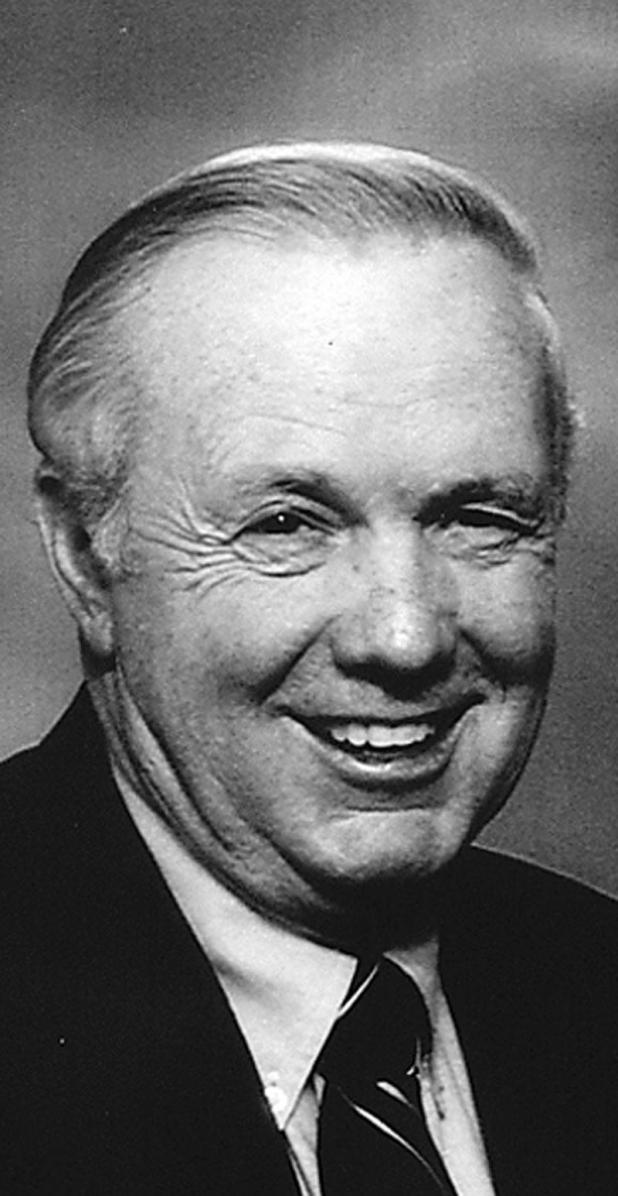
B.I. Moody III

Moody inducted into LPA’s 50-Year Club

Braxton “B.I.” Moody III was inducted to the Louisiana Press Association’s 50-Year Club at the association’s annual stockholders meeting June 22.
LPA’s 50-Year Club honors and recognizes men and women who have 50 years or more cumulative professional affiliation with newspapers and news websites, including ties to Louisiana.
Affiliation can include time other than as a full-time employee. Work as a carrier or delivery person, as a stringer, or free-lance writer, for the college paper, or full or part-time work in any aspect of a newspaper or news website’s operation can count towards the 50 years.
Moody’s newspaper career began 57 years ago when he acquired the Rayne Acadian-Tribune and Church Point News in 1963.
He later launched the Crowley Post Herald which eventually merged with the competing Crowley Daily Signal, resulting in the Crowley Post-Signal in 1974. During the next three decades Moody’s newspaper group, Louisiana State Newspapers, acquired several other newspapers around Louisiana and today owns and publishes 22 newspapers.
Moody believes that every community should have a voice and that voice should be a local newspaper.
Currently, Moody is chairman of The Moody Company and of Louisiana State Newspapers, Inc., both headquartered in Lafayette.
The University of Louisiana at Lafayette renamed its College of Business Administration after Moody in recognition of his service to the business industry in Acadiana as well as his community involvement.
He graduated from Rayne High School and attended Auburn University. His college career was interrupted by service in the United States Navy during World War II. After the war, Moody returned and entered then-SLI where he earned a Bachelor of Science degree in accounting.
Following graduation, Moody was the founding partner in the CPA firm of Moody, Broussard, Poché & Guidry. He also served as president and chief executive officer of Chart House, Inc., in Lafayette and chairman of the board for First National Bank of Lafayette.
His services on boards include Rayne State Bank & Trust Company, First National Bank of Crowley, Acadia Savings and Loan Administration, First Commerce of New Orleans, Coastal Chemical Company of Abbeville, Lastarmco, Inc., of Abbeville, Riviana Foods, Inc., of Houston, Celeron Oil Company, Inc., of Lafayette and Quantum Restaurants, Inc., of New York.
Moody was married to the former Thelma Hebert of Rayne for 70 years prior to her death in 2017. They are the parents of nine children, grandparents to 48 grandchildren and have numerous great-grandchildren.
To date, LPA has the following as members of the 50-Year Club:

2020
B.I. Moody III
Louisiana State Newspapers

2019
Henri Bienvenu
Teche News
Tom Kelly
Ruston Daily Leader/
Natchitoches Times

2017
Pam Mitchell
Louisiana Press Association

2016
Lou Gehrig Burnett
Political Columnist &
Fax-Net Update
Paul Kedinger
Rayne Acadian-Tribune

2014
Melba West
West Carroll Gazette (Oak Grove)

2012
David B Petty
The News-Star (Monroe)
Jerry Pierce
Northwestern State University,
Natchitoches

2011
Charles N. Lenox
University of Louisiana
at Lafayette

2010
Diana Daigle
Church Point News

2008
Ray Forman
The Bunkie Record

2007
Edwin Roy
St. Bernard Voice (Arabi)

2006
Jerry Byrd
Bossier Press-Tribune
(Bossier City)
Allen J. Lottinger
St. Charles Herald-Guide (Boutte)
Ted Uhall
The Daily Iberian (New Iberia)

2005
William J. Holliday
The Baker Observer
Sammy J. Franklin
The Jena Times
Olla-Tullos-Urania Signal
Porteous “Dickie” Broussard
The Daily Iberian (New Iberia)

2004
Jerry & Joy Wise
DeQuincy News
Raymond P. “Doc” Jeffress
Jackson Independent (Jonesboro)
Robert Gentry
The Sabine Index (Many)
Sam A. Hanna Sr.
Concordia Sentinel (Ferriday)

2002
John Blanchard
The Enterprise and
Interstate Progress (Mansfield)
Lovan Thomas
Natchitoches Times

2001
Annabelle McGuire Armstrong
South Baton Rouge Journal

2000
Fred “Pat” Achor
The Times-Picayune
(New Orleans)
Vera Hardman
St. Tammany Farmer (Covington)

1999
Sue Eakin
The Bunkie Record (Bunkie)

1998
Vincent Marino
The Advertiser (Lafayette)
Adolph C. Renaud
The Times (Shreveport)

1997
Bernard Curet
Pointe Coupee Banner
(New Roads)

1996
Robert H. Fackelman
Jennings Daily News
Peter Finney
The Times-Picayune
(New Orleans)
Douglas L. Manship, Sr.
The Advocate (Baton Rouge)
Clyde S. Miller
Madison Journal (Tallulah)
Anne K. Price
The Advocate (Baton Rouge)
Evelyn Short
The Advocate (Baton Rouge)
Joe D. Smith Jr.
Alexandria Daily Town Talk
Erbon and Marie Wise
Southwest Daily News (Sulphur)

1995
Bill Irwin
Amite Digest, Kentwood News

1994
Joseph Bosley
Madison Journal (Tallulah)
Lou Major Sr.
The Daily News (Bogalusa)
Willis Reed
Baton Rouge Post

1993
Fred Bandy
The Daily Iberian (New Iberia)
Frank J. Budde
The Times (Shreveport)
Earl Cobb
The Times-Picayune
(New Orleans)

1992
Ansley H. Colvin, Jr.
The Jackson Independent
(Jonesboro)
Lester G. Colvin
The Jackson Independent
(Jonesboro)
T.L. Colvin, Sr.
The Jackson Independent
(Jonesboro)
Bill Chapman
Bastrop Daily Enterprise

1991
Ray F. Dill
Houma Daily Courier
Ivy J. Smith
Houma Daily Courier
L.D. Young, Jr.
West Side Journal (Port Allen)
A.N. Dawson, Jr.
Alexandria Daily Town Talk

1990
Ralph Bienvenu,
Abbeville Meridional
Jo Cart
Rayne Independent
Myrta Fair Craig
Rayne Acadian-Tribune
Charles P. Manship, Jr.
State Times-Morning
Advocate (Baton Rouge)
William C. Risinger
Alexandria Daily Town Talk

Article Image Alt Text

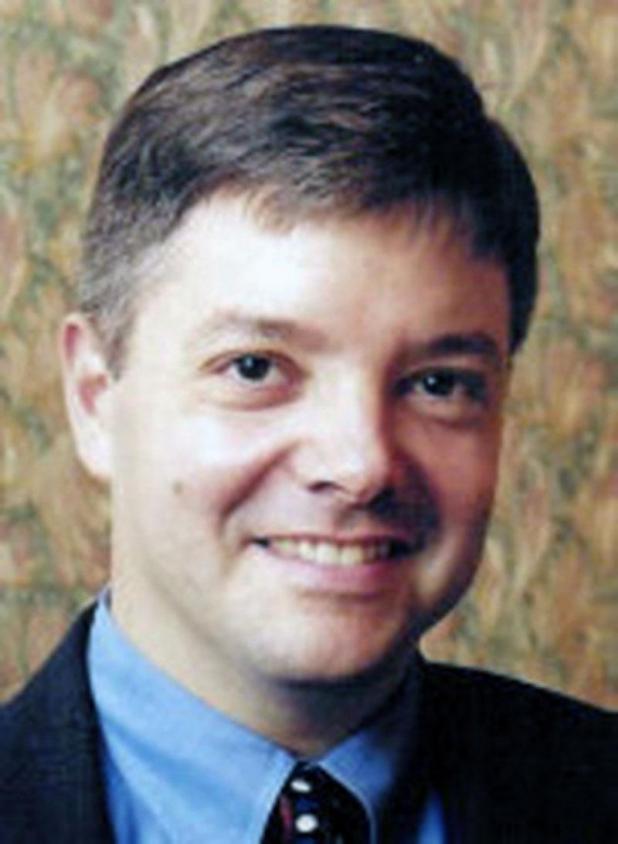
Jeff Crouere

Trump unbowed after five years of abuse

On June 16, 2015, the future President and his wife rode down the escalator at Trump Tower in New York City and the political world will never be the same. The occasion was the presidential announcement speech of Donald Trump. Previously, Trump had considered running for President in 1988, 2000 and 2012. Each time, the allure of his real estate and media businesses kept Trump away from the race. This time, he realized it was his last chance to run and he seized the opportunity.
The announcement speech was made before a packed crowd of boisterous supporters. The speech was pure Trump. He railed against bad trade deals and open borders. It was surely politically incorrect, and the media was appalled.
As a television personality and real estate mogul, Trump was not a threat to the media, in fact, he was an amusing curiosity who garnered mostly positive coverage. As a presidential candidate, Trump was a risk to the political system controlled by an entrenched establishment of both parties and supported by the corrupt news media.
As an independently funded businessman turned presidential candidate, Trump was a wild card. He did not need to make deals for donations. He gave voters his unvarnished opinion on the issues and that made him incredibly popular.
His initial foray into presidential politics infuriated the politically correct media. For example, regarding Mexico, Trump said, “They’re bringing drugs, they’re bringing crime, they’re rapists. And some, I assume, are good people.”
Immediately he was criticized and ostracized by NBC and the Miss Universe pageant. Amazingly, he stood firm and did not apologize, what most Republican politicians do during a controversy. One month later, he refused to express regret despite being eviscerated for criticizing the war record of U.S. Senator John McCain. Both controversies would have sunk any other candidate.
Trump faced universally negative media coverage and constant hostility from the establishment of the Republican Party. The party elders were in favor of any of the 16 candidates running against him. To their disbelief, they could not defeat him, and Trump garnered enough delegates to secure the GOP nomination.
It did not stop party insiders from trying to steal the nomination from him at the convention. Fortunately, he prevailed and strode into the general election against a very underhanded opponent, Hillary Clinton.
During the presidential campaign, the media and the Democrats unveiled a secret weapon they were convinced would finish his campaign, the infamous Access Hollywood tape. Trump’s controversial comments were taped without his knowledge on a bus at a TV production in 2005. It was released at a time to maximize damage to Trump. Surely, his opponents thought this would finally destroy him.
Instead, he fought back at the next presidential debate and brought with him three women who had accused Bill Clinton of varying degrees of sexual assault, including rape. He defused the scandal but in the final weeks faced a news media arrayed against him, social media bias and search engine manipulation engineered to harm his candidacy. To make matters worse, Clinton outspent him by a 2-1 margin.
Not surprisingly, the media never gave Trump any shot of beating Hillary. This surely diminished his turnout, which was their goal. Reporters touted the polls showing Hillary comfortably ahead of Trump. On Election night, when Trump was declared the victor, their anguished faces will always be remembered with delight by the President’s supporters.
Most winning presidential candidates receive a honeymoon, but not Donald Trump. He was harassed from the very beginning. From the efforts to overturn the results of the Electoral College to the boycott of his inauguration to the women’s march in Washington D.C. to the phony Steele dossier being revealed by a deceitful media, Trump was under constant attack.
It has never gotten any easier for the President. The Steele dossier, paid for by the Clinton campaign, led to a two-year Mueller investigation to determine whether Russia colluded with the Trump campaign. It found no collusion and proved no obstruction of justice.
In the investigation, Trump colleagues were badgered, indicted, and imprisoned for activities that had nothing to do with “Russian collusion.” In contrast, Hillary Clinton was exonerated for sending top secret and classified emails on an unsecured computer. Members of a biased Department of Justice who attempted the de-facto coup d’état of the President were never penalized with criminal indictments.
While the Mueller probe was ongoing, investigations were launched into his relationship with Stormy Daniels, his tax returns, his businesses, and his private foundation. All were conducted by a partisan House of Representatives.
Eventually, his phone call with the President of Ukraine was leaked and investigated. This led to hearings and his eventual impeachment by congressional Democrats, without a single Republican vote. The Senate trial resulted in a partisan effort to convict the President that generated only one GOP vote, well short of the necessary margin for removal.
Immediately thereafter, the Covid-19 crisis forced the government to shut down and the President was blamed for everything from virus deaths to the economic woes of the country.
Thereafter, the George Floyd murder sparked countrywide protests that often degenerated into disastrous riots. As the President tried to restore order, he was blasted by critics for threatening to use the U.S. military.
No matter what he does, his many opponents will criticize him. Independent analysts show that the mainstream media coverage of Trump has been 95% negative.
Recently, the media have returned to hyping the threats of Covid-19 and criticizing the President for staging his Tulsa rally, even though they commended the Black Lives Matter protesters.
As he faces re-election, powerful forces are arrayed against him and the polls show him losing to the unimpressive and clueless Joe Biden. Make no mistake, there will be a full court press to defeat him in November.
Nonetheless, Americans would be wise not to count out the man who has defied all expectations from the day he came down the escalator.

Jeff Crouere is a native New Orleanian and is a political columnist, the author of America's Last Chance and provides regular commentaries on the Jeff Crouere YouTube channel and on www.JeffCrouere.com. For more information, email him at jeff@jeffcrouere.com

Article Image Alt Text

Louisiana to begin spending $811 million in federal COVID-19 aid

BATON ROUGE – More than 450,000 Louisiana small businesses may be eligible for grants under a federally funded COVID-19 relief program, State Treasurer John Schroder said Monday.
The Louisiana Main Street Recovery Program fund contains $300 million. So if Schroder’s estimate is close to accurate, the grants for each business could be less than $700, though there is no way to know yet how many will apply or how much they will request. The maximum possible grant amount is $15,000.
“It’s not going to go far,” Schroder said. “I hope we run out of money. I hope we’re standing here four months from now and we’ve given out every penny.”
The federal government allocated $1.8 billion to Louisiana’s state government. Initially, $811 million was to be set aside for local governments, though Louisiana lawmakers decided to carve out $300 million from the local portion for the business fund.
The Joint Legislative Committee on the Budget, which met Monday, oversees how the money is spent. Schroder’s office is responsible for the business fund, which he expects to launch in early July. The office has issued a request for qualifications to find a consultant for the program, he said.
Companies must have no more than 50 employees and be based in Louisiana to be eligible. For the first 21 days, companies that already have obtained disaster assistance from the federal government or an insurance payout are not eligible. Examples of qualified expenses include losses caused by mandated closures or decreased customer demand, or costs associated with extensive cleaning or buying personal protective equipment.
The state law, passed during this year’s regular session, calls for $40 million to be set aside for minority-owned businesses. Schroder said that portion of the fund will be doled out through what essentially will be a separate program.
House Speaker Clay Schexnayder said he wanted the money to get out as quickly as possible. While the Louisiana Legislative Auditor will help to ensure only eligible expenses are compensated, Schroder said he didn’t want to slow down payments to the 90 percent of people he expects to follow the rules to try to stop the other 10 percent, which he said is about the national average for fraud.
Gov. John Bel Edwards’ Division of Administration is distributing the $511 million currently allocated to local governments. The first round of reimbursements totaling $153 million will start going out next week, Commissioner of Administration Jay Dardenne said. Nov. 1 will be the latest possible deadline to apply for the program, which must exhaust its funds by the end of the year or else send the remaining money back to the federal government.
Any money local officials don’t claim can be shifted to the business fund, though Dardenne doesn’t think there will be much if any left over. The state’s formula for deciding the maximum amount any parish could be eligible is based 70 percent on their number of COVID-19 cases and 30 percent on population, Dardenne said.
Rep. Blake Miguez, an Erath Republican, urged the administration to do more to work with local leaders to ensure everyone gets their fair share. Rural parishes that don’t have large staffs and may not fully understand how the program works might otherwise be at disadvantage compared to governments in larger cities, he said.

Article Image Alt Text

THE POST-SIGNAL / Steve Bandy
U.S. Congressman Clay Higgins was in Midland Tuesday morning to address area crawfish farmers concerning federal funding from the Coronavirus Aid, Relief and Economic Security (CARES) Act.

CONGRESSMAN HIGGINS ADDRESSES CRAWFISH FARMERS

MIDLAND — Coronavirus relief dollars are out there for crawfish farmers in South Louisiana. Getting to it, however, might be a little tricky.
U.S. Rep. Clay Higgins addressed about 60 crawfish farmers and producers at the Thibodeaux Brothers Farm in Midland Tuesday morning to help explain the process.
The Republican Congressman from the 3rd District first reviewed the steps taken by the federal government in response to the coronavirus pandemic, adding that he was not in favor of a nationwide shutdown of businesses.
“If you have a wreck in Crowley or Lafayette, you don’t shut down the streets in Monroe,” he said. “Since day one I have supported the states’ rights to make a decision.”
He said the decision to “shut down consumption” had the biggest impact on farmers — all farmers.
“My office was very involved in writing the CARES (Coronavirus Aid, Relief and Economic Security) Act, but the bill that was passed was not the bill I would have written — not 100 percent,” he said.
However, he touted the “tremendous accomplishment” of Representatives and Senators in getting “the largest financial relief package in the history of the world pushed through in six days.
“I supported the CARES Act because it sent money straight to American workers through community banks.”
Through the Act, Higgins said the U.S. Department of Agriculture is “very well-funded with relief for American farmers.”
But, because crawfish farmers were “lumped in” with aquaculture, “access to that money is a little different from a traditional crop farmer.”
Higgins said he was not happy with the decision to include crawfish farmers with “salmon farmers and catfish farmers,” but added that he “understood from a national perspective.”
Any aid to crawfish farmers will come out of a $637 million pool but “because crawfish farmers have traditionally not been engaged with USDA,” determining the amount of aid is still up in the air.
A recent survey by USDA and LSU determined that crawfish farmers lost an average of about 81 cents per pound and left more than 14 million pounds of crawfish in ponds when restaurants, schools, caterers, etc. were closed.
Turning to the harvesters of wild crawfish, Higgins said they are being treated differently “because that’s considered fishing, not farmed as a crop,” therefore, not considered “farmers.”
He said he and other Congressmen are working to remedy that situation.
“There is still billions of dollars in the CARES Act,” Higgins said. “Finding appropriate means of getting at it and getting it to the right people is the biggest challenge. Every American family has been impacted negatively by COVID-19.
“Your access to relief funding is a narrow path and you’re going to have follow the rules, but we will be there to help you navigate it.”

Article Image Alt Text

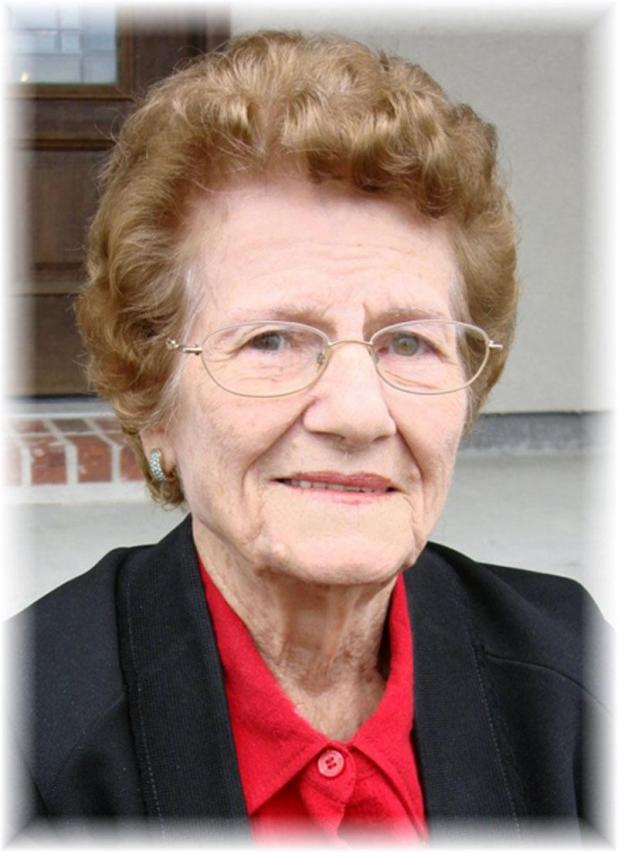
Donna Lange Breaux

ERATH – Funeral services for Donna Lange Breaux, 67, will be held Friday June 26, 2020, at 2:00 PM at Our Lady of Lourdes Catholic Church in Erath, with Fr. Sam Fontana officiating.
Visitation will be held Thursday June 25, 2020 from 10:00 AM until 8:00 PM with a Rosary recited at 6:00 PM, and will continue Friday from 9:00 AM until time of service. Burial will held in St. Paul Cemetery in Abbeville.
Survivors include her husband Claude “C.J.” Breaux of Mamou; her son John Steve “Buck” Touchet II and his wife Kisha of Delcambre; two daughters Tricia Trahan of Mamou, and Regan Touchet of Rayne; step children Chris and his wife Christie Breaux of Cow Island, Colby and his wife Daria Breaux of Meaux and Josette Breaux of Lafayette; her grandchildren Layne and his wife Lesley Touchet, Devin Trahan, Skyler Mayeaux , Jayden Gardner, Bailey Marceaux, Dylan and his wife Tori Marceaux, Dacotah Marceaux, Kelsi Touchet, Kennedi Touchet, her step grandchildren Brady Breaux, Megan Breaux, , Cody Breaux, Cayne Breaux, Demee Breaux, Kailee Breaux, and Shelbee LeJeune; and seven great grandchildren. She is also survived her sibling Kerry and his wife Jackie Lange of Erath, Monica and her husband Bill Daniels of Hayes, and Kittie and her husband Scott Durman of Erath.
Donna was preceded in death by two sons Jarret Emile and Jonah Shane Touchet; her parents Nelson Lange Jr. and Merlyn Broussard Lange; and sister Carla Lange Bourgeois.
Condolences may be sent to the Breaux family at www.davidfuneralhome.org
David Funeral Home 209 E. Putnam 337-937-0405 is in charge of arrangements.

Article Image Alt Text

Trisha Michelle LaGrange Landry

ERATH – Funeral service for Trisha Michelle LaGrange Landry, 46 will be held in David Funeral Home of Erath on Wednesday June 24, 2020 at 2:00 PM with Pastor Dick Menard officiating. Burial will follow in Our Lady of Lourdes Mausoleum.
Visitation will be held Wednesday June 24, 2020 from 10:00 AM until time of services, with a Rosary recited at 11:00 AM.
Trisha was a resident of Erath, she loved dancing, shopping, and spending time with family and friends, but she will be best remembered for her love of people, and her gift giving, Trisha passed away Saturday June 20, 2020 this is her first heavenly father’s day with her dad.
Survivors include her mother Nelona R. and her husband W.L. Davis: two sisters Melissa and her husband Trent Jabbia, and Suzanne and her husband Nick Inzerella; her brother W.L. “Dub” Jr. and his wife Tarrah Davis; her nieces and nephews Ashley, Amber, Zane, Allison, Alex, Kennedi, William, Chloe, and Kenzie; great nephew Jayden.
She was preceded in death by her father Michael LaGrange.
You may sign the guest register book and express condolences online at www.davidfuneralhome.org
David Funeral Home 209 E. Putnam 337-937-0405 is in charge of arrangements.

Article Image Alt Text

Willie André Broussard

With a heavy heart, we say good-bye to Willie André Broussard, who peacefully passed away on June 22, 2020. For over 45 years, he served as a public servant in Vermilion Parish, with great dedication and compassion as a high school math teacher and administrator for the Village of Maurice.
Born in Maurice, LA on July 2, 1931, he was the 8th child of 10. He was the son of the late Jean Camille Broussard and the former Ada Hebert. He was best known as a high school math teacher. Over the years, many of his students have shared with us and with him how “Mr Willie’s” guidance and dedication was instrumental in choosing or advancing their careers. He was always so honored to hear their accolades.
Mr. Willie “Willie B” was widely known for his French song, “Brasse don l’Cush Cush.” He wrote it to reflect the times after World War II in South Louisiana where many Acadians migrated to South Texas looking for work. He recorded the original 45 rpm record and it has been re-recorded by numerous artists since then, and is sung at Dwyer’s Café each Wednesday morning by a local Cajun language preservation group, la Table Francais. He also wrote and recorded two Christmas songs, “Santa in Bayou Land” and “Put Christ Back into Christmas”. For his contributions to the French music culture, he was presented with the Heritage Award by the Cajun French Music Association in 2000 as well as inducted into the Acadian Museum Living Legends Program in 2014.
He led a colorful and varied life. As a youth, he was fortunate enough to work on both of the Hadacol caravans, where he operated the sound truck announcing to the crowds the soon-to-arrive miracle of the Hadacol elixir. The caravan traveled the entire country, thus affording him the opportunity to meet many of the great singers and actors of that era. He performed with the Abbey Players in Abbeville. He worked as a French-speaking disc jockey on KROF radio station in Abbeville. He was asked by many to sing at weddings and funerals. He was a servant of God as well as a lector, an auctioneer, inventor, draftsman, master craftsman, visionary, and could fix anything with a coat hanger.
Mr. Willie graduated from Maurice High School and went on to earn a Master’s in Mathematics from The University of Southwestern Louisiana (USL). He taught Mathematics and Industrial Arts for 30 years at Abbeville High, Maurice High and North Vermilion High. In the mid-60s, he served as the president of the Vermilion Parish Teachers Association. In addition to teaching, he coached high school baseball and basketball where he was instrumental in bringing high school baseball back to the Vermilion Parish area. Through his perseverance, he spearheaded the creation of the Maurice High School baseball team, which at the time, was the first and only team in the parish to participate in high school baseball. Subsequently, the surrounding schools followed suit in developing their own programs.
Mr. Willie was always interested in the development of the youth. When many kids were left out of the local youth baseball program, he created and coached the Maurice Volunteers Little League Team, which participated in the Bayou Boys Little League program, thus affording many local youths the opportunity to play baseball.
Before and after he retired from teaching, he served as administrator for the Village of Maurice where he promoted and oversaw many improvements to the village such as the municipal water and sewer system and the promotion/development of the Maurice Park.
Mr. Willie married Joyce Love Hebert in 1956 and they celebrated 54 years of marriage. He was very proud of his Cajun heritage and has passed that passion on to his seven children, 18 grandchildren and five great-grandchildren.
He is survived by his sisters, Alice Broussard Schroeder and Faye Broussard Prejean; his children, Gwendolyn “Gabby” Broussard, M. Garrett Broussard, Bryan Broussard (Twyla), Damian Broussard (Jennifer), Diana Broussard Eppard (Larry), Phyllis A. “Annie” Broussard Kananack (Tabatt Laven) and Rexie Broussard (Kathy); grandchildren, Brandt Broussard (Stacy), Heidi Broussard LeDoux (Mike), Callie Broussard Ford (Fred), Jordan Broussard, Chloe Broussard Hanson (Jeff), André Broussard, Gage Broussard, Rhece Broussard, Elizabeth Eppard Westling (Chad), Stephanie Eppard, Jack Eppard, Lily Eppard, Travis Kananack, Quinn Kananack, Dashiell Kananack, Chase Kananack, Austin Broussard and Morgan Broussard; and his great-grandchildren, Jacque, Jackson, Henry, Cade and Trevor.
He was preceded in death by his wife of 50 years, Joyce Love Hebert Broussard; his parents, Jean Camille and Ada Broussard; brothers, Edward, Lastie, Wallace, John and Walter Broussard; sisters, Doris Broussard Dartez and Gladys Broussard Trahan.
Whether Mr. Willie, aka Coach Willie or Willie B., was starting the wave at Dodgers Stadium, leading the crowd in song at the Kentucky Derby or teaching himself sign language to communicate with a new employee with the Village, he was always sharing his love for his fellow man and his overall Joie de vivre.
The family requests that visiting hours be observed at Delhomme Funeral Home on Thursday, June 25, 2020, from 4:00 PM to 9:00 PM. A Rosary will be recited at 7:00 PM on Thursday evening in the funeral home. Visiting hours will continue Friday, June 26, 2020 from 8:00 AM until the time of service.
Pallbearers will be Garrett Broussard, Bryan Broussard, Damian Brousssard, Rex Broussard, Larry Eppard and Tab Laven.
A Mass of Christian Burial will be held at 11:00 AM on Friday, June 26, 2020, in St. Alphonsus Catholic Church for Willie André Broussard, 88, who passed away on June 22, 2020.
Fr. William Schambough, Pastor of St. Joseph Catholic Church, will serve as Celebrant of the Mass and will conduct the funeral services.
Burial will take place in St. Alphonsus Mausoleum.
Personal condolences may be sent to the Broussard family at www.delhommefuneralhome.com.
Delhomme Funeral Home, 200 Chief H. Fred Road, Maurice, LA is in charge of funeral arrangements.

Article Image Alt Text

Jamie Bergeron worked for Acadian Ambulance for 30 years.

Cajun musician Jamie Bergeron fired by Acadian Ambulance after posting cartoon

A Cajun musician is without a job after he was fired because of a cartoon he posted on the Internet.
Jamie Bergeron of Jamie Bergeron and the Kickin’ Cajuns, a successful recording group with at least seven albums and a successful touring, nightclub and festival schedule, got into trouble after posting a cartoon of a car hitting protesters in a roadway under the heading, “All Lives Splatter.” Another post suggested “my brakes have been acting up” when referencing people who protest in the roadways.
On Tuesday, Acadian Ambulance fired Bergeron because of the cartoon he posted. He had worked for Acadian Ambulance for 30 years.
Acadian Ambulance released a statement about the firing of Bergeron.
“We feel that while it is not the standard policy of Acadian Ambulance Service to provide public information regarding internal disciplinary matters, it is important to our Acadian family and the communities we are honored to serve that we both acknowledge and communicate the action that we have taken in the matter involving Jamie Bergeron. Mr. Bergeron’s employment with Acadian Ambulance Service has in fact been terminated.
“The posts and underlying insensitivity and disrespect shown by the posts are not in any way representative of our Company, our beliefs and values, and the extraordinary work of the men and women who work for Acadian. We humbly ask for consideration, as we have all been reminded of in these trying times, that one person and their actions do not represent the whole of one community, one gender, one race, one religion or one company.
“The overwhelming good work and sacrifice made every day by our 4,800 employee-owners should not be overshadowed by the actions of one individual. As an emergency services company, we move very quickly and we have done so in this instance as well. However, we are taking the necessary time and opportunity to look further into our company and our practices to assure that we are doing our part to educate and create awareness and a sense of renewed respect for the value of a diverse workforce and the importance of the current Black Lives Matter movement.
“Know that we have received your phone calls and read your texts. The management and 4,800 employee-owners of Acadian Ambulance Service value the trust the public places in us to care for them. Derogatory actions by any employee who blatantly violates that trust will not be tolerated.”

Article Image Alt Text

Jim Bradshaw

Prohibition and the good Bordeaux

When Prohibition became the law of the land, it was not very popular in south Louisiana. I’m told that some of the best illegal whiskey made anywhere during those supposedly dry days came from communities along Bayou Teche, and that smuggling in factory-made stuff was a substantial enterprise along parts of the Louisiana coast and in the Atchafalaya Basin.
The ban on booze went into effect on Jan. 17, 1920, when the Volstead Act spelled out how the 18th Amendment to the U.S. Constitution would be implemented. The Louisiana legislature had ratified the amendment by only a narrow margin in November. Legislators from north and central “dry” parishes scraped together just enough votes to overcome vigorous objections from New Orleans and the “wet” parishes of south Louisiana.
But then French Louisiana found an unexpected ally in Mrs. Chauncey Olcott, a woman in Paris who mounted a serious, though short-lived, legal fight, claiming that Louisiana should have been exempt from the law altogether because of our French heritage.
She argued that the Louisiana Purchase treaty between France and the United States in 1803 gave France the perpetual right to send liquor to the Louisiana Territory, and that the treaty superseded the prohibition amendment She maintained that the treaty was international law, while the Constitution was limited only to the United States.
The New York Times reported the story on Aug. 6, 1922, and said that U.S. constitutional lawyers were “unimpressed” with her argument.
It could have been a big problem if she was right. Said the Times: “Officials ... pointed out that if France possessed any such treaty right, superior to the American Constitution, the great belt of States west of the Mississippi ... would again become wet.” That would include not only Louisiana, but Arkansas, Oklahoma, Colorado, Kansas, Iowa, Minnesota, North and South Dakota, Idaho, Montana, Oregon and Washington.
“The Washington viewpoint,” the Times said, “is that no treaty can rise superior to the Constitution. It has been repeatedly held by the Supreme Court that treaties, like law, to be valid must be constitutional and that any treaty contravening the Constitution must fall of its own weight.”
Scholars said the key fault in Mrs. Olcott’s argument was that the treaty granted rights to France in “the Louisiana Territory.” They said parts of the treaty that protected French trade while Louisiana was only a territory may have had some validity, but that the 1803 treaty became generally moot once Louisiana became a state.
It does not appear that the case ever actually went to court, so Prohibition continued to be observed in Louisiana, but not as religiously by the people of south Louisiana as in some other places. Lots of them took full advantage of the fact that it was never illegal to drink during Prohibition. The law never actually banned consumption of alcohol — just making it, selling it, and shipping it. If you could get it, you could drink it.
That kept a good many folks busy making their own replacements for the good French Bordeaux Mrs. Olcott wanted to sell us, or running out into the Gulf to meet boats hauling crates of fine scotch or good bourbon distilled someplace else.
A ditty of the day sums up the attitude in much of south Louisiana:
Momma makes brandy from cherries;
Poppa makes whisky and gin;
Sister sells wine from the grapes on our vine —
My gosh, how the money rolls in!
A collection of Jim Bradshaw’s columns, Cajuns and Other Characters, is now available from Pelican Publishing. You can contact him at jimbradshaw4321@gmail.com or P.O. Box 1121, Washington LA 70589.

Pages

Vermilion Today

Abbeville Meridional

318 N. Main St.
Abbeville, LA 70510
Phone: 337-893-4223
Fax: 337-898-9022

The Kaplan Herald

219 North Cushing Avenue
Kaplan, LA 70548