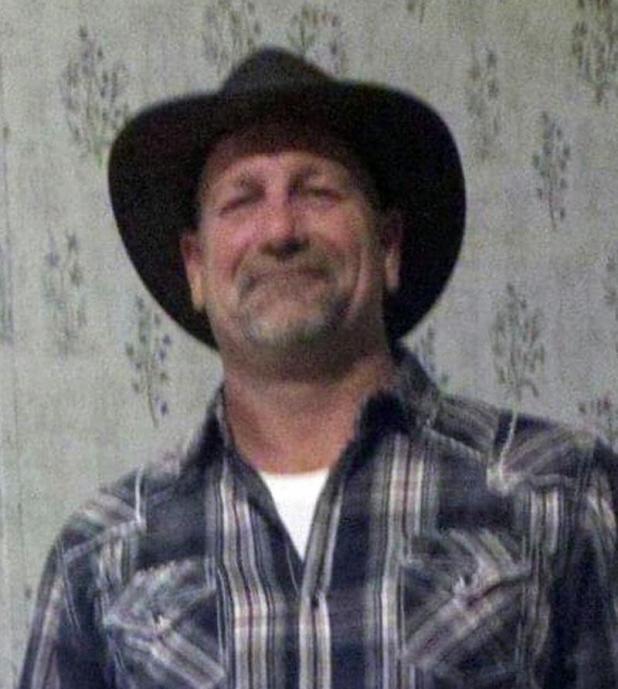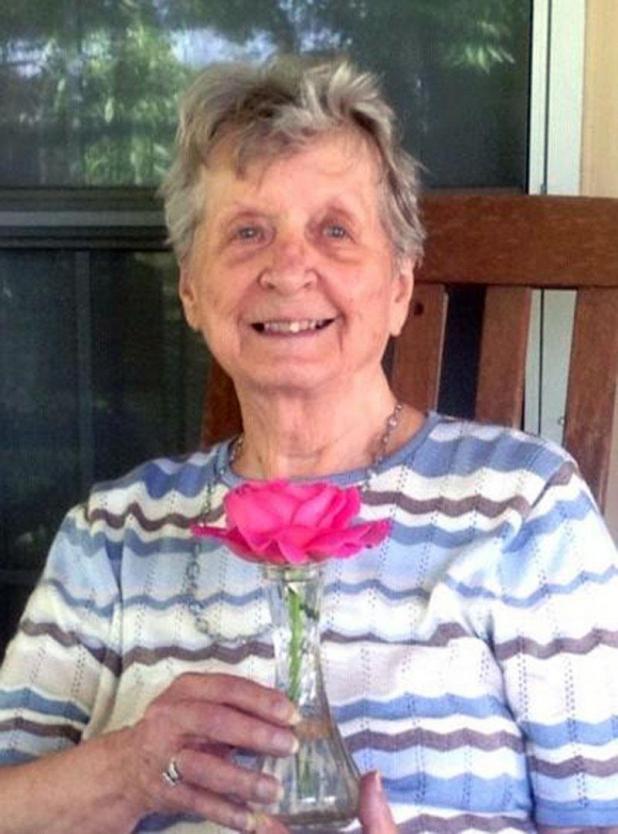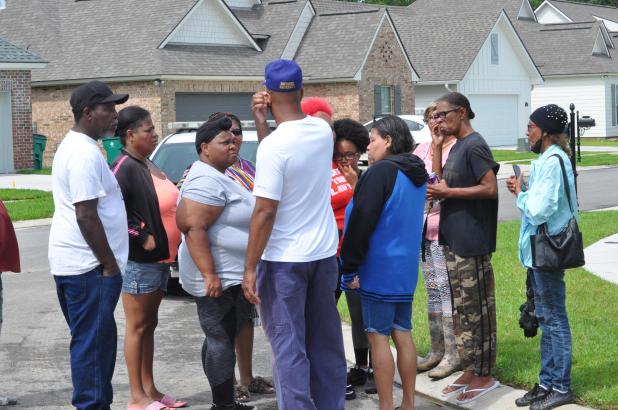
Marcus Duhon tells family and friends that the body found was Cleveland Duhon.
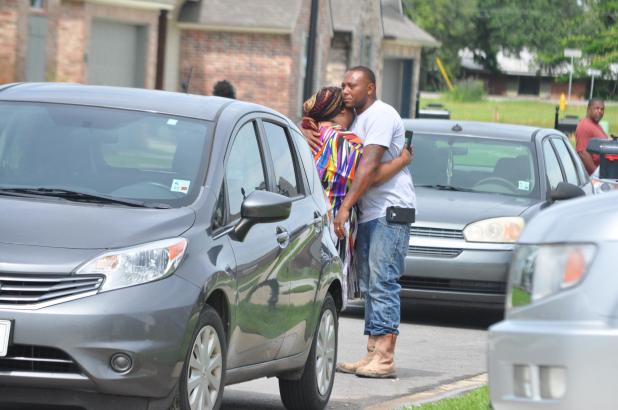
Family members hug after the tragic news.
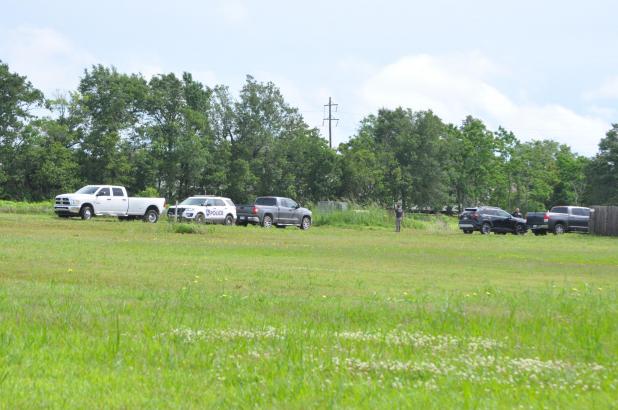
Law enforcement were on scene not long after the body was located.
Maurice man's body found 1,200 feet away from car crash
MAURICE - Family and friends of 45-year-old Cleveland Duhon received word that a body had been found in a drainage canal about four football fields away from where Cleveland Duhon’s car plunged into a coulee off Etienne Street in Maurice.
They got word about 9:30 Thursday morning and it did not take them long to gather in the neighborhood of Prairie Cove Subdivision, located south of where Duhon’s car wrecked.
According to Maurice Chief of Police Guy Nerren, a body was removed from the canal. His brother, Marcus Duhon, identified the body as Cleveland Duhon by looking at a photo.
The search began Thursday morning again for Cleveland Duhon. Nerren said law enforcement walked the banks of the drainage canal from Maurice to La. 699 and the La. 167 intersection.
A friend said he did not think Cleveland had a chance to survive when he escaped from his vehicle due to the strong current.
“I don’t think he would have survived even if he knew how to swim,” said the friend who did not want to be identified. “It just pulled him under.”
Nerren said the window was down on the driver’s sideof his vehicle, and he believes Cleveland Duhon was able to get out through that window.
On Monday at around 9:10 p.m., a surveillance camera near the coulee captured Cleveland Duhon’s car turning into the waterway and plunging below the surface into the coulee.
Nerren said Cleveland Duhon’s vehicle was discovered by a law enforcement patrol around 2:30 a.m. Tuesday after the vehicle began to protrude from the water. The vehicle was recovered, but Duhon was nowhere to be found, he said.
Cleveland Duhon had just left his mother’s house, which was five minutes away from the crash.