RSS Feed

Article Image Alt Text

North Vermilion senior Caleb Reese and his classmates made signs that they held as they marched to the school board’s central office.

Article Image Alt Text

The protesters stayed six feet apart as they protested to interim superintendent Brad Prudhomme who was in his office at the time.

Graduation Protest Held in Vermilion Parish

Parents, seniors want to have one large graduation, not individual graduations

A group of Vermilion Parish graduating seniors and parents held a protest on Tuesday to try to change the way seniors will graduate this year.
Interim Superintendent Brad Prudhomme, said there will be no large gatherings for high school graduations. Prudhomme announced last week that each graduate would be handed a diploma in front of only five family members and a small group of school staff members. A photo will be taken of each graduate, and then they will walk away, and another student and family members will arrive.
Each graduate will be given 10 to 15 minutes. The process for Abbeville, Erath, Kaplan North Vermilion High schools, could take two, 12-hour days because each school has at 120 graduates. It will take one hour to graduate six seniors.
Graduations will occur between May 14 through May 17 in Vermilion Parish.
Prudhomme decided on this method because of the COVID-19 pandemic and not being allowed to gather in large groups.
Last week when it was announced how graduation would take place, some seniors were not happy.
Two Abbeville High seniors who attended the protest want to graduate with their classmates.
Zah’ Kereya Bell and Coriana Willis were hoping their voices could help change Prudhomme’s decision on having individual graduations instead of one big graduation.
Willis said she wants graduation like the one in Calcasieu Parish, which is expected to be large with the entire class at a football stadium.
“They (Calcasieu) will have it at a stadium, along with a certain number of people who can attend,” said Willis. “[Vermilion Parish] School officials did not take into consideration all of the hard work we (seniors) put into school.”
Bell added, “We put in 12 years, and we are not getting a proper graduation. We missed out on our prom and our banquet.”
The two AHS seniors said they found out about their graduation on the Internet, and if nothing changes, both girls said they will not attend the individual ceremonies. They will go pick up their diploma the next day.
The two seniors and a handful of Abbeville High, North Vermilion, and Kaplan seniors met in Magdalen Square Tuesday at 11 a.m.
North Vermilion senior Caleb Reese orchestrated the protest by inviting people and students to join him.
“We are protesting against the individual graduations,” said Reese before the march. “We think they made a decision too soon. We want them to push it back and re-look at another date.”
Reese said school officials should wait to hear what Gov. John Bel Edwards says on May 15, in regard to lifting the stay-at-home order and opening all businesses in Louisiana.
“We think they made a decision too soon,” said Reese.
From Magdalen Square, the group of around 30 people marched to Central Office, where superintendent Brad Prudhomme was in his office. The group yelled, “Wait to let them graduate.” In other words, hold graduation In June or July.
After about 15 minutes of chanting, Prudhomme went to meet the group outside and answered questions about graduation. Some parents voiced their concerns about having only five family members, while others said they would have transportation issues.
Prudhomme thanked them and said he was not making any promises about changing graduation but said he and his staff would talk about graduation ceremonies once again.

Article Image Alt Text

Brad Pruhomme

Vermilion Parish School Board in no hurry to begin search for new superintendent

How long will interim superintendent Brad Prudhomme keep the word “interim” in front of his name?
The answer to that question is for at least another 90 days.
At Thursday’s three-hour school board meeting, school board member Chris Gautreaux wanted to begin the search for a permanent superintendent. He said the entire process could take anywhere from 60 to 90 days.
“It is important we have a superintendent in place before the start of the next school year,” said school board member Kristy Hebert.
School Board member Laura LeBeouf encouraged the board to wait until Gov. John Bel Edwards lifted the stay-out-home ban in the next 10 days.
Gautreaux said the process of finding a new superintendent will take at least two months. He said principals would like to know who their leader will be before the school year begins.
School Board Member Charlotte Detraz, who was at home and watching the meeting on video, said she did not think it was a good idea to begin looking for a new superintendent until the school board is finished paying the salary of former superintendent Jerome Puyau.
The school board is still paying Puyau $12,000 a month through September 8 because of a settlement the school board and Puyau reached.
Also, the school board is paying Prudhomme, who is the acting superintendent.
“I don’t think we need to move on it right now,” Detraz said.
School Board President Kibbie Pillette agreed with Detraz.
“We are dealing with far bigger issues right now,” said Pillette. “I think this is bad timing.”
“Timing is not the issue,” said school board member Jason Roy. “It is going to take 60 to 90 days to find a new superintendent. I do not see how we can do it any faster.”
The board voted 5-3 not to begin the search for a new superintendent until possibly June, which will be when the school board next meeting will take place.
Voting not to begin the search were Pillette, LeBeouf, Detraz and Dale Stelly.
Voting to begin the search were Gautreaux, Roy and Hebert.

Article Image Alt Text

Connor Goldsmith

Senior Highlight: North Vermilion's Connor Goldsmith

What are your plans after high school?

I want to serve my community in the fire department or the police department.

Who is/was your favorite teacher?

Ms. Meraiah Young

Who has had the greatest influence on you, why?

I actually have two. My dad has always pushed me to try harder and Coach Tommy Byler, he never gives up on any of us.

What is your favorite movie?

Chasing Mavericks

If you had a chance to have dinner with one person from history, who would it be?

Abe Lincoln

If you could go back, what advice would you give “freshman” you?

Live every moment. The good and the bad!

What was your most memorable moment from your senior year?

Making history with my soccer teammates

Who would you count on to uplift your spirits when you’re feeling down?

My mom. She always helps me see it’s not that bad.

Where do you see yourself in 10 years?

Still serving my community, living my best life

Article Image Alt Text

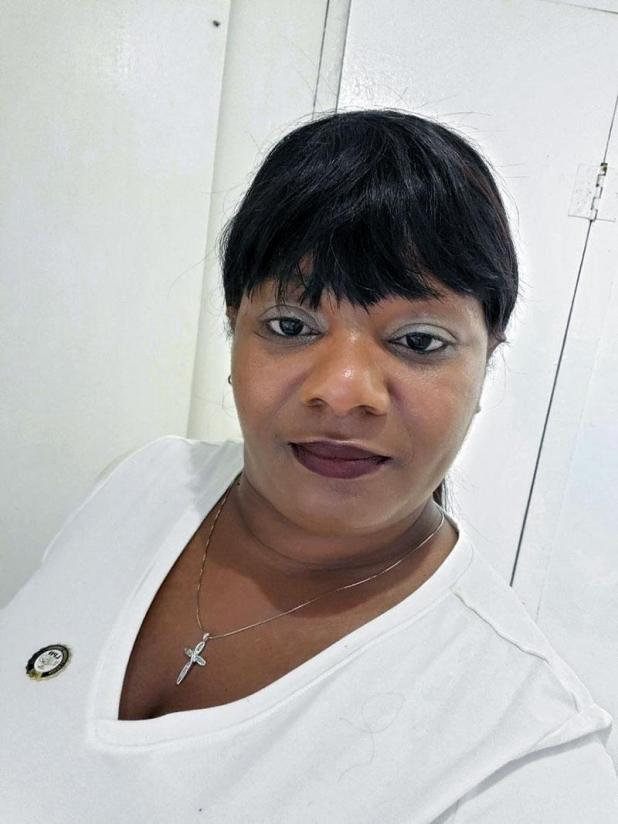
Mayor Pam Blakely visits Delcambre citizens to deliver masks.

Delcambre mayor hands out masks to citizens

DELCAMBRE - On Thursday, Delcambre Mayor Pam Blakely drove around town handing out masks to those who needed. Her goal was to make sure that everyone had a mask to help flatten the curve of Covid-19.
Targeting the elderly and businesses as her main focus, Blakely just wants what is best for the people in her town, and for everyone to stay healthy.
“There are people that can’t get out or don’t have vehicles,” she said, “health issues as well, as one gentleman was battling cancer, it’s just sad to me that there are people out there that do not have the proper necessities to stay safe from this.”
Children were not left out either, in fact, they were overjoyed with the masks. Blakely said that everyone was very appreciative and that it’s just the human thing to do; helping your neighbor and your town and keeping a safe distance while doing so.
In light of new evidence, the CDC recommends wearing cloth face coverings in public settings where other social distancing measures are difficult to maintain like grocery stores and pharmacies.
Significant community-based transmission areas are also urged to wear masks in public to keep safe.
Mayor Blakely also recommends regularly cleaning surface areas with unexpired household bleach that has been properly diluted (mix 5 tablespoons of bleach per gallon of water).
She urges businesses to regularly clean surfaces to stop the spread of Covid-19. “We have to do everything we can to stop the spread so that lives could return to normal and businesses reopen; our economy so needs it,” she said, “the virus can stay on some surfaces for hours to days and we must be careful.”
The masks were donated by Haynes to all government entities. The masks are machine washable with warm water and are 100% cotton. “They’re pretty comfortable masks and I like that I could use non-chlorine bleach to keep them sanitary after use,” the Mayor said, “Let’s do our part.”

Article Image Alt Text

Businesses do find positives: Vermilion Chamber of Commerce sends out survey to parish businesses

In trying times, it can be difficult to find and focus on positives.
During its “Refocused Coffee & Conversation” virtual meeting on April 24, the Vermilion Chamber of Commerce found that many business owners are indeed finding some highs among lows of the COVID-19 (coronavirus) pandemic.
The Chamber is meeting virtually with business owners to connect, share ideas, and find out how they are navigating these uncertain times. Chamber President Megan Landry-Lalande said this is providing a productive opportunity for all involved. “The Chamber’s goal through the Refocused Coffee & Conversation Virtual Meetings,” Lalande said, “is to get a pulse on our members, connect them with like-minded industry professionals and find innovative ways to help them through either connections or resources.”
Some of the highs provided from businesses included:
• Increase in sales
• Manufacturers understanding the situation to help others
• Business remains open
• People are no longer stock-piling goods
• Extending premiums and decreasing rates to help clients
• Increase in production
• Partnering with the community to assist where needed
• Foregoing disconnection of electricity to help as long as we can
• Able to help businesses get financial resources and help with loan paperwork
• Received PPP loan to get employees back to work
• Finding innovative ways to recognize people through awards and recognition
• Being able to keep everyone on the payroll
• Learning virtual tactics to continue to assist clients

Business owners also shared various approaches to operating during this time. One said they are learning to be flexible. Another mentioned finding ways to give back to the community, while another focused on outreach and finding ways to help promote students and schools. One recommendation centered on creating partnerships with other small businesses. “Remember who is helping you now” served as a strong message. Another piece of advice is essential now and in the future. “Support local as best as we can.”
One question asked during the meeting is what bright spots have been seen during these times and it returned some positive answers. Among them:

• Reevaluate operating systems – online & virtual
• Causing different generations to come together to develop remedies
• Having more mobility
• Teaching people how to be more digital
• Forcing people to slow down and have more appreciation
• Employees having more appreciation for a Team; cross-training workforce - teams overlapping to get things done
• Learning to reset and reevaluate
• Having more time to work on internal tasks – goals & employee evaluations
• Taught us a lot of what’s important = family, connections and relationships
• Allowing time to work on the business and not just within the business

No playbook existed for how people and businesses could respond to the pandemic. However, people and businesses are learning more about handling it each day. The Vermilion Chamber will continue to connect with its members to help promote new, better ideas to respond to uncertain times and more importantly to get people connected!
“The first virtual meeting has shown how much our community is finding positives during this time of discontent,” Lalande said. “Businesses are reassessing and reevaluating their business processes and goals and finding ways to reconnect with their employees and clients.
“Through these informal meetings, we are truly embodying of mission to “create a positive business and community environment.”

Article Image Alt Text

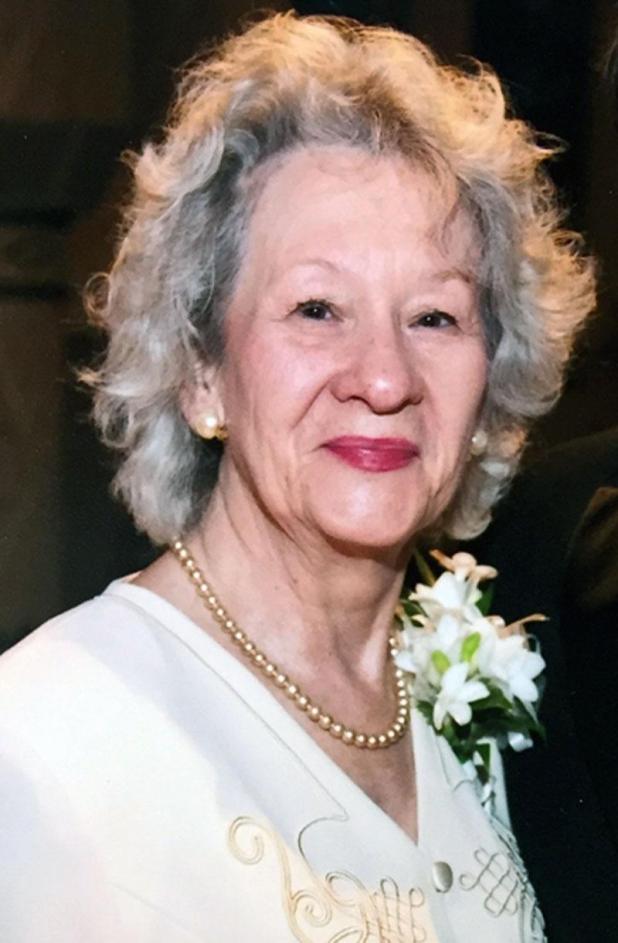
Elworth Joseph Petry, Jr

September 1, 1945 – April 26, 2020

Elworth Joseph Petry Jr., known as; Popeye, Junior, Tetan, and Red, was born on September 1, 1945, in Abbeville, Louisiana. He passed away after a long battle with bladder cancer, on April 26, 2020, at his daughter’s home in Lafayette, LA, at the age of 74.
He attended Our Lady of Lourdes Elementary School and James A. Herod High School. He graduated from James A. Herod High and then served in the United States Army, during the Vietnam Era. He is a member of St Theresa Catholic Church and his favorite pastime was going to the race track and the casino. He worked at many places, among which are; the Pipeline Service, JeffersonIsland Salt Mine, and Avery Salt Mine. He also worked as a mechanic for Union Oil of California, Unocal, Hanover Compression, Exterrian, and Archrock. He worked at Archrock until he became ill.
He will always be remembered by his wife, Mary Eva McCowan Petry, four children; Stanley James Wright (Suzanne), and Eric Donyell Petry (Sabrina) of
Abbeville, Louisiana, Erica Deitra Trahan (Bryant) of Lafayette, Louisiana, and Gralon Keith Petry (Ida) of Colorado. Eleven grandchildren; LaShira Petry,
Shaquayla Darby (Roderick), Jhordi Henderson (Ebonie), and Jhorian Henderson of Abbeville, Louisiana, Bryant C.Trahan II and Asia Trahan of Lafayette, Matthias Petry and Jada Petry of St. Martinville, Louisiana, Kolby Petry and Tori Petry of Youngsville, Louisiana, and Akirah Petry of Monroe. Fifteen great grandchildren;Taya Lewis, Ty Petry, Tiranni Henderson, Roderick Darby Jr., Adelyn Darby, Aria Darby, Jhordi Henderson Jr., Jhace Henderson, Kamryn Henderson, Exzavion Thomas, Kayson Small, Jhaiden Papillion, all of Abbeville, Louisiana, Sydni Henderson of Lafayette, Louisiana, Analee Rose Guidry of Youngsville, Louisiana, and Khalon Mikkel Petry of Monroe, Louisiana.
He is also survived by his siblings; Claudette Simons, Inolia Senegal, and Alvin Petry of Lafayette, Louisiana, Leona Hillman, Lois Jordan (Eddie), Elsie Dora(Curtis), Mackolyne Petry (Victoria), and Teary Petry(Chong), of Abbeville, Louisiana, and Laurian Brailey (Michael) and Verna Petry of Houston, Texas, and Carolyn Lucas, of Fort Washington, Maryland, and two Godchildren, Mary Hill Landry, and Louis Boudreaux, and a host of nieces, nephews, other relatives and friends.
He was preceded in death by; his parents, Elworth and Laura Petry, two sisters, Mary Dozier and Linda Pillette, and one brother, Richard Petry.
Due to the Pandemic, there will not be a funeral service, and at Elworth’s request, he will be cremated. His final place of rest will be at St Paul’s Cemetery in Abbeville, Louisiana.
Elworth Petry, Jr. will be sadly missed and never forgotten.
Kinchen Funeral Home Inc., 1011 North Saint Antoine Street, Lafayette LA 70501 is in charge of arrangements.

Article Image Alt Text

As the lead off hitter for Northwestern State, her job was to ‘set the table’ or get on base, no matter how.

Article Image Alt Text

Elise Vincent

Vincent hopes to go from softball to med school

Her softball senior season cut short at Northwestern State

Elise Vincent, a North Vermilion graduate, was the leadoff hitter for Northwestern State this year. The senior was off to a great start, starting in all 22 games. She was batting .323 and scored a team-high 20 runs. She stole 12 out of 13 bases. Entering the season she was a preseason All-Southland Conference First team member.

Where were you when you got the news the season was over?

I was at my home in Natchitoches. It was the weekend after my coaches told us that our conference game had been suspended.

What was your reaction?

I was downstairs with my sister when I first got the message from my coaches. I was super upset and cried a lot. I’m not a super emotional person, but getting that news was really heartbreaking and just crushing.

It looks like you were having a great season. What do you attribute that great start to, in your senior year?

I credit all the hard work I had put in in the fall and pre-season, but I also credit the support of my teammates and coaches. They helped me to grow even more confident in myself because they supported me and had my back no matter what.

What is your job as a lead-off hitter?

As the lead-off, it was my job to “set the table.” So basically, it was my job to get on base as often as I could, it didn’t matter how.

When will you graduate?

I am graduating this May. We won’t be having a commencement, but we are having a virtual ceremony, and they may have a ceremony for us to walk in in August.

In four years at Northwestern, how many “Bs” did you make as a final grade? What class did you make the B in? How did you handle it?

I only made one B and it was in Physics II. At first, I was upset about it, but what helped me to get over it was to remember that I’m not perfect, no one is. And just because I didn’t get an A doesn’t mean I won’t be successful. Being a perfectionist, this was a hard lesson to learn.

What is next for Elise? Are you returning for another year, or are you moving on? What will determine if you stay or go?

So I don’t know what the future holds. I would love to go back to NSU and play my final year, but I’ve also applied to medical school. So if I’m accepted into medical school, I, unfortunately, will not be able to go back to NSU.

Med school? What type of doctor do you want to be?

Medical school has been something I’ve dreamed of for a long time. At this point, I’d love to become an orthopedic surgeon, but I am open to the possibility that my interests will change in medical school.

Why do you want to be a doctor?
Being a doctor would allow me to be in a field where I get the opportunity to learn continually. Not only that, but I would be able to help and interact with a wide variety of people and have an impact on their lives.

Your thoughts on COVID-19 and how it has changed the world?

I think that this pandemic has had a major impact on the world. I think it’s been an eye-opening experience for many. One of the things I think that it’ll impact the most is people’s hygiene. This virus had made people more aware of their habits, and I think this will help people to be more aware of their hygienic practices to help limit the spread of diseases. But I think that this has also helped to bring everyone together in a sense. What I mean is that neighbors and even strangers are helping each other tremendously, and everyone is doing the best they can to be there for everyone.

If you move on, will there be a strange feeling on how your softball career ended? Or will you be OK with it because you have been playing since you were a freshman at Northwestern?

I would be upset. I honestly don’t like the idea that this is how my career could end, I mean it’s not what I had planned. I would, however, be happy to have had the opportunity to even play in college at all. I know many don’t have that opportunity, so I know I was blessed with the chance to play softball for as long as I did. If I don’t get to run out on that field again, I’d be upset, but I’d also be happy for all the memories I was able to make and for all the wonderful people who made the experience truly wonderful.

Looking back, was Northwestern the right choice?

100%. It was the place that helped me grow, athletically, and personally; being their helped me to grow more as a leader and as a better person overall. If I had to choose again, I wouldn’t change a thing because the people I met along the way at NSU helped mold me into who I am today, and I’ll always be grateful for the opportunity I had.

Did the four years go quickly?

Yes! It honestly went by so fast. I still remember what it was like being a freshman and hearing the seniors tell me to soak it all in because it’ll fly by. I kept joking all year that I thought the seniors in my freshman year were being dramatic, especially about how their bodies were always hurting, but I was wrong. I found out the hard way that they were not dramatic. From being a shy freshman to being senior captain honestly felt like the blink of an eye.

How tough was it to balance school with playing softball?

It was challenging, honestly. To succeed, 100 percent, you have to have good time management skills. The days were always super long, from 6 a.m. weights/conditioning to class, and then finally to practice took up much of the time. Not to mention finding times to eat, study, and complete study-hall hours. Then there are the away games where you often miss classes and have to become your own teacher (especially during the season) and do everything you’d normally do at home on a bus. The best advice I could honestly give is to get a planner and never schedule super hard classes on a MWF because you will never be in that Friday class.

What was the most memorable game or play that stands out over the last four years at Northwestern?

Beating Baylor last year was fun and memorable. Honestly, the most memorable games were the ones where, as a team, we were all playing together and truly for each other. I think that’s what upsets me the most about not being able to finish this season because this year, our team was truly special, and at every practice and game, we all genuinely pulled for each other.

When did you realize you had the talent to play at the next level?

It was when I was 12, and I was playing in a tournament in Georgia with my older sister’s 18-U team. I was playing right field and our pitcher mis-pitched. I wasn’t worried about it at the time, but I did what I was taught to do and went all out for the ball, diving and catching it. I honestly didn’t think it was that big of a deal, but the next thing I knew, the pitcher ran up to me and hugged me and kept saying how proud and thankful she was for me. I can’t say exactly what she said, but she said I saved her. And then, after the game the opposing coaches asked my coach about me, wondering where I was committed to. The look on their faces when he told them I was only twelve made me proud and helped me realize that I had the skill to play at a higher level.

How will playing softball prepare you to become a doctor?

Softball has taught me a wide variety of skills that will help me, including time management, competitiveness, strong work ethic, and leadership skills. But the most important lesson it’s taught me is how to cooperate.
Being a member of a team, you won’t always like or agree with everyone, but you have to be able to work with them to succeed. Like my dad often says, you have to learn how to be “your sister’s keeper,” which means that you’re there for teammates (or as I see them, sisters) no matter what. Teamwork is tough, and your teammates will be super different from you in both the way they think and act. But softball, and sports in general, has provided me with an outlet to learn vital interpersonal skills that everyone in the medical field should have.

Article Image Alt Text

Stephen Waguespack

Trust is a two-way street

About two weeks ago, certain businesses in Lafayette Parish opened their doors to a new way of doing things. They wear masks if interacting with customers. They established systems for spacing employees and customers six feet apart. They monitor employees’ health and don’t allow sick workers to report in. They keep to 25 percent of their fire marshal’s set capacity. And if they don’t, they risk fines and even having their utilities cut. It meant some adjustments, creativity and patience, but… they were back in business. Meeting their customers’ needs, providing paychecks for their employees and jump-starting a community’s economy – safely.
That’s because the leadership in that area listened to employers, consulted with health care experts, worked with economic development officials and came up with a creative solution for businesses that fall within the “gray area” of the governor’s “Stay at Home” order… they’re non-essential, but also non-prohibited. They trusted their people. It’s estimated in Lafayette Parish alone, that gray area covered roughly 60 percent of the parish’s businesses. And the governor confirmed that indeed, this “Safe Shop Policy” complied with his order, and these gray area businesses could have been open this whole time, with such safety measures in place. So, if this type of policy is deemed safe and smart for one community, why not for the rest of the state?
Governments don’t exist without taxpayers and taxpayers don’t exist without jobs. It’s time to start listening to employers on how best to put the pieces of our economy back together.
The best way to listen to employers is simply to pay attention to what is happening right now in towns across Louisiana. The businesses providing essential services, such as hardware stores, grocers, the maintenance and construction companies, have operated safely for weeks now. They are meeting the needs of the community, keeping their workers employed and taking smart steps to protect public health. They’ve shown us how to conduct ourselves, and in the meantime, the curve has indeed flattened.
There’s an all-too-prevalent but incorrect assumption that when anyone speaks about the need to open businesses back up, they’re putting the almighty dollar ahead of human lives. But that’s just not the case. That’s a political talking point. These are our neighbors, our friends, job-creators in our own communities who want to do the right thing. They just want to be allowed to do so.
We’ve all had to pivot in our personal lives. We’ve figured out video conferencing. We’ve adjusted to home school. We’ve altered our daily lives to meet our household needs with health at the forefront, and employers at essential businesses have done the same. When forced to adapt, these entrepreneurs, leaders, thinkers and doers have come up with innovative ways to serve, in a way that makes their clients and customers confident they’re entering a safe environment.
Since this crisis started, nearly 350,000 jobs have been lost. Each one of those represents a Louisiana family who is now desperately searching for stability and answers – for them, two weeks is too long a wait. Some projections put the state’s post COVID-19 unemployment rate near 22 percent, which would be the highest since the Great Depression.
At LABI, our more than 2,000 member businesses large and small collectively employ more than 320,000 Louisiana workers – including a significant number in the health care sector. We constantly seek their guidance and input, and have spent the past few weeks reaching out individually and in groups to understand what they need to bounce back from the effects of this shutdown. They’ve been specific in asking that certain regulations be lifted to allow operations, that incentives be tweaked to keep investment robust, and that laws – especially liability protection – be changed in the short term, so they can recover in the long-term. We look forward to releasing those policy recommendations in the coming weeks, but in the immediate future, we ask for something far simpler: It’s time for government to start trusting the people they represent again.
Everyone has learned a lot over the last month or so. We are all much wiser to the need to take smart, sanitary steps to protect ourselves, our family and our neighbors. People get it. Businesses get it, too. It’s time to let people start using that new knowledge and get back to work in a safe manner.
The legislature seems to get it. They have already stated they are ready to get back to work in a safe way and they seem ready to focus on steps to piece this broken economy back to together again. We commend them for that mindset and hope the governor will adopt the same goal soon.
Trust is a two-way street. The people of Louisiana trusted government weeks ago when they were told to sacrifice everything they had to stay home for the greater good. That trust has held firm for weeks now. Now, it is time for government to return that trust to them. The people have earned that right… by their commitment to social distancing, by their sacrifice of their jobs, by the health care providers who have fought courageously, by the employers who stayed open to serve and by the ones patiently begging and waiting for a chance to do the same. It’s time to get back to work. It’s time for government to return that trust.

Stephen Waguespack is President of the Louisiana Association of Business and Industry.

Notes On The Coming Meat Shortage

by Michelle Malkin

The Great Toilet Paper Scare of 2020 has come to end, but don't breathe a sigh of relief just yet. The Spring Meat Stampede is here.
At my local Costco in Colorado Springs on Monday, fresh chicken breast was nowhere to be found. Nationwide, bacon prices doubled. Wholesale pork prices for ham, ribs and loins rose between 12% and 32% over the last seven days. COVID-19 outbreaks among the nation's major meat processing plants have shut down nearly 20% of the country's fresh pork production. Chinese-owned Smithfield Foods has shuttered five facilities so far because of sick and no-show workers; Tyson Foods warns "the food supply is breaking" and "millions of pounds of meat will disappear" by May 1 after the mega-corporation idled its largest pork plant in Iowa, a beef plant in Washington state and another meatpacking facility in Indiana.
On Tuesday, President Donald Trump invoked the Defense Production Act to compel the nation's biggest meat processors to stay open and stave off shortages. How exactly the feds will "address liability issues" (which Tyson Foods execs complained about to Trump) and force union leaders to comply remains unclear. Whether the order actually heads off mass hysteria is also iffy. As we saw with the toilet paper rush, Chicken Little-ism is contagious. Warnings about shortages induce shortages. Admonitions of "Don't hoard the Charmin" failed in the face of mob behavior. Same with "Don't hoard the hocks."
With meat prices rising, the economic landscape looks bleak. While gas is less than $2 a gallon, much of the nation is still locked down and off the streets, out of the cars and in no hurry to get on planes or trains. The latest Consumer Price Index summary reveals rising rent prices and costs of medical care services on top of spiking meat prices. With nearly 26 million Americans now out of work, signs of impending stagflation loom. That "V-shaped recovery" is more like a "P.D." recovery: Pipe Dream.
More candor from all the Beltway "experts" about what we face would be helpful to our suffering citizenry. While we're at it, this nation must confront the dangers of dependency on the globalized, homogenized methods of producing meat and other key products in our food supply, which is concentrated in the hands of a quarter of giant multinational corporations who press for unlimited alien workers in exchange for low food prices. An estimated 30% of America's meat production employees are foreign-born. As usual, "Open Borders Inc." reaps all the benefits while we're left holding an empty grocery bag.
Let's remember: Tyson Foods was embroiled in an illegal immigrant smuggling racket two decades ago. The company has paid Swamp lobbyists like Republican Ed Gillespie millions of dollars to push for illegal immigrant amnesty. And Big Meat coordinates with refugee resettlement racketeers to import tens of thousands of cheap laborers from Asia, Africa and Latin America into the heartland.
Just one example: Tyson fundamentally transformed Waterloo, Iowa, by working with faith-based government contractors to ship in thousands of low-wage Burmese refugees to fill jobs at the meat plant now at the center of a coronavirus outbreak. Since 2002, 9,143 refugees from 37 countries have resettled in Iowa (which doesn't include so-called secondary migration, or friends and relatives moving to Iowa from their primary settlement location). Taxpayer-subsidized Catholic Charities, Lutheran Services and the U.S. Committee for Refugees and Immigrants have reaped millions dumping them across Central Iowa -- and abandoning them in cultural, linguistic and economic ghettos at the mercy of exploitative employers.
As Refugee Resettlement Watch founder and investigator Ann Corcoran reports, "The dark underbelly of the giant globalist meatpacking industry in the US is being exposed as large numbers of slaughterhouse workers are creating US hotspots for the spread of the Chinese virus."
A decentralized system of meat and poultry production would enhance food security, national security and public health. Demographic conquest fueled by big business' insatiable appetite for cheap labor, by contrast, is making us sick to our stomachs in more ways than one.

Michelle Malkin's email address is MichelleMalkinInvestigates@protonmail.com. To find out more about Michelle Malkin and read features by other Creators Syndicate writers and cartoonists, visit the Creators Syndicate website at www.creators.com.

Article Image Alt Text

Abbie Shull/LSU Manship School News Service Secretary of State Kyle Ardoin proposed greater temporary use of mail-in ballots than the Legislature was willing to approve.

Mail-in voting contested

Paige Daniel and Abigail Hendren
LSU Manship School
News Service

BATON ROUGE--Three blue states–Washington, Oregon and Colorado–conduct all of their elections through mail-in votes, and four red states--Wyoming, Montana, Utah and Alaska–are joining them this year in conducting their presidential primaries entirely through mail ballots.
Since the COVID-19 outbreak began, 28 other states have announced plans to increase access to absentee ballots or take other actions to keep voters from lining up at polling places.
Yet in deciding on Tuesday to delay Louisiana’s presidential primary to July 11, the Legislature insisted that state election officials scale back plans to rely less on in-person voting and more on mail voting to reduce the health risks.
Republican legislators expressed concern that more mail-in ballots could increase the potential for voter fraud. But national election experts say there have been few instances of fraud as other states have expanded voting by mail. And even once the risks from the virus ease, they say, Louisiana could increase voter turnout if it made greater use of alternative voting methods.
Voter turnout in governor’s races in Louisiana declined steadily for several decades, from 54% in 1979 to 31% in 2011 before rebounding to 51% last fall, according to the Louisiana Secretary of State’s office. Turnout in presidential elections in Louisiana has stayed higher, at 55% to 60% of eligible voters, though voting-rights advocates fear it could slip this year if voters do not feel safe.
Voting by mail is “something we’ve thought was important for a while now, but with the current state of the world, we now believe it is not only important, but essential to the democratic process,” Catherine McKinney, the director of the Louisiana Vote-by-Mail initiative, said.
“Now it is not only easier but imperative to keeping our poll workers and our voters safe from a global pandemic,” she said.
Secretary of State Kyle Ardoin, a Republican, and Gov. John Bel Edwards, a Democrat, had agreed on an emergency election plan that would have made mail-in absentee ballots available in the presidential primary to anyone affected by the coronavirus or who did not want to vote in person for fear of catching it.
Sen. Barry Milligan, R-Shreveport, helped shoot down that plan at a hearing on April 15, saying it was “extremely broad and basically covers everyone in Louisiana.”
“There is not an election cycle that goes through that we wake up to the news that votes are found in somebody’s garage or somebody’s truck,” Milligan said.
Milligan’s comments echoed concerns expressed by President Donald Trump, who claimed recently that “mail ballots are a very dangerous thing for this country, because they’re cheaters.”
He also maintained that if vote-by-mail were expanded, “you’d never have a Republican elected in this country again.”
Numerous studies show, however, that mail-ballot fraud is very rare. According to the Brennan Center for Justice, a non-partisan institute in New York, none of the states that hold their elections by mail have had any voter fraud scandals. In fact, the most significant recent instance of voter fraud was committed by a Republican operative in North Carolina, who illegally collected and filled in absentee ballots.
Under a compromise approved by the Legislature, Louisiana residents who are already allowed to mail in absentee ballots, such as those age 65 and older, will be able to vote by mail in the presidential primary and in state elections in August. Because of the threat from the virus, people with serious medical conditions or those who are quarantined or taking care of someone quarantined also will be able to mail ballots.
But lawmakers blocked other proposals by Ardoin to temporarily allow voting by mail for people between ages 60 and 65 or those caring for a child whose school was closed. They also rejected his plan to extend early voting in person to 13 days from seven. No changes have been considered for the presidential election in November.
Colorado, Oregon and Washington were voting entirely by mail long before the COVID-19 outbreak.
Colorado implemented mail-in ballots in 2013. Its voter turnout rate was 51.7%. in 2010, but in its 2018 gubernatorial election, nearly 62% of eligible voters mailed in ballots.
Voter turnout in Washington is typically around 70% of registered voters with all-mail voting. At least 60% of people in Washington chose the option to vote by mail before the state switched to sending mail-in ballots to all registered voters.
Even though it was at the epicenter of the coronavirus outbreak, Washington had a 50% turnout rate for its presidential primary in March, thanks to its focus on mail voting. Louisiana’s voter turnout in the 2016 presidential primary was only 28% of registered voters.
Before the pandemic, Louisiana was one of only 16 states that required voters to submit a valid excuse to obtain an absentee. In the 2016 general election, only 1.8% of Louisiana’s registered voters cast absentee ballots.
Ardoin and legislators from both parties say they want to avoid a situation like Wisconsin just went through in its presidential primary on April 7.
Republican leaders there rejected proposals to loosen restrictions on voting because of the virus, and they were backed by the U.S. Supreme Court. Long lines ensued, and 52 Wisconsin voters and poll workers have since been diagnosed with COVID-19, though it is unclear where their exposures occurred.
Given the health risks, New York Gov. Andrew Cuomo canceled the state’s Democratic primary altogether. Ohio, a key swing state, was one of the first states to move forward with a last-minute plan to vote by mail. Results of that change were mixed in its primary on Tuesday, with many citizens failing to receive an absentee ballot in time to cast their vote.
Besides vote-by-mail, some states have implemented other alternative voting methods--either before the COVID-19 outbreak or since--to make voting more accessible and increase turnout.
These include same-day registration, in which people can register online or at the polls on election days, and holidays from work for voting. Georgia and Colorado, both states with average turnout rates over 50%, have holidays on election days, while Louisiana does not.
Early, in-person voting has expanded in Louisiana, with 33% of those who cast ballots in the 2019 gubernatorial election voting early.
But “if you want to vote early, you have to go to a central location,” said Dr. Brian Brox, a Tulane University professor specializing in. Other states have implemented early voting that actually incorporates satellite early voting, where they basically have more places in the county, rather than having to go to the courthouse.”
Virginia and Maryland are among the states that have lifted restrictions on voting since the COVID-19 outbreak. Virginia removed its excuse requirement for absentee ballots, loosened voter identification laws and expanded its early-voting period. It also made election day a holiday.
Brox contends that lawmakers in Louisiana have not been interested in removing more of the barriers because the voters who manage to overcome them are the ones who put them in office.
“There needs to be a way to kind of get around the gatekeepers, who are basically the legislators,” he said.
Lawmakers, of course, disagree. “I’m not going to spend the thousand hours of effort to come up with good solutions to these problems,” Rep. Barry Ivey, R-Central, said in an interview on this subject last year. “I do not feel that as a state our voting opportunities in the aggregate are subpar. I believe we’re probably above average in that category.”
But in the congressional election in November 2018, Louisiana ranked 45 out of 50 states and the District of Columbia in the percentage of voters who turned out, according to data compiled by Dr. Michael McDonald at the University of Florida.
Republican strategists fear that expanding the use of mail ballots would increase voter turnout among poorer people who would not vote for them. But greater use of mail ballots also could help Republicans, especially if Louisiana gets a second wave of COVID-19 in the fall and older voters are reluctant to go to the polls.
If the virus ramps up again then, McKinney said, “Under no circumstances should the state of Louisiana put our poll workers or our voters in harm’s way when such a simple solution is available like vote-by-mail.”

Pages

Vermilion Today

Abbeville Meridional

318 N. Main St.
Abbeville, LA 70510
Phone: 337-893-4223
Fax: 337-898-9022

The Kaplan Herald

219 North Cushing Avenue
Kaplan, LA 70548