RSS Feed

Article Image Alt Text

Water gets trapped on Lahasky Street because of the La. 14 Bypass. It is not uncommon for Lahasky Street to be closed due to high water

Erath moving forward to elevate Housing Authority apartments

ERATH - It looks like the Erath Aldermen will accept the $2.2 million in grant money to elevate 13 homes in the Erath Housing Authority.
Earlier this year, HUD awarded the town $2.2 million to lift the homes. HUD will pay 98 percent of the cost. The Housing Authority agreed to pay the remaining $42,000 of what the HUD grant will not cover.
However, at the meeting, Erath Mayor Taylor Mencacci did not want to assume the Housing Authority would pick up the $42,000 without hearing from them. Once he gets the official word that the Housing Authority would contribute the $42,000, the Mayor said the town would sign off.
If the Housing Authority signs off on the $42,000, the town will go out for bids to elevate the homes and have ramps or stairs built for each apartment. The only apartments that will get a handicap ramp are if the residents are handicap.
If the bids are more than $2.2 million, the grant amount, the town can back out, elevating the homes.

Flooded roads big problem

Todd Vincent of Sellers and Associates informed the aldermen and Mayor that the residents had a meeting last month and brought up concerns about elevating the 13 homes, which are divided up into two apartments. There are around 44 residents who live in the Housing Authority.
The residents’ biggest concern is the roads that flood for heavy rain, trapping residents inside their homes. The town looked into elevating the streets, but it would cost too much.
The residents requested the town to create another road access into the Erath Housing Authority other than the La. 14 Bypass. Once the roads flood, they have no other way to leave, they said.
The residents also did not like how they have to evacuate, Vincent added. For heavy rains, high trucks have to ride down the road to evacuate residents. Many residents are elderly and can not climb into the trucks.
Vincent informed the aldermen and Mayor that Acadian Ambulance purchased six rescue trucks that could be used to evacuate the elderly.
Alderman Clarence Fuselier told the Mayor and aldermen that the residents were also worried about the height of their apartments once elevated and where they go once they are evacuated for a heavy rain. The aldermen said the town could not pay for them to stay in hotels.

Article Image Alt Text

Mayor Mark Piazza said water would have covered the sidewalk at the intersection prior to recent improvements.

City of Abbeville working on drainage issues

Drainage improvements help at intersection of Lafayette St., S. Louisiana

Is that rain?
At the rate things have been going, it probably is.
Now, with the help of a recently completed drainage project, rain doesn’t mean the intersection of East Lafayette Street and South Louisiana Street will turn into a standing pond.
Abbeville City Councilman Brady Broussard Jr., who represents the area, said the project has already proven its worth.
“In the rainy season we are now in,” Broussard said, “it was not long to hear of the success of this drainage improvement project. Business owners in the S. Louisiana and Lafayette Street area have seen an intersection that no longer gets so much water on the street that intersection was sometimes closed.
“We are happy for those businesses and residents in both areas that can see the positive results of this project that was a decade in planning and state funding and implementation.”
The final walkthrough inspection took place on Tuesday. Work began a few weeks ago, and was originally expected to go into August.
“The contractor (LA-Contracting Enterprise, LLC) has exceeded expectations and finished ahead of schedule,” Broussard said.
The results are clear.
“When rain formerly stayed on the roads for some time in these areas, that is no longer the case,” Broussard said. “I received calls that water was receding from roadways much quicker than before the project.”
Piazza agreed.
“I took a picture that shows Lafayette Street after a torrential downpour,” Piazza said during last week’s city council meeting. “It shows that the sidewalks are visible. I don’t think I have ever seen the sidewalks without water on them after a torrential rain.
“This project obviously works very, very well.”
City Engineer Richard Primeaux said there are numerous features to the project that make it work.
“We added storage,” Primeaux said. “That was the key to making this work. We added storage and added inlets to get the water inside, so it wouldn’t affect people down stream. We have 30-inche pipes. It looks big, but it’s because we needed to add storage to accommodate further down line.
“That’s why you’re seeing the water go into the pipe, and not stay on top of the road and cover the intersection.”
This is the second major drainage project the city has taken on this year. Contractors made improvements around Second Street in May.
“Another part of the drainage improvements for the Godchaux Park area includes the Drainage Board cleaning Dick Hunter Coulee so it can carry more water out to the river,” Broussard said. “When the weather dries up, citizens should soon see asphalt patching and overlay for areas of the drainage project that required road cuts.”
While Mother Nature continues to throw plenty of rain the city’s way, drainage improvements are standing up to the test.
“The positive comments have come in to me, the Mayor (Mark Piazza) and city hall for weeks now,” Broussard said. “With these present thunderstorms that are dumping inches of rain on our city, compliments from Fifth Street, Franks Alley, Third and Fourth have all indicated immediate improvements are evident.”

Article Image Alt Text

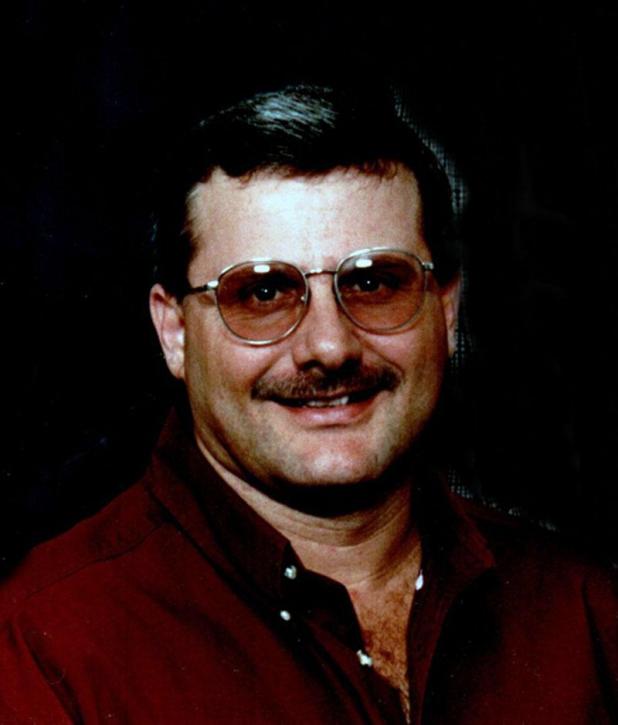
Laura G. Broussard

ABBEVILLE – Funeral services for Laura G. Broussard, 69, were held Saturday July 17, 2021 at 2:00 PM at David Funeral Home of Abbeville, with Deacon Tim Marcantel officiating.
Visitation was held Saturday July 17, 2021 from 10:00 AM until time of services. Burial followed follow in Our Lady of Lourdes Catholic Cemetery.
A native of Shreveport, and a resident of Erath. Laura was a loving mother and grandmother who will be missed by all. Laura passed away Thursday at her residence.
Survivors include her children Amy Broussard and her fiancé’ Casey Simon, Alicia and her husband Landry Quibodeaux, and Joey Henrielle Broussard; her granddaughter Sydnie Quibodeaux; step daughter Thelessa Ripley; sisters in laws Maxine Sellers, and Yvonne Guillory; and brother in law Wilfred Broussard Jr.
She was preceded in death by her husband Alcibiade Broussard; her parents Henrielle and Margaret Sherman Guillory; brother Carroll Guillory; mother and father in law Olivia Sellers and Wilfred Broussard Sr.; brother in law Clement Simoneaux II stepson Alcibiade Broussard II; great nephew Baylee Simoneaux; and step grandson Christopher Sharp.
Serving as pallbearers were Joey Henrielle Broussard, Donny Simon, Landry Quibodeaux, Casey Simon, Clement Simoneaux III, and Nicholas Lege,
Condolences may be sent to the Broussard family at www.davidfuneralhome.org
David Funeral Home 2600 Charity St. 337-893-3777 was in charge of arrangements

Article Image Alt Text

Birth Announcements for July 18

Stephain O’Libiya Cormier
A daughter, Stephain O’Libiya Cormier, was born on Thursday, July 8, 2021 at Abbeville General to Shakyla I’dae Brailey of Maurice and Rodney John Cormier, Jr. of Abbeville.

Za’Morii Kior Willis
A daughter, Za’Morii Kior Willis, was born on Sunday, July 11, 2021 at Abbeville General to Nevaeh Mecole Willis of Abbeville.

Tru Royalty Fontenot
A daughter, Tru Royalty Fontenot, was born on Tuesday, July 13, 2021 at Abbeville General to Chelsey Lynn Fontenot of Abbeville.

Article Image Alt Text

Edwin Washington Edwards

1927-2021

Louisiana’s 50th governor, Edwin Washington Edwards, was born on August 7, 1927, and passed from this world on July 12, 2021. He was one month shy of his 94th birthday.

Gov. Edwin Edwards was born in a two-room farm house in the small community of Johnson seven miles outside Marksville, Louisiana, in Avoyelles Parish. His father Clarence was a farmer and his mother Agnes was a midwife credited with nearly 2,000 births. When he was 15, Edwin taught himself electricity and wired his home and many others. He became a Nazarene youth minister. He graduated Marksville High School in 1944 and began his life of public service at 17 when he joined the United States Navy. He became a Navy pilot in California but as his squadron was about to deploy to the Pacific, Japan surrendered and World War II ended. Edwards graduated LSU Law School four years later and married Elaine Schwartzenberg, a classmate at Marksville. They had four children, Anna, Victoria, Stephen and David.

He opened the Edwards Law Firm atop Gremillion’s Drug Store in Crowley in Acadia Parish because his sister, Audrey Edwards Isbell, told him there were more businesses in Crowley. There, the young attorney met lifelong friend B. I. Moody, an accountant, who many times tried to get quick-thinking Edwin to go into business. But Edwards made a name for himself by using his Cajun French to communicate with coastal French Acadians who had oil and gas lands. He brokered fairer deals with energy companies for the Cajuns, many of whom were illiterate.

In 1954, he won his first election as a Crowley City Councilman, serving on Louisiana’s first integrated city council. In 1959, he introduced young Massachusetts Senator John F. Kennedy to 100,000 festivalgoers at the Crowley International Rice Festival. He noticed that Kennedy genuinely enjoyed himself while connecting with poor south Louisianans with whom he had nothing in common. Edwards realized he inherently had that same gift but knew Louisianans much better. Just three months later, JFK announced for the Democratic nomination for president in 1960.

In 1964, Edwards challenged long-time Louisiana Senator Bill Cleveland and won, immediately becoming a floor leader for Governor John McKeithen. When 7th District Congressman T. A. Thompson was killed in an accident in 1965, Edwards won a seat in Congress, becoming a favorite of President Lyndon Johnson. In a heated debate over cutting farm subsidies at the White House, Congressman Edwards reflexively stood up over the President’s head pleading that farmers had elected LBJ because they believed he understood the plight of America’s farmers. Johnson replied, “That’s good enough for me” and farm subsidies remained in place. Edwards further brokered a deal for South Korea to buy $40 million of Louisiana rice, the largest single sale in state history.

Congressman Edwards became part of Louisiana’s powerful delegation headed by Senators Russell Long and Allen Ellender, and Congressmen Hale Boggs, Otto Passman, Joe D. Waggoner, and Speedy Long, and became one of a handful of southern congressmen to vote for the extension of the Voting Rights Act of 1965. He also appointed Louisiana’s first black postmaster.

In December 1970, Congressman Edwards announced to the Baton Rouge Press Club that he would be a candidate for governor, challenging a field of 18 candidates by mid-1971. His friends called him crazy but they supported him anyway. Edwards flew his own plane, hopscotching across the state three times faster than road-bound candidates. Campaign manager Charles Roemer was first to use computers to plot out demographics to show where stops and campaign ads were needed most. As a result, Edwards came out on top in the Democratic primary over J. Bennett Johnston, Gillis Long, and former Governor Jimmie Davis who had been the odds-on favorite most of the year. In February 1972, he beat Republican David C. Treen to become Louisiana’s 50th governor on May 9, 1972.

Two months later, legendary U.S. Senator Allen Ellender suddenly died and, to avoid all the politicians who begged to fill out Ellender’s term, Edwin appointed his wife Elaine. She was sworn in on his birthday, August 7, 1972, after a private coffee with President and Mrs. Nixon in the Oval Office. Edwards noticed Nixon’s nervousness and much later learned that he had just been notified that the FBI was moving forward with an investigation of the Watergate break-in six weeks earlier.

Governor Edwards immediately fulfilled a campaign promise to replace Louisiana’s bloated 1921 Constitution and initiated CC-73, Louisiana’s first constitutional convention in half a century. During the 1973 legislative session, Edwards successfully beat back oil lobbyists and upped the state’s severance tax on oil from 25-cents a barrel to 12.5% of value. Edwards was first to predict that U.S. support of Israel during the 1973 Arab-Israeli War would result in an embargo. He had been warning while in Congress that the U.S. was becoming more vulnerable by its dependence on foreign oil. In October 1973, OPEC did shut off oil to the United States, creating gasoline shortages and gas lines and driving gas prices from 25-cents a gallon to near $1 a gallon. Prices soared in 1974 by 300%. By half of 1974, Edwards’ tax move flipped the $40 million state budget deficit he had inherited from Gov. John McKeithen to an $88 million surplus. By 1979, Louisiana was the most cash-rich state in the nation while New York City was asking Congress for a bailout to keep from going bankrupt.

As a result of Edwards’ fiscal prowess, he was solicited through Judge Edmund Reggie to consider running for Vice President on the ticket with Senator Ted Kennedy. Kennedy was challenging President Jimmy Carter for the Democratic nomination in 1980. As president, Carter had threatened Governor Edwards that he would send in U.S. troops to nationalize Louisiana’s pipelines if Edwards slowed production to determine Louisiana’s remaining oil reserves. Edwards had railed for years through Nixon, Ford and Carter that the federal cap of $5 per barrel was unfair to Louisiana producers and would kill exploration which would make OPEC even more powerful. All his predictions came true.

By the end of his first term, the Public Affairs Research Council applauded Governor Edwards for fulfilling all the reforms PAR had requested. Complaining that Louisiana’s party primaries required an exhausting three elections and three fundraising efforts and that continually begging for money compromised politicians, Edwards passed legislation to shift to a jungle primary in which the top two vote getters would be in a single runoff, no matter what party. This allowed conservative voters and politicians to shift to the Republican Party and, for the first time, still have a chance to win office.

This shift allowed David C. Treen to become Louisiana’s first Republican governor since Reconstruction. But Treen was beset by a plummet in oil prices and budget shortfalls and lost by a landslide when Edwin Edwards returned in 1983. Edwards took 617 friends at $10,000 each on a fundraising trip to France where he met with President Francois Mitterrand and discussed economic alliances between France and Louisiana, named for King Louis XIV.

But oil prices continued to fall through Edwards third term at the same time he was tried twice by U.S. Attorney John Volz. But Volz was embarrassed when Governor Edwards on the witness stand reminded Volz that he, too, had asked Edwards for a favor, that being to push politically to get Volz a federal judgeship. Edwards was acquitted.

The damage was done, however, and in the 1987 governor’s race, he did not finish first. He conceded the race at midnight and essentially made Congressman Buddy Roemer governor. Four years later, Roemer fell through the crack in the election between Edwards and former grand wizard of the Ku Klux Klan, David Duke. With the backing even of foes and detractors, Edwards won handily over Duke for his fourth and last term. With that election, Edwards became one of only eleven men in U.S. history to win four gubernatorial terms.

He retired from office in 1996, returned to the Edwards Law Firm and formed business partnerships for many clients. To sort out his storied life, Governor Edwards coauthored a bestselling biography with writer Leo Honeycutt, winner of the Louisiana Literary Award. That book was read by Trina Scott in Alexandria who began a pen pal relationship with the former governor, began dating and married in 2011 in New Orleans with Chief Justice of the Louisiana Supreme Court, Kitty Kimball, officiating. Governor and Trina Edwards celebrated the birth of his fifth child, Eli Wallace Edwards, in 2013. Eli will turn 8-years-old on August 1.

Governor Edwards is survived also by his four other children, Anna Edwards, Victoria Edwards, Stephen Edwards and David Edwards and David’s wife, Laura. Also surviving are 12 grandchildren: Douglas Edwards, Scott Hensgens, John Todd Edmond, Dana Edwards Danos (Brannon), Edwin Nolan Edwards (Holly), Stephen Edwards Jr. (Christie), Matthew Edwards, and Allison Edwards, and Christopher Schadt (Lauren), Amanda Edwards Blair (Preston), Kristen Edwards, and Anna Edwards Chandler (Colby).

And 19 great-grandchilden: John Edwards, Grey Edwards, Caroline Hensgens, George Hensgens, Henry Hensgens, Taylor Edmond, Connor Edmond, Sadie and Jolene Danos, Zoe and Nolan Edwards, Theodore and Rose Schadt, Lizzie and Benjamin Moore; Maddox and Coen Chandler; Peyton and Carter Blair.

Governor Edwards will lie in state at Louisiana’s State Capitol on Saturday July 17 from 10 a.m. to 7 p.m. The visitation is open to the public. At noon Sunday, July 18, his body will be carried on an open, horse-drawn funeral carriage from the State Capitol, down 4th Street to North Boulevard, to Louisiana’s 170-year-old Old State Capitol overlooking the Mississippi River. He will be remembered in a private but streamed and televised funeral service.

“I want everybody to remember that I tried to do as much good for everybody that I could,” he said, “and my hope is that I did. I also hope that those I helped will, in turn, help those around them, too.”

Article Image Alt Text

It takes only about five minutes to steal a converter from a car.

Abbeville Police warn about catalytic converters being stolen off vehicles

If one morning when you start your vehicle and it sounds like your vehicle no longer has a muffler and it runs rough, the odds are someone stole your catalytic converter from under your vehicle.
The Abbeville Police Department sent out a public notice informing Abbeville citizens to be aware of catalytic converter thefts in different parts of Abbeville.
The Abbeville Police Department (APD) says that the recent trend of these thefts are not only in the surrounding areas, but also within the city also. They say, residents should be on the lookout for any suspicious activity around neighborhoods.
If you see anything suspicious, residents are asked to contact the police department.
Anyone with tips on these crimes may remain anonymous.
Thefts have occurred in the rural areas of the parish as well as in the city.
Most crimes in the rural area of the parish have been vehicles parked in parking lots where there is not a lot of daily traffic.

Article Image Alt Text

Edwin Edwards

Obituary for Gov. Edwin Edwards

Louisiana’s 50th governor, Edwin Washington Edwards, was born on August 7, 1927, and passed from this world on July 12, 2021. He was one month shy of his 94th birthday.
Gov. Edwin Edwards was born in a two-room farm house in the small community of Johnson seven miles outside Marksville, Louisiana, in Avoyelles Parish. His father Clarence was a farmer and his mother Agnes was a midwife credited with nearly 2,000 births. When he was 15, Edwin taught himself electricity and wired his home and many others. He became a Nazarene youth minister. He graduated Marksville High School in 1944 and began his life of public service at 17 when he joined the United States Navy. He became a Navy pilot in California but as his squadron was about to deploy to the Pacific, Japan surrendered and World War II ended. Edwards graduated LSU Law School four years later and married Elaine Schwartzenberg, a classmate at Marksville. They had four children, Anna, Victoria, Stephen and David.
He opened the Edwards Law Firm atop Gremillion’s Drug Store in Crowley in Acadia Parish because his sister, Audrey Edwards Isbell, told him there were more businesses in Crowley. There, the young attorney met lifelong friend B. I. Moody, an accountant, who many times tried to get quick-thinking Edwin to go into business. But Edwards made a name for himself by using his Cajun French to communicate with coastal French Acadians who had oil and gas lands. He brokered fairer deals with energy companies for the Cajuns, many of whom were illiterate.
In 1954, he won his first election as a Crowley City Councilman, serving on Louisiana’s first integrated city council. In 1959, he introduced young Massachusetts Senator John F. Kennedy to 100,000 festivalgoers at the Crowley International Rice Festival. He noticed that Kennedy genuinely enjoyed himself while connecting with poor south Louisianans with whom he had nothing in common. Edwards realized he inherently had that same gift but knew Louisianans much better. Just three months later, JFK announced for the Democratic nomination for president in 1960.
In 1964, Edwards challenged long-time Louisiana Senator Bill Cleveland and won, immediately becoming a floor leader for Governor John McKeithen. When 7th District Congressman T. A. Thompson was killed in an accident in 1965, Edwards won a seat in Congress, becoming a favorite of President Lyndon Johnson. In a heated debate over cutting farm subsidies at the White House, Congressman Edwards reflexively stood up over the President’s head pleading that farmers had elected LBJ because they believed he understood the plight of America’s farmers. Johnson replied, “That’s good enough for me” and farm subsidies remained in place. Edwards further brokered a deal for South Korea to buy $40 million of Louisiana rice, the largest single sale in state history.
Congressman Edwards became part of Louisiana’s powerful delegation headed by Senators Russell Long and Allen Ellender, and Congressmen Hale Boggs, Otto Passman, Joe D. Waggoner, and Speedy Long, and became one of a handful of southern congressmen to vote for the extension of the Voting Rights Act of 1965. He also appointed Louisiana’s first black postmaster.
In December 1970, Congressman Edwards announced to the Baton Rouge Press Club that he would be a candidate for governor, challenging a field of 18 candidates by mid-1971. His friends called him crazy but they supported him anyway. Edwards flew his own plane, hopscotching across the state three times faster than road-bound candidates. Campaign manager Charles Roemer was first to use computers to plot out demographics to show where stops and campaign ads were needed most. As a result, Edwards came out on top in the Democratic primary over J. Bennett Johnston, Gillis Long, and former Governor Jimmie Davis who had been the odds-on favorite most of the year. In February 1972, he beat Republican David C. Treen to become Louisiana’s 50th governor on May 9, 1972.
Two months later, legendary U.S. Senator Allen Ellender suddenly died and, to avoid all the politicians who begged to fill out Ellender’s term, Edwin appointed his wife Elaine. She was sworn in on his birthday, August 7, 1972, after a private coffee with President and Mrs. Nixon in the Oval Office. Edwards noticed Nixon’s nervousness and much later learned that he had just been notified that the FBI was moving forward with an investigation of the Watergate break-in six weeks earlier.
Governor Edwards immediately fulfilled a campaign promise to replace Louisiana’s bloated 1921 Constitution and initiated CC-73, Louisiana’s first constitutional convention in half a century. During the 1973 legislative session, Edwards successfully beat back oil lobbyists and upped the state’s severance tax on oil from 25-cents a barrel to 12.5% of value. Edwards was first to predict that U.S. support of Israel during the 1973 Arab-Israeli War would result in an embargo. He had been warning while in Congress that the U.S. was becoming more vulnerable by its dependence on foreign oil. In October 1973, OPEC did shut off oil to the United States, creating gasoline shortages and gas lines and driving gas prices from 25-cents a gallon to near $1 a gallon. Prices soared in 1974 by 300%. By half of 1974, Edwards’ tax move flipped the $40 million state budget deficit he had inherited from Gov. John McKeithen to an $88 million surplus. By 1979, Louisiana was the most cash-rich state in the nation while New York City was asking Congress for a bailout to keep from going bankrupt.
As a result of Edwards’ fiscal prowess, he was solicited through Judge Edmund Reggie to consider running for Vice President on the ticket with Senator Ted Kennedy. Kennedy was challenging President Jimmy Carter for the Democratic nomination in 1980. As president, Carter had threatened Governor Edwards that he would send in U.S. troops to nationalize Louisiana’s pipelines if Edwards slowed production to determine Louisiana’s remaining oil reserves. Edwards had railed for years through Nixon, Ford and Carter that the federal cap of $5 per barrel was unfair to Louisiana producers and would kill exploration which would make OPEC even more powerful. All his predictions came true.
By the end of his first term, the Public Affairs Research Council applauded Governor Edwards for fulfilling all the reforms PAR had requested. Complaining that Louisiana’s party primaries required an exhausting three elections and three fundraising efforts and that continually begging for money compromised politicians, Edwards passed legislation to shift to a jungle primary in which the top two vote getters would be in a single runoff, no matter what party. This allowed conservative voters and politicians to shift to the Republican Party and, for the first time, still have a chance to win office.
This shift allowed David C. Treen to become Louisiana’s first Republican governor since Reconstruction. But Treen was beset by a plummet in oil prices and budget shortfalls and lost by a landslide when Edwin Edwards returned in 1983. Edwards took 617 friends at $10,000 each on a fundraising trip to France where he met with President Francois Mitterrand and discussed economic alliances between France and Louisiana, named for King Louis XIV.

But oil prices continued to fall through Edwards third term at the same time he was tried twice by U.S. Attorney John Volz. But Volz was embarrassed when Governor Edwards on the witness stand reminded Volz that he, too, had asked Edwards for a favor, that being to push politically to get Volz a federal judgeship. Edwards was acquitted. In that time, Edwards passed legislation to set aside a half billion dollars of the mid-1980s 8G Settlement for the Louisiana Quality Education Support Fund which would help colleges survive later budget cuts.

The damage from the trials was done, however, and in the 1987 governor’s race, he did not finish first. He conceded the race at midnight and essentially made Congressman Buddy Roemer governor. Four years later, Roemer fell through the crack in the election between Edwards and former grand wizard of the Ku Klux Klan, David Duke. With the backing even of foes and detractors, Edwards won handily over Duke for his fourth and last term. With that election, Edwards became one of only eleven men in U.S. history to win four gubernatorial terms.

He retired from office in 1996, returned to the Edwards Law Firm and formed business partnerships for many clients. To sort out his storied life, Governor Edwards coauthored a bestselling biography with writer Leo Honeycutt. That book was read by Trina Scott in Alexandria who began a pen pal relationship with the former governor, began dating and married in 2011 in New Orleans with Chief Justice of the Louisiana Supreme Court, Kitty Kimball, officiating. Governor and Trina Edwards celebrated the birth of his fifth child, Eli Wallace Edwards, in 2013. Eli will turn 8-years-old on August 1.

Governor Edwards is survived also by his four other children, Anna Edwards, Victoria Edwards, Stephen Edwards and David Edwards and David’s wife, . Also surviving are 8 grandchildren: Douglas Edwards, Scott Hensgens, John Todd Edmond, Dana Edwards Danos (Brannon), Edwin Nolan Edwards (Holly), Stephen Edwards Jr. (Christie), Matthew Edwards, and Allison Edwards.
And 11 great-grandchilden: John Edwards, Grey Edwards, Caroline Hensgens, George Hensgens, Henry Hensgens, Taylor Edmond, Connor Edmond, Sadie and Jolene Danos, Zoe and Nolan Edwards.

Governor Edwards will lie in state at Louisiana’s State Capitol on Saturday July 17 from 10 a.m. to 7 p.m. The visitation is open to the public. At noon Sunday, July 18, his body will be carried on a horse-drawn funeral cortege from the State Capitol, down 4th Street to North Boulevard, to Louisiana’s 170-year-old Old State Capitol overlooking the Mississippi River. He will be remembered in a private but streamed and televised funeral service.

“I want everybody to remember that I tried to do as much good for everybody that I could,” he said, “and my hope is that I did. I also hope that those I helped will, in turn, help those around them, too.”

Article Image Alt Text

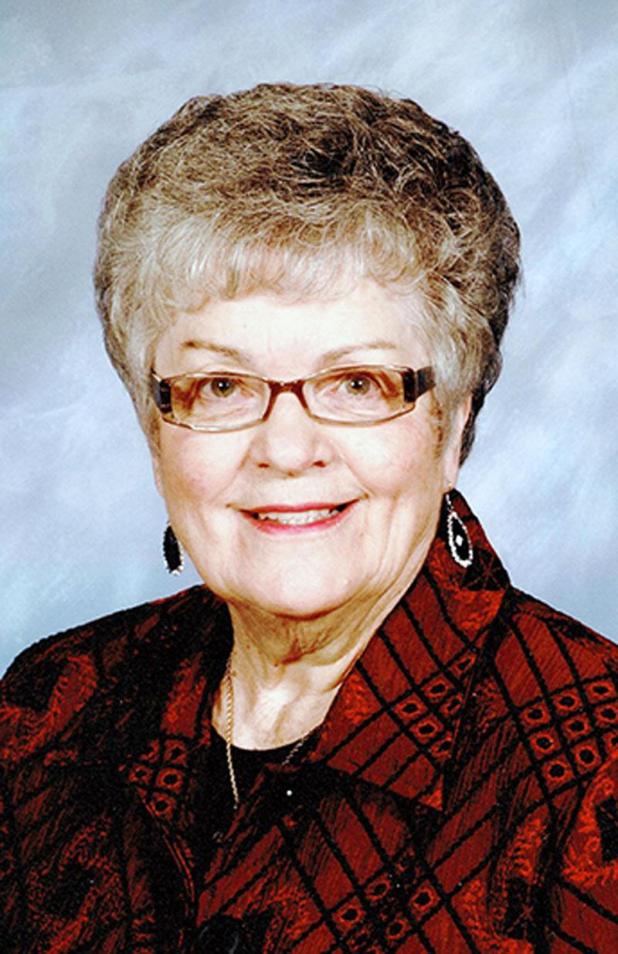
Joan Scroggin Greco

August 24, 1929 ~ June 28, 2021

ABBEVILLE — Memorial services will be held Saturday, July 17, 2021 at an 11:00 AM Mass of Christian Burial at St. Mary Magdalen Catholic Church in Abbeville honoring the life of Joan Scroggin Greco, 91 who died Monday June 28, 2021 at Iberia General Medical Center. She will be laid to rest at St. Mary Magdalen Cemetery with Reverend Louis Richard officiating.
Mrs. Greco was a retired middle school teacher having spent nearly 50 years teaching at Mount Carmel Elementary and numerous Vermilion Parish schools.
She is survived by her six children, Diane Greco Sexauer and her husband, Dr. Charles L. Sexauer of Oklahoma City, David J. Greco, Jr. of Abbeville, Michael H. Greco of Abbeville, Lisa Greco Metcalf of Broussard, James B. Greco and his wife, Dr. Leslie K. Greco of Lafayette, Robert E. Greco and his wife, Julie C. Greco of Maurice; sister, Phallie S. Sellers and her husband, Eugene M. Sellers of Abbeville; twelve grandchildren, seven great grandchildren; and numerous nieces and nephews.
She was preceded in death by her husband, David J. Greco; her parents, Henry H. Scroggin and Alverta Wright Scroggin; her brother, Henry H. Scroggin, Jr.; sisters, Lorraine S. Callier and Elise S. Mixon and her husband, F. G. Mixon.
The family requests that visiting hours be observed at St. Mary Magdalen Catholic Church on Saturday July 17, 2021 from 9:00 AM until the time of services at 11:00 AM, with a rosary to be prayed at 10:00 AM.
The Greco family would like to thank Dr. Leslie Greco and staff with Iberia General Medical Center and Dr. Georgios Constantinou with Ochsner Iberia Medical Center and staff for the care and compassion they provided to our mother.
In lieu of flowers, memorials may be made to Vermilion Catholic School, 425 Park Avenue, Abbeville, LA 70510.
Condolences may be sent to the family at www.vincentfuneralhome.net.
All funeral arrangements are being conducted by Vincent Funeral Home of Abbeville, (337) 893-4661.

Article Image Alt Text

After six years at Centenary, Mark Suire is moving north to coach at Hendrix College in Conway, Arkansas.

Abbeville High grad named softball coach at Hendrix College

Mark Suire leaving Centenary for Hendrix

The former Abbeville High and Delcambre High softball coach, Mark Suire, was recently named the new head coach at Hendrix College located in Conway, Arkansas.
For the last six years, Suire has been the head softball coach at Centenary University where he won more than 100 softball games.
“We are excited to announce that I have accepted the head softball Coaching position at Hendrix College in Conway, Arkansas,” Suire wrote on his Facebook page. “I will forever be grateful to Centenary College for the opportunity to build the program there for the last six years. I am proud of all that we were able to accomplish in that time.
“I now look forward to the challenges that await in leading the Warrior program. I’m thankful for the opportunity that our family has been given.”
He is coming off one of the most successful seasons Centenary has had. He led the team to the SCAC Championship game.
Suire, an Abbeville High grad, is replacing long-time Hendrix softball coach Amy Weaver, who has been the softball coach at Hendrix for 19 years (2003-2021).
Weaver will continue to be the athletic director at Hendrix.
Hendrix is a Division III in the NCAA and plays in the Southern Athletic Association.
Last year Centenary, under Coach Suire, beat Hendrix twice (7-1) and (9-1).
Hendrix plays most of their softball games against schools in Mississippi,Tennessee, Kentucky and Georgia.
In Weaver’s final year, the Warriors posted a 6-15 record.
Hendrix College has an enrollment of 1,200 students.

Article Image Alt Text

Bryan Golden

Dare to Live Without Limits: Look In the Mirror

If you want to see who is responsible for your life then look in the mirror. You are not a victim. You are in control of your thoughts, emotions, and actions. If you don’t take active control of your life, you are allowing other people and circumstances to make decisions for you.
Life isn’t always fair. Unanticipated circumstances occur. Adversity, challenges, problems, and obstacles occur. Although you can’t control external situations, your response is up to you. You decide how you handle your circumstances.
Taking control of your life is more satisfying and requires less effort than constantly struggling in reaction to what’s happening. It’s the difference between being proactive vs. reactive. Taking the initiative to get where you want to be puts you in the driver’s seat.
Eliminate excuses. Excuses are a roadblock. Don’t waste time justifying why you can’t, or won’t be able to accomplish your objective. Instead, formulate reasons to succeed. Every problem has a solution. There is a way around each obstacle. Any challenge can be overcome.
Don’t blame other people or circumstances for your situation. You have free will to choose who you associate with, along with the circumstances you involve yourself with. You can say NO to anything or anyone that is a negative influence.
Stop procrastinating. Don’t wait for something to happen, make it happen. Make positive decisions. Only by taking action are you able to steer your life in your desired direction. A passive approach leaves you drifting aimlessly.
Stop worrying. Worry drains your energy with nothing to show for it. You can’t control other people or circumstances. The past is over. Replace worry with action. What you do today prepares you for tomorrow, so focus on the present.
When you look in the mirror you see who is responsible for solving your problems. Issues which are ignored tend to worsen. The best time to solve a problem is as soon as it’s identified. Small problems are easier to fix. As soon as a problem is recognized, concentrate on solving it.
Don’t waste any time complaining about a problem. Complaints drain your energy with no positive results. If you need assistance with a problem, turn to those who have successfully solved a similar problem. Following bad advice accelerates the worsening of your problem. Looking for sympathy accomplishes nothing.
Attempting to run away from, or hide from your problems doesn’t work. Your problems follow the person you see in the mirror. They go wherever you go. Start fixing your problems right now, wherever you are.
Your perception is your reality. How do you see the person in the mirror? Do you see someone in charge of their life, or do you see a victim? Do you see a problem solver, or do you see a problem creator? Do you see a happy person, or someone who is miserable? Changing your perception is key to changing your direction. You mind follows your self-image.
Look for the best in yourself and your circumstances. Be solution oriented, not problem oriented. You always have a choice as to what path you take. You are in control of your thoughts and emotions.
Don’t get offended by the actions of others and don’t take things personally. You have no control over what others say, think, or do. You do have control over your response. You are in charge of your emotions.
The person you see in the mirror has control of your life. You determine your thoughts, emotions, and actions. You have free will to make any changes you desire. You are in charge. Use this responsibility to shape your life in the way you desire.

Pages

Vermilion Today

Abbeville Meridional

318 N. Main St.
Abbeville, LA 70510
Phone: 337-893-4223
Fax: 337-898-9022

The Kaplan Herald

219 North Cushing Avenue
Kaplan, LA 70548