RSS Feed

Article Image Alt Text

The city currently has a moratorium on new permits for food trucks.

Council decides not to lift food truck moratorium in Abbeville

Not long after the start of the COVID-19 pandemic, the Abbeville City Council made the decision to place a moratorium on food trucks.
At the time, two vendors already had permits to operate food trucks in the city. An ordinance covering food trucks allows for up to five at a given time, and they must be on private property.
The council allowed the two permitted vendors to continue to operate, but would not accept any new permits.
“The council felt like the situation with COVID,” Mayor Mark Piazza said during last Tuesday’s regular city council meeting, “and with the restaurants being closed and then having to operate at (limited capacity), a moratorium was appropriate at that time.
“That moratorium is still in place.”
During last Tuesday’s regular meeting, the City Council decided that the moratorium will not be lifted at this time. That came after a local resident, Hope McCloskey, expressed interest in operating a food truck in the city.
McCloskey said she and her husband, Chad, will soon be ready to open a food trailer.
“We are having a food trailer custom built for us,” McCloskey said. “With Chad being from here, he naturally wants to serve in his community.
“We are asking that it be considered to allow us with our food trailer in the community.”
Councilwoman Roslyn White said, given the reasons for the moratorium, she feels that now is not the right time to reverse course.
“I love the idea of food trucks,” White said. “The more options we have for dining, the better. However, I fully support the moratorium we put in place. Our restaurants took a huge hit.
“I don’t know that we want to lift it at this point.”
Councilman Francis Touchet Jr., who initially brought up the moratorium last year, agreed that it should continue.
“We heard from businesses about how COVID was affecting them,” Touchet said. “We still have an economy that is not where it needs to be. We need to give some of these businesses time to recover.
“I don’t feel like we are at that point to lift anything.”
Broussard said, when it comes to the economy, it goes beyond the effect of COVID.
“We are in an extended oil and gas reduction in our parish,” Broussard said. “We have seen job loss and income tax loss.”
Considering potential losses factored into the decision for the moratorium. Touchet said brick and mortar restaurants return revenue to the city.
“Food trucks are not paying electricity and water,” Touchet said. “They are not paying sewer and they are not paying property tax.
“They are paying a permit fee.”
McCloskey said she respectfully disagreed that food trucks do not bring something to the city.
“I understand the thing about the (utilities),” McCloskey said, “but every supply of food, gas, propane, all of that is purchased in the city.”
Councilman Francis Plaisance, who serves as president of the Louisiana Cattle Festival, suggested that McCloskey could be a part of that event’s food lineup. The city’s ordinance does not preclude food trucks from being part of festivals.
“I appreciated talking about the events,” McCloskey said. “As long as we can be part of the Cattle Festival and other events, I will take that.
“At the same time, it’s disheartening. You ask people to bring business to the city, and when we try to, it’s denied.”
White said she doesn’t see that as a decision that is final.
“Businesses are changing every day,” White said. “Food trucks are part of that change. I could see on the horizon that we would offer this.
“It’s just not the right time, but we can start to have the conversation.”

Article Image Alt Text

For the second year in a row, the State Farm Bureau queen is from Vermilion Parish. Avery Hebert, a 2019 Vermilion Catholic graduate and LSU student, was crowned as the 2021 Louisiana Farm Queen. She was crowned by Victoria Roussel, the outgoing Louisiana Farm Bureau Queen. Hebert is the daughter of Blair and Michelle Hebert.

Vermilion Parish Youth Crowned 2021 Louisiana Farm Bureau Queen

By Kristen Oaks-White

BATON ROUGE — Avery Claire Hebert, 20, of Vermilion Parish, was crowned the 2021 Louisiana Farm Bureau Federation Queen on Saturday afternoon during an unconventional LFBF Queen’s Coronation Ceremony.
While the crowd was small and limited due to COVID-19 precautions, Hebert’s beaming smile filled the room as 2019 Louisiana Farm Bureau Queen, Victoria Roussel placed the crown upon her head.
Hebert captured the title after a week of virtual interviews, testing her agricultural knowledge and understanding of the Farm Bureau Federation and practices. The competition included 15 other parish queens. Hebert and the other top 10 finalists were asked to answer a final on-stage question: “Why is it important that consumers trust farmers and ranchers?”
“In this day and age, there are so many misconceptions about agriculture,” Hebert responded. “So many people, especially our youth, do not know where simple things like milk, beef or even a bag of potato chips come from. They think it comes from the grocery store or mommy and daddy picked it up, and all of us here know that’s not true.”
“It’s so important that people, especially youth, understand where your food is from and having that true farm to table experience,” Hebert added. “Consumer preference is a thing, and it’s very important that our consumers trust our farmers and know that their food is safe. America, and the state of Louisiana, produce some of the most safe, economically savvy, and great products, and I think if consumers would put the effort in to educate themselves from ages five to eighty-five, they would understand that and appreciate agriculture from the local, state, and national level.”
Hebert is the daughter of Blair and Michelle Hebert of Erath. She will be a junior at Louisiana State University where she is majoring in agribusiness and minoring in political science. She is a member of the Agribusiness Club, Student Government's Executive Staff serving as the Assistant Director of Student Entertainment, and Phi Mu Sorority serving on the Sisterhood Committee. Avery is also a Les Voyageur serving as the PR Chair-Elect. She is an active member of Christ the King’s Catholic Student Center. After graduation, Avery plans on attending law school to become an agriculture-focused attorney.
Emmerson Lyons of St. Landry Parish was named first runner-up in the contest. Second runner-up in the competition was Caroline Doise of Jeff Davis Parish.
The Louisiana Farm Bureau Queen's Contest is sponsored by the Louisiana Farm Bureau Women's Committee.
Founded in 1922, the Louisiana Farm Bureau Federation is the state’s largest general farm organization representing more than 140,000 member families.

Article Image Alt Text

After a long layoff, Abbey Players is will reopen later this summer.

Abbey Players set to reopen doors

On Feb. 9, 2020, Abbey Players performed their last closing night of Darkside. While in rehearsal for Xanadu, a show that was supposed to open on April 17, 2020, the Abbey Players, much like the rest of the world, had to close the doors to their businesses indefinitely.
“When the governor shut things down in March of last year, Xanadu kept rehearsing after the stay-at-home order was lifted, even holding auditions for Little Shop of Horrors,” Mitchell Prudhomme, President of the Abbey Players said. “When it looked like the worst of the pandemic might have been over, but we were wrong.”
As we all know, it lasted much longer than expected. While the theatre has been dark, Prudhomme said that they’ve had a couple of virtual events. “But we haven’t been able to hold live performances, which is what we thrive on,” he said.
Prudhomme is happy about the Abbey Players reopening. “It means we survived,” he said. “Our supporters are extremely patient.” Abbey Players main source of revenue is the box office, but being unable to perform didn’t mean that bills stopped coming in, but Prudhomme thanks his patrons who helped. “We are incredibly lucky to have such amazing patrons who’s generous gifts kept us going,” said Prudhomme.
At the end of April, Governor John Bell Edwards lifted the restrictions that prevented performances for the theatre, but were still unable to sing on the stage with an audience. “We held auditions because of this,” Prudhomme said, “for the summer youth show, which is usually a musical. This year, however, due to the restrictions, we chose to play The Lion, the Witch, and the Wardrobe, which is currently being directed by Michelle Flott.
Prudhomme, his cast and crew and his audience is eager to get back to normal. About a week ago, the governor’s new order lifted all restrictions on operations. This means that the two already-casted musicals can finally take the stage and invite people in. “Literally just this past week, we finalized our new dates for both Xanadu (directed by Kaleigh Lay that’s running September 10-26 and Little Shop of Horrors (directed by Lauren Dartez that’s running October 15-24,” Prudhomme said.
It will surely be a quick turnaround since it means that the Abbey Players will have one extra show this season, but both shows have already had some rehearsal under their belts. “After that, we will hold the other shows that were supposed to be performed last season, which is Our Christmas play named Sorry! Wrong Chimney, which will be running in December as well as our spring musical, Bonnie and Clyde, running early next year,” he said.
Excitement for being able to perform in front of an audience wasn’t all the team was excited about. “We were very surprised that there will be no limitations on attendance since the governor lifted those restrictions, but of course we will still do our part to sanitize and clean, but other than that, aside from being cautious, we will be running business as usual,” Prudhomme was happy to say.
Previously sold season tickets or general admission tickets will still be honored for Xanadu. Season tickets for this year, beginning with Little Shop, will be available soon.
For more dates and times, visit Abbey Players’ Facebook page or visit abbeyplayers.com.

Article Image Alt Text

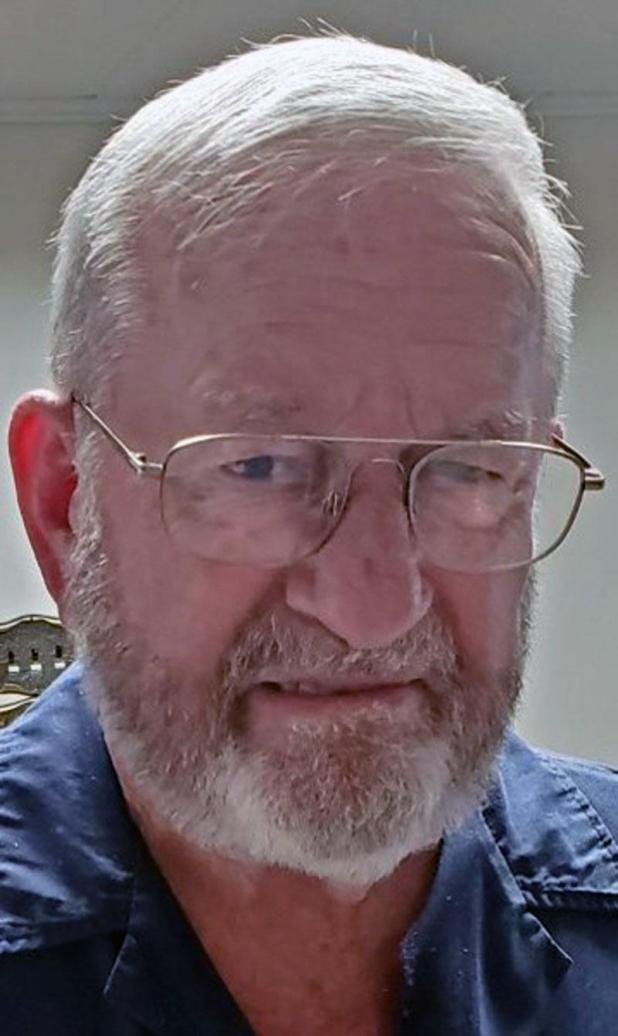
Ted Paul LeBlanc

November 9, 1939 ~ June 7, 2021

ABBEVILLE — Funeral services will be held at 10:00 AM on Friday, June 11, 2021 at Vincent Funeral Home - Abbeville honoring the life of Ted Paul LeBlanc, at the age of 81. He will be laid to rest at St. Paul Cemetery with Fr. François Sainte-Marie officiating the services.
On the evening of June 7, 2021, Ted Paul Leblanc departed this life to meet his beloved wife, Helen, in eternity. Those who knew Ted knew that he always had a joke to tell, and a song in his heart. His vibrant personality led to a late-in-life discovery of a love for acting on the local theatre stage. Ted's time as a sailor in the United States Navy later served him as a towboat pilot for over 30 years, as well as one of his most favorite careers, the Captain of the Vermilion Queen River Boat. Ted's early years were spent living on the Sugar Mill Plantation in Patoutville. His time spent in the Navy brought him and his wife, Helen together. They enjoyed over 50 years of marriage, raised five of their own children, and countless others in their neighborhood. 
He is survived by four sons, Darrel LeBlanc of West Virginia, Donald Bolin and his wife, Rachel of Lafayette, Raymond LeBlanc of Abbeville and Eddie LeBlanc and his wife, Rebecca of Leroy; one daughter, Annette LeBlanc of Cankton; three sisters, Audrey Bourgeois of Jeanerette, Lillian Bryant of Bayou Jack and Alecia Silas of St. Martinville; nine grandchildren, Donnie, Shoheen, Reiko, Kyle, Garrett, Coy, Lindsay, Dillon and Julie; numerous great grandchildren; and numerous great-great grandchildren.
He was preceded in death by his wife, Helen Westmoreland LeBlanc; one brother, Minos LeBlanc; and his parents, Emile LeBlanc and the former Eunice Martin.
In lieu of flowers donations can be made to the American Lung Association, 2021 Hickory Ave, New Orleans, LA 70123, in memory of Mr. Ted Paul LeBlanc.
The family requests that visiting hours be observed at Vincent Funeral Home - Abbeville, 209 S. St. Charles St., on Thursday, June 10, 2021 from 11:00 AM until 9:00 PM with a rosary being prayed at 7:00 PM; Friday, June 11, 2021 from 8:00 AM until the services 10:00 AM.
Condolences may be sent to the family at www.vincentfuneralhome.net.
All funeral arrangements are being conducted by Vincent Funeral Home of Abbeville, (337) 893-4661.

Article Image Alt Text

Kaplan pitcher Carina Chargois

Kaplan pitcher lands on Class 3A All-State Team

Kaplan senior pitcher Carina Chargois ended her four-year high school career by making the Class 3A All-State Team.
Chargois went 17-4 (counting playoffs) and led the Lady Pirates to a district title. She was one of four pitchers to make the All-State first team. Chargois also batted .300.
The Lady Pirates also had three girls make the honorable mention all-state team. They are Kennedy Marceaux, Lauryn Packard and Molly Sistrunk.
Marceaux finished the season with a .660 batting average. Sistrunk hit for a .441 average and Packard hit for .352 average.
Sterlington and Jena won the LHSAA’s Class 3A titles in baseball and softball. So, it is fitting to have players from each school headline the Louisiana Sports Writers Association’s Class 3A All-State softball and baseball teams.
Parker Coley, an LSU-Eunice signee, was voted the Outstanding Player on the LSWA’s baseball squad after leading Sterlington to its second straight Class 3A state baseball crown.
Coley batted .448 and hit nine home runs with 54 RBIs, 11 doubles and a triple. The senior outfielder was 22 of 23 on stolen base attempts and committed only three errors in the field.
Tori Shirley, a junior first baseman, claimed the Outstanding Player honor on the LSWA’s softball squad. She helped guide Jena to the first 3A softball title in school history with a .491 batting average to go with nine home runs, 52 RBIs, .530 on-base percentage and .907 slugging percentage.
For leading their teams to LHSAA titles, Jena’s Sarah Roark and St. Louis Catholic’s Matt Fontenot were chosen as the LSWA’s 3A Coaches of the Year recipients. It was the first LHSAA title for both coaches.
Roark guided Jena past Iowa 12-10 in the Class 3A title game on May 1. It was one of eight wins in which Jena (25-8) grabbed the lead in the fifth inning or later this season.
Fontenot helped St. Louis (25-12) win its fourth baseball title in program history and first since 2011. St. Louis defeated Parkview Baptist 6-3 in the Division II final.
Joining Shirley on the Class 3A softball first-team was her Jena teammate and utility player Janasia Jones.
Sterlington pitcher Brandon Brewer and infielder Seaver Sheets joined Coley on the baseball first-team. St. Louis pitcher Parker Morgan and first baseman Evan Joubert were also first-team selections.
Archbishop Hannan, the Division II state softball champion, had a first-team selection in catcher ydnie Ferrant.

SOFTBALL

P Carina Chargois Kaplan Sr. 17-4
P Katie Haynes Sterlington Sr. 13-8
P McKenna Howell Grant So. 18-4
P Allie Bland Lutcher Jr. 19-8
C Sydnie Ferrant Hannan Fr. .388
IF Emi McGehee Grant Sr. 464
IF Tori Shirley Jena Jr. .491
IF Morgan Eaves South Beauregard Jr. .505
IF Ana Alexander Iowa So. .590
OF Hope Tucker Sterlington So. .389
OF Kamryn Broussard Iowa So. .477
OF Hailey Peterson Haynes Academy Fr. .372
UT Janasia Jones Jena Sr. .439
UT Maycie Hardy Pine Prairie Sr. .500
UT Mallory Stevens Sterlington So. .479
UT Delaney Walker Haynes Academy Jr. 16-5
UT Aubrynn Arcement Thomas Jefferson Jr. .512

OUTSTANDING PLAYER: TORI SHIRLEY, JENA

COACH OF THE YEAR: SARAH ROARK, JENA

Honorable mention: Alyssa Fish, North Webster, Sr.; Arlee Darbonne, Iowa; Bentley Richard, Iowa; Karagan Howard, Iowa; Calee Guillory, Iowa; Lesley Lebleu, Iowa; Jadyn Dauzart, Buckeye; Olivia Henry, Buckeye; Alli Brunson, Jena; Kennedy Marceaux, Kaplan; Molly Sistrunk, Kaplan; Lauryn Packard, Kaplan; Morgan Malveaux, David Thibodaux; Greta Fontenot, Iota; Bronwyn Colbert, Berwick; Haley Spears, Grant; Kamryn Howard, Iowa; Katie Salling, Parkview Baptist; Gracie Pettway, Grant; Alexis Dale Hannan; Aubrie Claverie, Haynes Academy; Britt Bourgoyne, Brusly; Maria Detillier, Lutcher; Camryn Becnel, E.D. White; Mikah Ortiz, Berwick; Shelby Edgeworth, Buckeye; Melissa Lopera, Haynes Academy; Asia George, Pine Prairie; Lailia Clark, Brusly; Chakirrious Parker, St. James.

BASEBALL

P Brandon Brewer Sterlington Sr. 12-1
P Parker Morgan St. Louis Sr. 10-3
P Dylan Bergeron E.D. White Sr. 7-3
P Ryan Harland Parkview Baptist Sr. 10-1
C Braxton Comeaux E.D. White So. .464
IF Brennan Holt Parkview Baptist Sr. .469
IF Seaver Sheets Sterlington Sr. .409
IF Evan Joubert St. Louis Sr. .345
IF Tyler LeJeune Iota Jr. .458
OF Patrick Coley Sterlington Sr. .448
OF Brady Pederson Westlake Sr. .385
OF Caleb Stelly Parkview Baptist Jr. .385
UT Blake Windham Jena Sr. .461
UT Kyle St. Pierre Lutcher Sr. 8-2
UT Gavin LeBlanc Iota Sr. 6-1
UT Coleman Beeson Bossier Sr. .543
UT Britton Coleman South Beauregard Sr. 10-1

OUTSTANDING PLAYER: PARKER COLEY, STERLINGTON

COACH OF THE YEAR: MATT FONTENOT, ST. LOUIS CATHOLIC

Honorable mention: Kane Gill, Westlake; Gavin Johnson, Westlake; Keagan Aaron, Marksville; Reid Snider, St. Louis; John Reina, St. Louis; Dawson Wallace, Iota; Nick Duplechain, Iota; Matthew Melancon, E.D. White Catholic; Charlie Hunt, E.D. White Catholic; Josiah Jennings, Patterson; Clay Menard, Berwick; Mason Johnston, Berwick; Branton Vicknair, E.D. White Catholic; Alec Mahler, St. James; Brandon Boudreaux, E.D. White Catholic; Grant Roberts, Patrick Taylor; Rett Bowman, South Beauregard; Christian Champlin, Jena; Brock Slaton, University; Charles Keith, South Beauregard; Michael Curry, Brusly; Jaron Townsend, Caldwell; Dezmon Dugas, Iowa; Cameron Lavergne, Iowa; Matthew Melancon, E.D. White; Clay Menard, Berwick; Jadikus Johnson, Jena; Cade Labruyere, Iowa; Dawson Wallace, Iota; Charlie Hunt, E.D. White; Brady Parker, Grant; Gaven Jones, Buckeye; Jacob Mercer, Grant; Nick Duplechain, Iota; John Shahrdar, Loyola; Nathan Lirette, Loyola; Hunter Ponson, Parkview Baptist.

Article Image Alt Text

Jim Bradshaw

Citizens worried about spies among us

South Louisiana was not left out when the U.S. entry into World War I caused everyone and his brother to become wary of strangers, and sometimes neighbors, suspected of being German spies.
Folks in Eunice thought they’d found one when a drifter passed through just about Christmas time in 1917. A newspaper report identified him as “John de Armand, alias Frederick Hebert.” The newspaper said he also went by Frederick Schwartz, and that he variously represented himself as a reporter for a New Orleans paper, a watchmaker, and a Baptist minister.
He was held in Eunice after nervous passengers on a train he boarded in DeQuincy said he was acting suspiciously. They said that just before the train reached Eunice “the stranger continually paced up and down the car,” asking some of the passengers for money.
The newspaper described him as a man about 55 years old who “wore neat clothing, his vest bearing the brand of a Milwaukee firm.” He said he had no permanent address and refused to answer questions “as to his mission in this part of the country.”
Local authorities sent him to New Orleans to be questioned by federal agents who may or may not have been more adept at sniffing out enemy agents.
Another suspect was arrested in Crowley a month later, when, according to the Crowley Signal, “Patriotism of Crowleyites proved itself … despite the fact that … the ‘suspect’ proved out and was released.” He was picked up when sheriff’s deputies received complaints about a “German piano tuner” who had recently come to town. It turned out that he really was a piano tuner and that he was from England.
Nobody seemed exactly sure what aroused suspicion in June 1918 when Rev. Fred Ross, pastor of the First Christian Church in Crowley, was accused of spying. The reverend proclaimed his loyalty in the press when rumors began to spread.
“My father was born in Glasgow, Scotland,” he wrote. “My mother was born in Paris, France. Each of these countries are in the great struggle for truth and righteousness.” He said he had more than a hundred relatives fighting in France, and that “the public can judge my loyalty by the loyalty of the family I have the honor of being a member of.”
Another part of his statement might offer a clue as to why talk started.
“As I have often said in the pulpit,” he said, “I am for everything the government is for and against everything the government is against. … I am … doing all I can to aid the government to a conclusion of this war that will mean a permanent peace, so the world will be a safe place to live in. But a premature peace that does not mean this, I am against.”
Many Americans believed that the U.S. had no business in fighting World War I and favored “peace any cost.” But it is worth mentioning that later events suggest the reverend had a point. Most historians agree that the treaty that ended World War I stopped the fighting but did not guarantee the peace. They say it planted seeds that led inevitably to World War II.
When a man was arrested in Alexandria and “sweated all day” by the police, he reportedly confessed that he was on his way to blow up the Shreveport waterworks. According to some news accounts, he was carrying two quarts of nitroglycerin to do the job.
It turned out that the liquid was not nitro, but was pretty potent stuff. Police said the man was “more interested in breweries than in waterworks.”
That story prompted the Shreveport Times to comment, “At times like these the mischievous and mendacious can do a lot of harm by repeating senseless and inflammatory rumors. These rumors are going to be hatched from time to time, and the people should recognize this fact and exercise some care in repeating and giving currency to them. In this particular instance there was not one scintilla of truth in the wild story of the nitroglycerin and the murderous intent of the ‘German spy,’ who was not even a German.”
It was good advice, but the rumors continued. Anti-German sentiment was exacerbated in Louisiana in 1918 when the legislature outlawed teaching German in any school in the state and banned speaking the language, flying the German flag, or even selling products made in Germany. Punishment could be up to 60 years in prison.
Fortunately, these laws were repealed in 1921, but they left their mark on families who had been here for generations.
A collection of Jim Bradshaw’s columns, Cajuns and Other Characters, is now available from Pelican Publishing. You can contact him at jimbradshaw4321@gmail.com or P.O. Box 1121, Washington LA 70589.

Article Image Alt Text

Bryan Golden

Dare to Live Without Limits: A Kite Flies Against the Wind

Given a steady wind and a properly balanced kite, the kite will soar to great heights. But if the nose of the kite is pointed downward, the same wind will send it crashing into the ground.
Just as wind can either lift a kite or destroy it, criticism can either motivate you to reach lofty goals or dissipate your drive. Those who criticize far outnumber those who achieve. Yet no statue was ever erected to a critic. Rather than seeking to appease and mollify critics, utilize their admonition to stay on track.
Criticism is human nature. Instead of creating or innovating, people find it easier to criticize. If you want to accomplish something, critics will have an endless number of reasons why you won’t or shouldn’t succeed.
To use criticism to reach great heights, understand that if you are being criticized you are in the company of all great doers. By reaching out and extending yourself you rise above the horizon and become a target.
What kind of criticism do you think the following person would receive? He dropped out of grade school. He ran a country store. He went broke. It took him 15 years to pay off his bills. He married, but had an unhappy marriage.
He ran for congress and lost twice. He then campaigned for the senate but also lost twice. He delivered a short speech and the audience was indifferent. He was attacked daily by the press and despised by half the country.
How many would label this man a loser who would never make it? Who was this man? Abraham Lincoln. What was the short speech? The Gettysburg Address.
Put yourself in this situation. After only three months of schooling your teacher informs your parents that you don’t have the intellectual capacity to pursue an education. So you are taken out of school.
But you have an insatiable curiosity and want to make a living discovering and inventing. Would your dreams be condemned? Might you be laughed at? Probably. However, Thomas Edison did reasonably well with only three months of schooling and an “inferior” mind.
Ponder the plight of this poor fellow. He had a radical new concept for transmitting information. His ideas were so preposterous that his friends and family tried to have him locked up in a psychiatric institution. Undeterred, in the 1890’s, Guglielmo Marconi proceeded to successfully develop the radio.
Are you routinely chided or ridiculed for your dreams, desires plans or goals? If so, take a look at the people offering their negative opinions. Are they experts in the areas that you are striving for? Have they already accomplished what you are trying to do? Are they presenting their “advice” because they want you to succeed? If the answers are no, why would you ever allow their criticisms to deter you?
How do you fly against criticism? Believe in yourself and your goals. You don’t need approval. You aren’t obligated to convince anyone that your ideas are worthwhile. Often, it’s prudent to keep your aspirations mostly to yourself. Seek out others who are also working towards their dreams and form a motivational group to help each other.
When you succeed, some people will tell you they knew you could do it. Others will insist you must have been lucky or were in the right place at the right time. These will be the very same people who were convinced you’d never make it.
Use criticism to feed your determination and strengthen your resolve. Make it the wind that will propel you to new and exciting achievements.

Article Image Alt Text

William Thibodeaux

Ramsey Plantation

An old postal map dating back to the 1800s revealed there was once a community named Ramsey situated some five miles south of Abbeville along the Vermilion River.
It was named for James R. Ramsey, apparently a well-respected medical doctor. Warren Perrin, the well-known Cajun lawyer from the hamlet of Henry, said the property was once owned by a wealthy land owner and sugarcane grower named George Greig, who at the time owned 1,000 slaves. Greig built a sturdy two-story house in 1807. The old home was surrounded by some of the largest oak trees around. The old man was reported to be mean as a snake. It was rumored that George Greig’s slaves killed him and ran away. Greig had no heirs, which meant without heirs, the property went to the state of Louisiana. Perrin said, “Aristide Broussard, my great grandfather, purchased the property in 1930, and called it Turkey Island.” The old home was moved to the Buteaud land, south of where it was originally built, and where it still stands today [May 2021] nestled among the giant moss draped oaks. “It weathered numerous hurricanes over the years and so it’s in a state of disrepair,” said Perrin.
Ramsey was also the site of a killing that took place in late September 1893. The Abbeville Meridional of Saturday, September 30, 1893, titled: “The Killing of Ford” reported that Martin Bagley, an Irishman and one of the largest sugarcane growers in Vermilion Parish, reportedly shot and killed John Ford with a pistol shot to the head. Ford was said to be from Texas and had been in the parish for about 10 days and was employed as engineer on the steamer Mary Rose. After the pistol shot, Bagley went to Abbeville and turned himself in to Deputy Sheriff George E. Lyons.
Coroner Abshire and District Attorney Gordy went to the scene of the murder. A jury composed of George Delano, Ophelias Bourque, Hunter Ramsey, Adam Brasseaux, and Elias Broussard also went to investigate, which was continued the following Monday morning. Martin Bagley was placed in jail awaiting his preliminary examination. According to the newspaper article, Bagley claimed to have shot in self-defense. He hired an attorney in preparation of his hearing.
A Saint Landry Clarion article titled: “News and Comments” of October 28, 1893, reported that “Martin Bagley, a wealthy sugar planter of Vermilion Parish, who killed John Ford on September 24, was denied bail last week.” The Meridional of Saturday, October 21, 1893, titled: “Bagley Denied Bail” was hoping to give their readers the sworn testimony of all the pertinent witnesses. However, the preliminary inquiry of Martin Bagley was said to be too extensive. It was “nearly 100 pages of closely written legal cap.” To condense it would not do the story justice it said. Bagley soon saw how ugly things began to turn when the honorable Judge A. C. Allen of the 17th Judicial District denied bail. The paper reported the evidence in the case was concluded on October 8, 1893. Judge A. C. Allen said, “After a full, just and fair application of the facts and circumstances of the case, to this law, I am forced to conclude that Martin Bagley should not be admitted bail.” And just like that Bagley’s application for bail was denied and he was remanded to the parish jail.
A vicious rumor began circulating that said Martin Bagley was allowed to sleep in his own bedroom each night at Ramsey Plantation. If it was intended as humor, it missed its mark—no one was laughing, especially not Martin Bagley. However, it had created its desired effect. The rumor began to gain traction. The more it was repeated, the more infuriated the community became, which further divided the area. Fear is a great motivator of change. Bagley wasted no time in hiring Joseph A. Chargois, a noted defense attorney from Abbeville. If Bagley thought the case was turning ugly, it was fixing to get a lot worse.
On December 2, 1893, an ad in The Meridional titled: “$50 Reward $50” paid for by then Sheriff Alphonse L. LeBlanc, who offered $50 to “whomever will bring me sufficient proof to locate the slanderer.” It was the sheriff’s crowning moment. Back then fifty dollars was considered a large sum of money. That same $50 would be worth $1,050 today in 2021. The ad ran for several weeks, but there were no takers. In the same newspaper as above there was another article titled: “Special Notice” undersigned by P. L. Terrier, who informed the public that he was now in charge of “the financial portion of the business of Martin Bagley, agent, for both Ramsey and Lyons Plantation in all transactions that may take place from this date.” Terrier also had power of attorney for purchasing sugarcane for the aforementioned factories on the two plantations during grinding season of 1893.
On December 16, 1893, a lengthy article appeared in The Meridional titled: “The Bailing of Bagley” which stated in part “as is well known to the public, Martin Bagley has been confined in our parish jail since September 24, 1893, to answer to the charge of having murdered John Ford.” The article continued by saying in early October 1893, Bagley was denied bail by Judge Allen. Since that time Bagley became ill during his imprisonment. He again applied for bail on the grounds of being “dangerously ill and likely to die or have his health permanently impaired.” The newspaper published Dr. F. F. Young’s petition of December 6, 1893. Dr. Young wanted to certify that he was the attending physician of Martin Bagley, and that his patient was seriously ill with “acute inflammation of hepatitis of the liver and perityphlitis.
The jail where Bagley was confined was apparently kept terribly unsanitary. Dr. F. F. Young explained that his patient needed “proper nursing care with sanitary surroundings,” which in his estimation, regarding Bagley’s medical condition would take several months to improve. His professional belief was if his patient was not given proper medical care, he would in all likelihood perish from his illness. Judge Allen was caught in the middle. He was not wanting to show favoritism to one of Vermilion’s largest sugarcane growers. Bagley was examined by several physicians and each one was interviewed separately by Judge Allen.
The physicians were: F. F. Young M.D., W. D. White M.D., J.T. Abshire M.D. & Coroner; and by Robt. J. Young, M.D. The article indicated that each physician after examining Martin Bagley had determined that continued confinement as it was would “very likely prove fatal or permanently impair his [Bagley’s] health.” After hearing from all the above, the court made an unusual decision by allowing bail, which was set at $20,000. The Meridional of February 23, 1895, titled: “Town and Parish” reported Martin Bagley had furnished bail and was released “after nearly a month’s confinement.” That same newspaper titled: “For Sale” reported that Martin Bagley was selling two eighty-acre tracts of land at Prairie Greig. The property was “fenced and well ditched” and included one dwelling, two cabins, and multiple farm implements, along with four mules. The price was not listed, however, it did include “easy terms.”
When it rains, it pours. As if Martin Bagley’s legal troubles weren’t enough, the Meridional of Saturday, January 6, 1894, under the title: “Attention” followed by the Lyons plantation sugarhouse was set on fire intentionally. “It was the work of an incendiary” reported the newspaper. It was believed that “a number of hands who had been docked for lost time had expressed dissatisfaction thereat.” The total loss was estimated between $18,000 and $20,000 with only $10,000 insurance. The rest would “fall heavily on the owners, the Messrs. Bagley.”
Martin Bagley’s historic trial began in Abbeville in the spring of 1894 and lasted an entire week. When the jury began their deliberations on Saturday; they were locked away for the weekend. Monday came and went without a word from the jury. A look of uncertainty had to have been on Bagley’s face. Finally on Tuesday morning the jury said it was useless, they were deadlocked. The judge thanked the jury for their service and declared a mistrial. The entire community was split. According to The Lafayette Gazette of April 7, 1894, titled: “The Bagley Case” reported the jury was out fifty-five hours and were unable to agree on a verdict—eleven for conviction and one to acquit. It was also learned that after the jury was discharged, one of the jurors, J. D. Morgan, was arrested for perjury. . . . Note: Nearly a year later an article from the Abbeville Meridional of March 30, 1895, titled: “Town and Parish” mentioned Jeff D. Morgan’s perjury case had been continued. No mention of court proceedings, only that his perjury case was continued until “the next court term.” Try as I might, this author could not find any information regarding Morgan’s perjury trial other than he had been arrested for violation of his oath.
The Lafayette Gazette of Saturday, April 13, 1895, titled: “Bagley’s Case” reported that Martin Bagley’s murder trial was set to begin in Lafayette on Thursday, April 18th. The newspaper stated that Bagley was in Lafayette on Tuesday of the previous week and returned to Abbeville the following day. Back during that era, it was a day’s travel by horse. The saga of Martin Bagley’s court proceedings wore on as his second trail was getting ready to get underway in Lafayette. This time Bagley wasn’t taking any chances—he was loaded for bear due to his near conviction in Abbeville a year earlier. Bagley hired some of the best legal minds in the area according to the article above. All six of his attorneys were from south Louisiana.
The Meridional of April 27, 1895, titled: “The Bagley Case” reported that the murder case against the accused murderer, Martin Begley, was supposed to take place the previous Thursday morning hit a snag. Two material witnesses for the prosecution were “unavoidably absent” So, District Attorney Gordy moved to postpone the case until the following Saturday or Thursday. The defense team opposed the dates and asked for the case to be continued. A continuance was granted. It was said that a number of people from Vermilion Parish had come to Lafayette to see the trial, including Sheriff LeBlanc, Dr. Abshire, George Lyons, and Simonet LeBlanc, which was reported in the Lafayette Gazette of April 20, 1895, without a heading.
The Lafayette Advertiser of October 26, 1895, reported that Bagley was a native of Ireland having first lived in St. Mary Parish and later moved to Vermilion Parish where he “acquired considerable means and married a prominent lady of that parish.” In the same newspaper as above, Martin Bagley was sketched in a pencil and ink profile. He was shown wearing a thick shock of dark hair nicely combed. Bagley was dressed in a stylish suit and tie, clean shaven other than sporting a fin-de-siecle mustache, which was common during the turn of the century. Throughout history there are countless stories like the Martin Bagley case, but this one was reported to be the most famous case ever tried in Lafayette Parish. Of all the newspaper articles, there weren’t any that fully described what transpired inside the courtroom. We can only imagine what took place. You can bet the courtroom was crowded, probably standing room only since it generated a great deal of interest. We know Martin Bagley had a front row seat as he sat among his horde of intelligent lawyers and probably fingered his mustache while calmly watching the proceedings.
Bagley’s attorneys were: Judge John Clegg of New Orleans, Judge C. Deballion and Joseph Chargois of Lafayette, Chas Fontelieu of New Iberia, Robt. P. Obrien of Calcasieu and Mr. Southon of Houma. The honorable Minos T. Gordy, Lafayette Parish District Attorney, represented the state of Louisiana. Despite having what he thought was unassailable facts, Gordy knew he was in a fierce battle, especially when defense attorney, Southon from Houma had the floor. Southon confidently rambled on for two hours straight, meticulously tearing away at the prosecution’s air-tight case. Gordy wasn’t worried; he had clear and convincing evidence that the sugarcane grower was guilty as charged.
During the court proceedings, it was disclosed that John Ford was employed at Bagley’s planation, an argument ensued over wages and Ford was ordered to leave. Ford went to the plantation store to “arrange settlement preparatory to his departure.” Some of the items he had purchased on credit were returned. While at the store, Bagley informed the manager, Mr. St. Amant, not to give Ford any more credit, since “he had been discharged.” A heated argument occurred while inside the store between Bagley and Ford. That was when Ford left and went to a barge on the Vermilion. Bagley probably expected trouble, prior to leaving the store, he armed himself with a 44-caliber pistol and followed John Ford. At the boat is where the two men met again and it’s also where “the tragedy took place.”
The State claimed Ford was on deck of a steamer that was attached to the barge. Bagley was standing on shore approximately 15 to 20 feet distance from Ford. Bagley called out to Ford “to put back the mosquito bar which he carried under his arm.” Ford refused and Bagley fired the fatal shot which struck Ford in the head. Bagley immediately turned to a bystander J.P. Long and said, “Did you not hear me say to him twice ‘to put that bar back’ but he refused?”’ Evidence suggest that Long vanished. He could not be found to give testimony. During the court session, it was discovered that a razor was found on the ground near John Ford’s body. Defense attorney Clegg argued that “Ford was about to make an assault upon Bagley.” Clegg also stated that Ford had insulted Bagley and had threatened his life with the razor and intended to use it against Bagley if he hadn’t been shot first.
After three days of court proceedings, it finally came to an end on Saturday October 19, 1895. The article reported that the jury deliberated a short period of time. All throughout the proceedings Bagley maintained his composure even after the jury said, “Not guilty!” After thanking his attorneys, Martin Bagley walked out of the courthouse a free man. He was free, but probably on the brink of bankruptcy.

Article Image Alt Text

The Cecil McCrory Building was packed with people on Saturday.

Daylily Festival a success despite rain

The 19th Annual Daylily Festival may not have been the biggest Abbeville has ever had, but days after the festival took place, it is being billed as the most financially successful.
The one-day festival had a hiccup 48 hours before it took place. Because of Mother Nature, festival organizers Lynn Guillory and Charlene Beckett were concerned about rain for Saturday.
They met Thursday night to develop a Plan B for moving the festival and its 45 vendors. They thought of the Cecil McCrory Exhibit Building at the LSU AG Center and made phone calls.
The building is covered but has a dirt floor. They got the OK from the LSU AG Center to move the vendors into the McCrory Exhibit Building the day before.
Vendors began setting up at 10 a.m. Friday and by Saturday morning, the festival had a line of customers waiting to go through the doors.
“It was stressful, but it turned out well,” said Guillory. “The vendors said it was their best festival yet. I think people were ready to come out and have a good time.”
“We can tell it was a success because the vendors were happy,” said Beckett. “If they were happy, that means they made money.”
Guillory said many vendors sold out of flowers by noon.
In 19 years, this was only the second time the festival had to be moved from Magdalen Square. The festival will return to the Square next year, and Guillory and Beckett have already come up with a Plan B if it rains for next year. The festival will be moved to the Red Barn on Rodeo Road in Abbeville if Mother Nature threatens to cancel the festival.
“We want to thank the LSU Ag Center for letting us use their building on such short notice,” said Beckett. “It poured down rain Saturday, but everyone stayed dry, thanks to the LSU AG Center.”

Article Image Alt Text

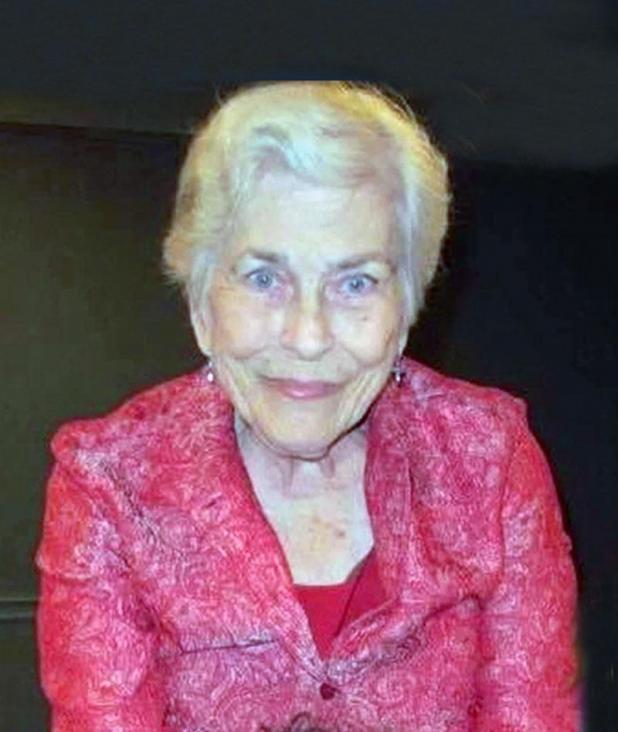
Lester Paul Schexnider

ERATH — Private Services for Erath native Lester Paul Schexnider,80, will be held at a later date.
Lester who passed away Thursday June 3, 2021 in his residence surrounded by his loving family. Lester had a large family and he loved spending time with them especially his grandchildren. He loved animals both great and small, as well as his best friend of 14 years, his dog Paco. He was a devoted husband, father, grandfather and friend. He never met a stranger and he will be missed by all who knew him.
He is survived by his loving wife of 58 years, Terry Hollier Schexnider of Erath, 2 sons, Darren Schexnider and girlfriend Cindy Walker of Delcambre, Michael Schexnider and fiancée Shantel Landry of Franklin, 3 daughters, Sendie Trahan and husband Mack of Erath, Betsy Hardy and husband Tony of Abbeville, and Nola Miguez and husband Robbie of Erath, nineteen grandchildren, Brooke Blanchard, Brittney Schexnider, Trinity Schexnider and fiancée Henry Clark, Maclynn Schexnider, Paige Landry, Michael Schexnider Jr., Cody Trahan and wife Shalli, Angel Lacoste and husband Chris, Draven Saucier, Gaven Vincent and fiancee Haylie Coon, Lili Burson, Alyssa Miguez and boyfriend Zack Blood, Kristen “Bebop” Miguez, Taylor Touchet, Trent Touchet, Trey Touchet, Triston Touchet and fiancée Tristan Vincent, Justin Broussard and fiancée Karyn White, and seventeen great grandchildren, Abigail, Gunner, Olivia, Stephanie, Johnny, Aleigh, Beau, Kylan, Kohen, Caden, Graci, Spencer, Zoei, Alayna, Maisie, Onyx, and Everly.
He was preceded in death by his parents, Frank Sr. and Philomene Meaux Schexnider, 3 brothers, Robert Schexnider, Wilbert Schexnider and Frank Schexnider Jr. , a daughter, Victoria Touchet Schexnider and a great granddaughter Annagrace Lacoste.
Pallbearers for the service were Cody Trahan, Chris Lacoste, Trey Touchet, Draven Saucier, Justin Broussard and Gaven Vincent.
The entire family would like to extend a very special thank you to Bridgeway Hospice for the professional assistance, compassion and understanding in Mr Lesters final days.
Condolences may be shared with the family at www.davidfuneralhome.org
David Funeral Home of Erath is in charge of arrangements 209 E. Putnam St. Erath LA 70533 (337)937-0405.

Pages

Vermilion Today

Abbeville Meridional

318 N. Main St.
Abbeville, LA 70510
Phone: 337-893-4223
Fax: 337-898-9022

The Kaplan Herald

219 North Cushing Avenue
Kaplan, LA 70548